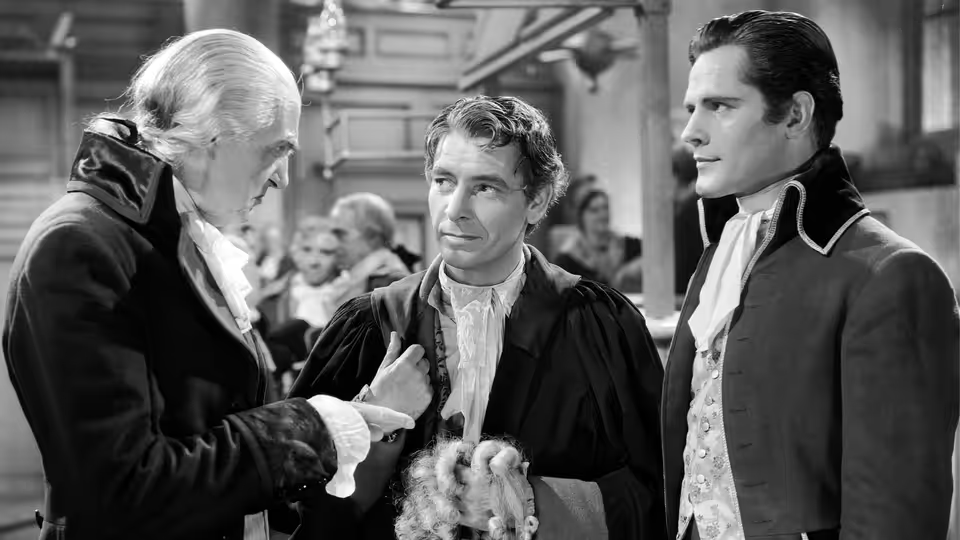
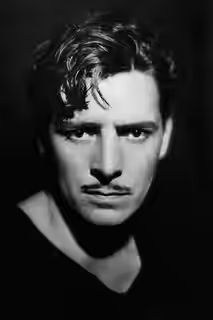
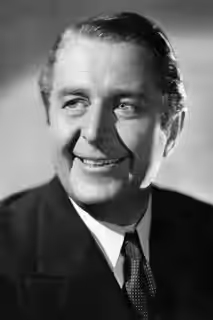
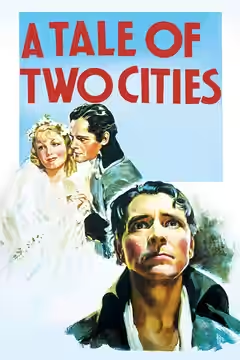
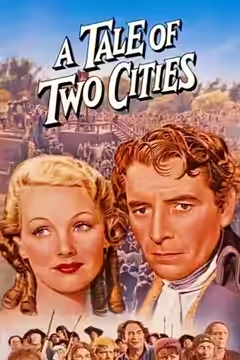
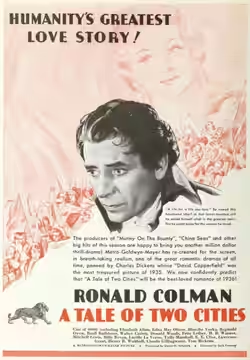
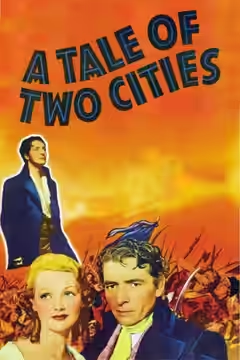
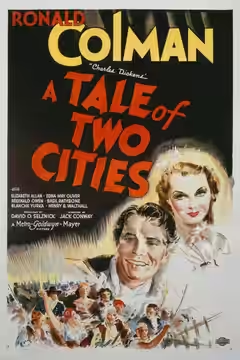
Jack Conway’s Dickens is handsome, stately and better cast than it needed to be, with Ronald Colman carrying the heart and Blanche Yurka the menace. It is also long, and the young lovers at its centre are the dullest people in either city.
Dickens’s novel is half London, half Paris, and David O. Selznick’s production keeps both halves and most of the furniture. Jack Conway directs from a script by S. N. Behrman and W.P. Lipscomb that follows the book faithfully enough to be used as a crib, and at 126 minutes it takes its time doing so. It is a good film, well made and very well acted at the edges, and it is at its best whenever Ronald Colman or Blanche Yurka is on screen and at its slackest whenever the plot returns to the people it is supposedly about.
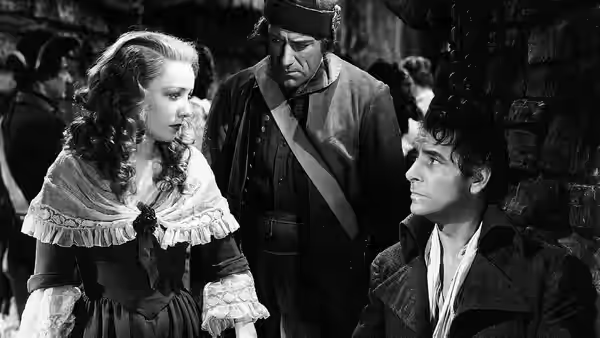
Colman is the reason to sit through it. Sydney Carton is a man who has decided he is worthless and has arranged his life to prove it, and Colman plays him without a trace of self-pity. The wit is in the mouth; the eyes are somewhere else. In court he lolls, looks bored, and wins; in the Manette drawing room he says the cruellest things about himself as if passing the salt. There is a scene, roughly halfway in, where Carton tells Lucie what he would do for her if it ever came to it, and it moved us more than we expected. It was not the words, which are Dickens’s and lay it on. It was how long Colman waits before saying them, and how quickly he leaves.
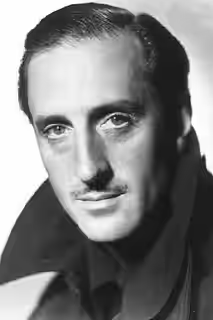
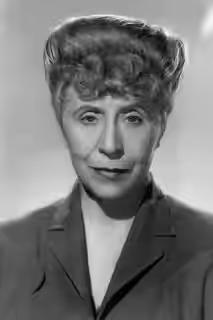
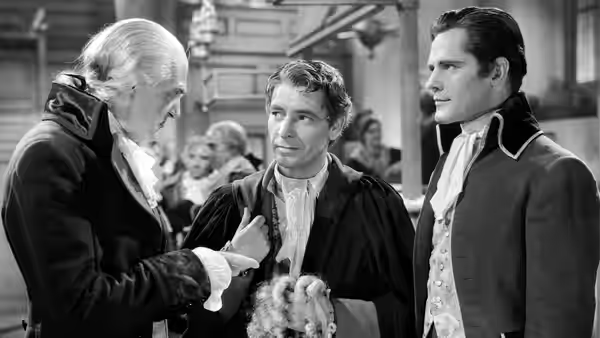
Yurka is the other performance, and she is doing something quite different. Her Madame De Farge barely raises her voice for the first hour. She sits in her husband’s wine shop with her needles going and lets people talk, and every so often the camera finds her face and she is not listening, she is counting. We felt a real dread each time the film cut back to that shop, and it took us a while to work out why: nobody in Saint Antoine is shouting yet, and she is already finished with them. Basil Rathbone’s Marquis St. Evremonde is the other side of the same coin, all silk and boredom, and his one long scene with Fritz Leiber’s Gaspard tells you everything the Revolution will need to know.
Oliver T. Marsh shoots the London scenes in a soft, even light and saves his shadows for Paris, where the faces in the crowd are lit from below by torches and the Bastille goes up in smoke and bodies. Conrad A. Nervig cuts that sequence fast, a few seconds a shot, so that the mob seems bigger than it is and the walls seem to fall from sheer noise. It is the one stretch where the film stops being a series of well-dressed rooms. Dolly Tree’s costumes do a lot of quiet work: the Marquis is in embroidered silk, the wine shop is in undyed wool, and you can tell which side of the century anyone is on before they open their mouth.
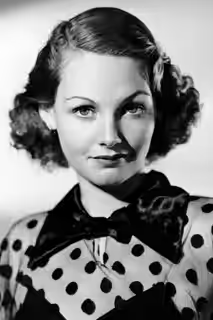
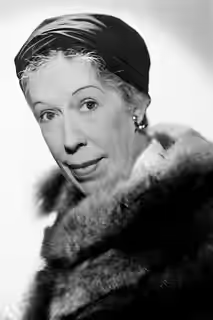
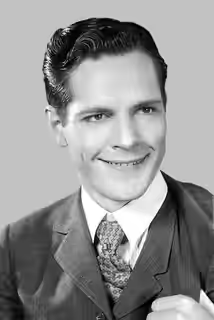
The trouble is the lovers. Donald Woods’s Charles Darnay is a decent, upright man with nothing going on behind the face, and Elizabeth Allan’s Lucie is asked to be looked at and wept over and does both nicely. That was Dickens’s problem too, but the film does nothing to fix it, and every time it leaves Carton for the happy household the temperature drops. Herbert Stothart’s score does not help; it swells under every declaration and every farewell, and by the second hour we had started to brace when the strings came in. The London half is where the length shows. Edna May Oliver’s Miss Pross, all elbows and loyalty, and Reginald Owen’s puffed-up barrister Stryver are a pleasure, but they are relief, not momentum.
Measured against the studio Dickens of its decade, this is among the better ones, and it is not adventurous. Conway does not reinterpret the book, cut it against the grain, or find a new angle on the Terror. He puts the novel on screen, in order, with the best actors he can find, and that is why it holds together and also why it never surprises. We were bored for stretches of the first hour and we were not bored at all in the last half hour, and we will not say why beyond noting that the second half goes to Paris under the Terror and does not come back.
It wants a long evening and a certain patience. If you have both, Colman will pay you back in the final reel, and Yurka will have been paying you all along.