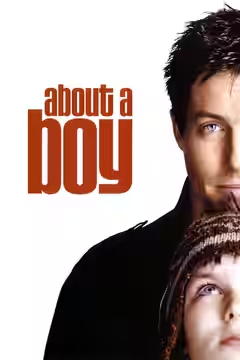
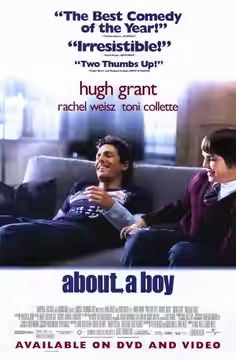
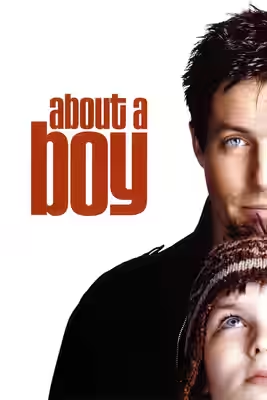
Hugh Grant and Nicholas Hoult make About a Boy a funny, touching comedy about an unlikely friendship. The women get less room, and the sentiment sometimes needs a firmer hand, but the central pairing earns our affection.
About a Boy is a good comedy about an unlikely friendship, with a performance from Hugh Grant that is worth rather more than the familiar lesson about growing up. Directors Paul Weitz and Chris Weitz trust the awkwardness between him and Nicholas Hoult, and the film is funniest when neither appears to be trying to please us. Adapting Nick Hornby’s novel with Peter Hedges, they keep the central relationship from becoming too respectable. Some of the surrounding characters could use the same attention.
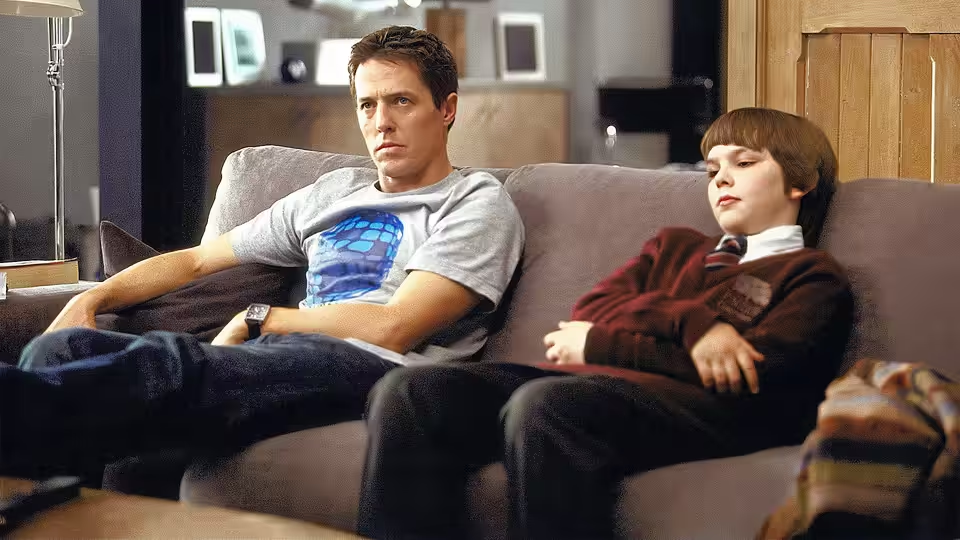
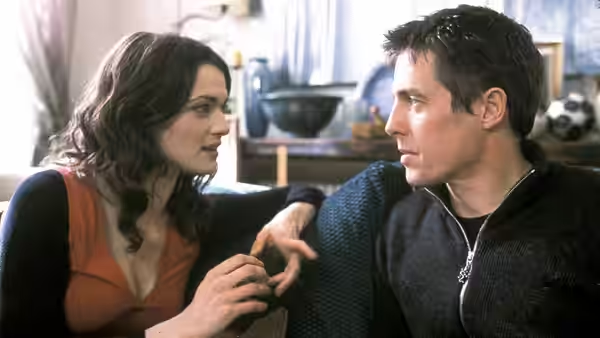
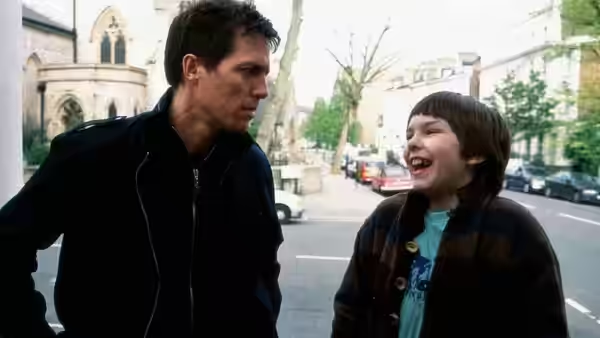
Hugh Grant plays Will Freeman with a precise sense of how little to give away. His blankness is funny because there seems to be some calculation behind it: perhaps a sufficiently unhelpful response will bring this conversation to an end. We laughed at those pauses, and at the suggestion that answering properly would involve more work than Will considers reasonable. The performance keeps him interesting even when he has little of interest to contribute.
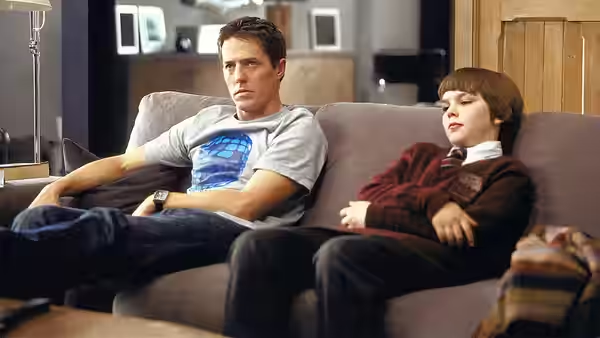
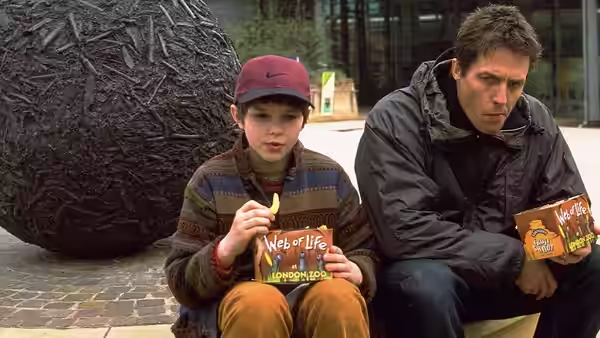
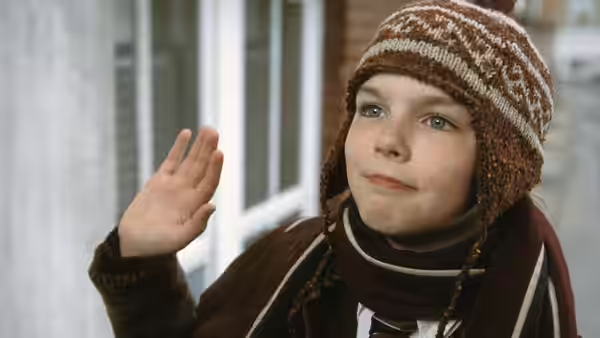
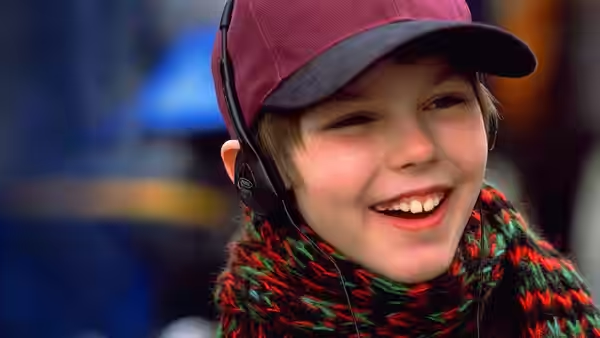
Nicholas Hoult’s Marcus Brewer gives Will someone he cannot simply out-charm. The pleasure of their scenes is the mismatch in comic rhythm: the adult appears to be managing an encounter while the boy declines to supply the response that would make it easy. The younger actor earns sympathy without asking us to find every awkward moment adorable. In a coming-of-age comedy, where a child can so easily become a lesson for an adult, that individuality matters.
The writing is less generous to the women. Toni Collette gives Fiona Brewer’s depression enough weight to stop it becoming an eccentricity, though the film sometimes seems too eager to make distress fit the comedy. Rachel Weisz brings assurance to Rachel, but the part has less room to develop than Will’s. The screenplay by Paul Weitz, Chris Weitz and Peter Hedges understands its central man more fully than the people around him, and that limits how far the feeling goes.
Remi Adefarasin’s cinematography keeps small shifts of expression legible without insisting that each should be important. Jim Clay’s production design has a comparable restraint: the surroundings feel inhabited without competing for attention. Neither contribution makes an ordinary conversation feel like a grand occasion. That suits the material, although the visual modesty also means there is little to distract us when an exchange is less sharply written.
Nick Moore’s editing is alert to the time a reaction needs; a quicker cut would often spoil Will’s apparent indifference. Badly Drawn Boy’s music adds an appealing softness, but it also helps make the sentiment feel more settled than the writing warrants. When the film presses hardest for an emotional response, the encouragement becomes noticeable. The friendship has already done enough to interest us without quite so much assistance.
Coming-of-age comedies often ask children to be relentlessly lovable, and this one benefits from letting Marcus be awkward. Its growing tidiness is a limitation, especially when the central actors have made the discomfort so enjoyable. At 101 minutes, it gives their exchanges room without allowing the pace to become leisurely. We recommend it for their company, with a little patience for the film’s more insistent efforts to warm us up.