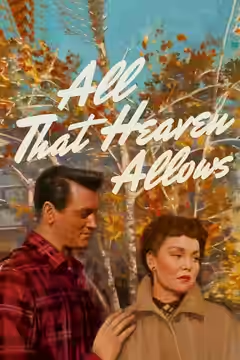
Douglas Sirk’s romance is richly coloured, tender and angry about the cruelty of respectable people. Jane Wyman makes its unhappiness matter, though Rock Hudson’s reserve occasionally leaves her doing too much of the emotional work.
Douglas Sirk’s All That Heaven Allows is a moving romance, and its anger at the people who make love difficult gives it force without making the lovers seem foolish. It takes Cary Scott’s happiness seriously enough to risk looking excessive, a sensible choice for a melodrama. We are asked to care about what she wants before assessing what she ought to do, and that order matters. The film would be considerably less affecting if it stood back and congratulated us on being cleverer than the people in it.
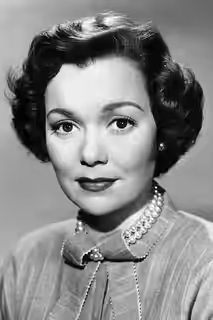
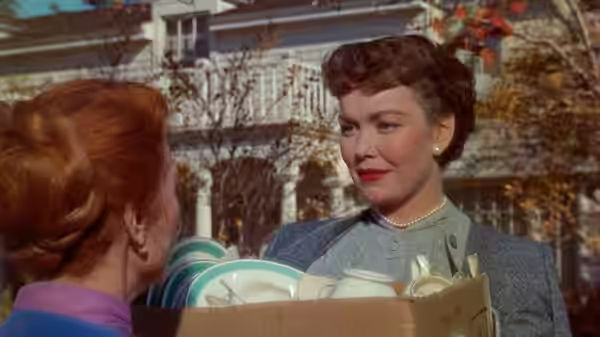
Jane Wyman makes Cary’s indecision difficult to dismiss. Watching her weigh her own wishes against other people’s standards can be frustrating, but the performance makes that hesitation understandable. We were moved by her uncertainty: she seems to need permission even to want a happier life. She gives that need enough weight that we stay with Cary when we would like her to be firmer with the people judging her.
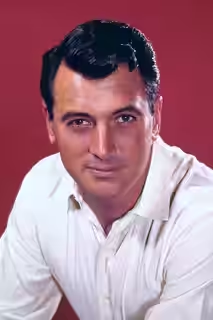
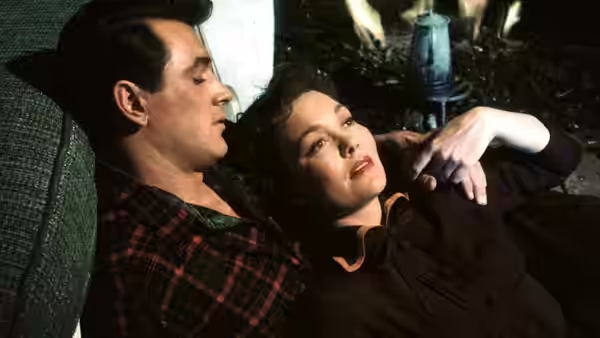
Rock Hudson, as Ron Kirby, is less consistently persuasive. His stillness gives the romance dignity, but it can also leave Ron looking like an answer to Cary’s troubles rather than a person whose company we have come to know. That is a limitation when so much depends on believing in the attraction, and the writing could give him more awkwardness, more room to be inconvenient. A less composed Ron would give his partner more to work against.
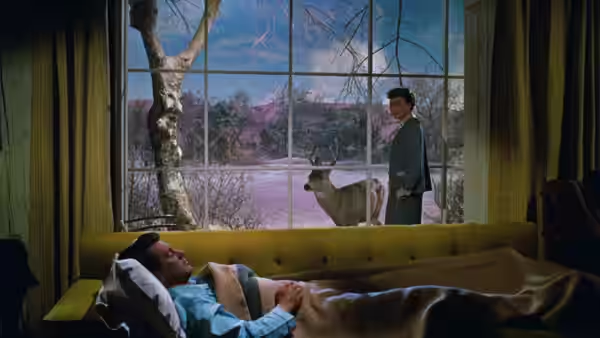
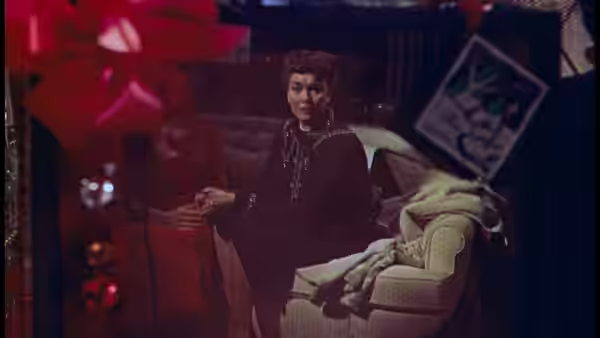
Russell Metty’s cinematography makes the strongest case for the film’s richness. The saturated colour is pleasurable in itself, but the precise geometry of the compositions also makes us alert to how much space Cary seems allowed. Looking at her place within the frame becomes part of watching her struggle, so the images never feel like decoration applied to an otherwise ordinary romance. Those carefully arranged images hold our attention even when the story’s social criticism is easy to grasp.
The editing by Frank Gross and Fred Baratta keeps that visual emphasis within a compact 89 minutes. The film has time to dwell on the unhappiness without feeling protracted, and its concentration suits the pressure on Cary. Frank Skinner’s music shares the willingness to make feeling explicit. There is no need to apologise for that: a romance this openly emotional would be poorly served by a score afraid of sounding involved.
Peg Fenwick’s screenplay is frank about the ugliness beneath respectable judgement, and that frankness can make the opposition to the romance feel too neatly arranged. Gloria Talbott, as Kay Scott, brings a welcome sharpness to the supporting cast. The film does not always allow for the possibility that a misguided objection might be complicated, or even sincerely meant. Still, its anger is earned by how seriously it considers the happiness being denied.
As a melodrama, this works because it is prepared to take ordinary unhappiness seriously. We do not have to admire it from a safe distance or pretend the romance is merely an excuse for the pictures. Even with the stiffness in Ron, there is enough tenderness here to justify the large feelings and the emphatic colour. Watch it without apologising for liking a tearjerker.