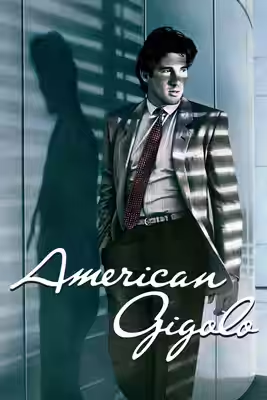
Paul Schrader’s thriller about a Beverly Hills escort is superbly dressed, and John Bailey and Ferdinando Scarfiotti make Los Angeles look like a showroom after hours. The man in the suits stays a blank, which is the point, and the murder plot is thin.
Paul Schrader wrote Taxi Driver (1976), a film about a lonely man driving through a city at night, and here he writes and directs another one, except the car is a Mercedes convertible, the city is Los Angeles and the man has a tan. Julian Kaye sells himself to rich women and takes a craftsman’s pride in it. Schrader wants to know whether a man who is all surface can be reached, and he spends 117 minutes asking. The first hour is handsome and absorbing. The second is thin, and the answer, when it comes, is borrowed.
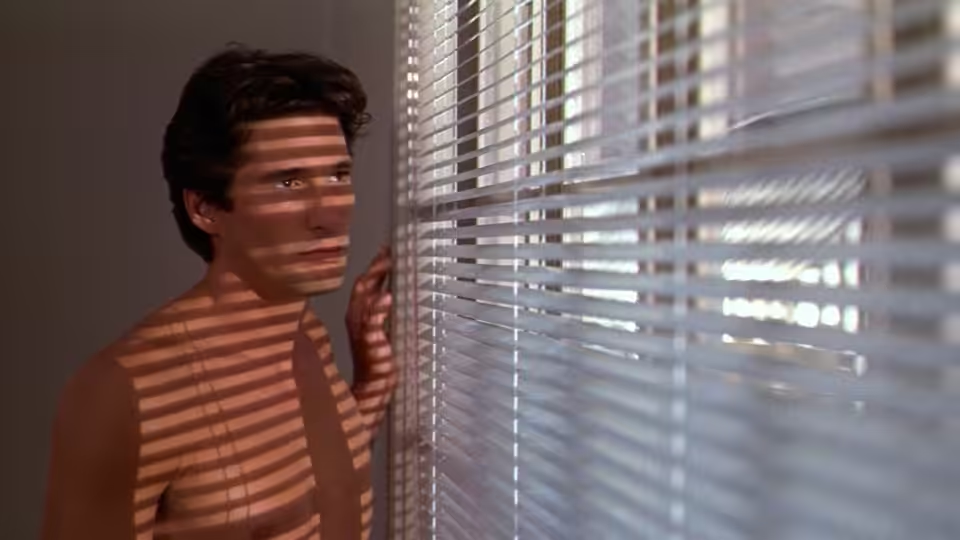
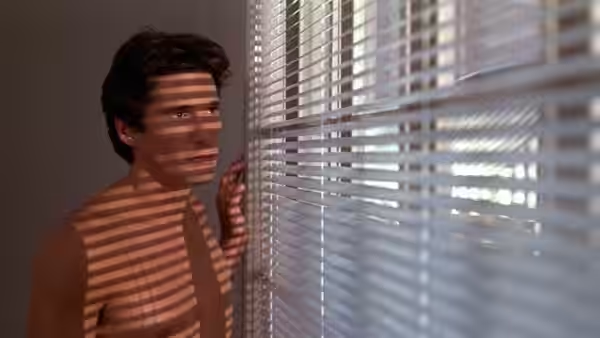
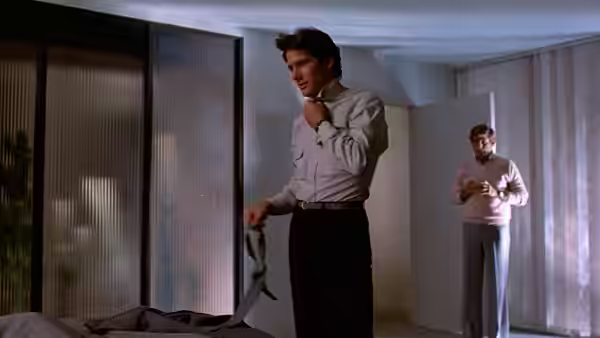
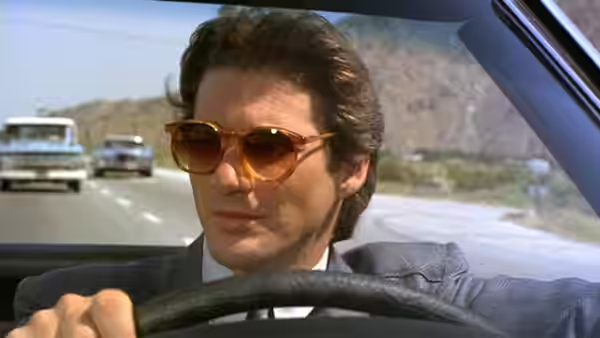
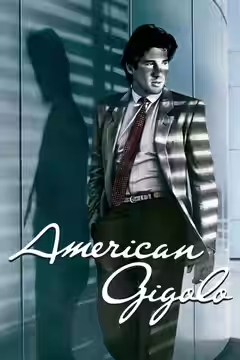
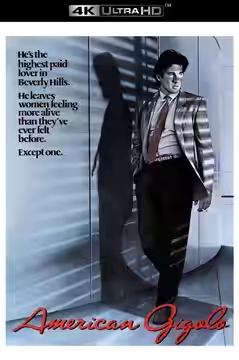
Ferdinando Scarfiotti gives Julian a flat in greys and oyster whites, with venetian blinds, a bar he hangs from by his ankles and almost nothing on the walls, and the rest of the city follows: pale hotel bars, pale beach houses, a Malibu living room the colour of sand. John Bailey lights it through the blinds and from below, so faces are striped and skin looks expensive. Giorgio Armani’s suits hang on Gere as if poured, and the film’s best-known scene is a man alone with them, laying shirts and ties and jackets across a bed, pairing and rejecting them, humming to himself. We found it strange and a little sad, and it is the only scene in which Julian is plainly happy. Giorgio Moroder’s score is a synthesiser pulse that never raises its voice, and Blondie’s “Call Me” opens the film over a drive down the coast road.
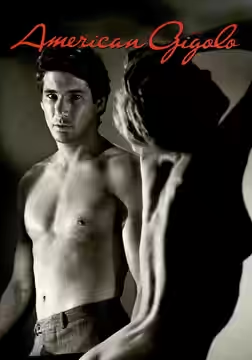
Gere is good. He walks like a man who has practised walking and talks like a man who has practised talking, slipping into French for a client and back again, and he lets you see the small satisfaction each time it works. It is a performance about being looked at, and what Gere gets right is the moment nobody is looking: the face stays on, because he has no other. When Julian explains that he spent three hours on a woman nobody else would have bothered with, Gere says it without a flicker of irony.
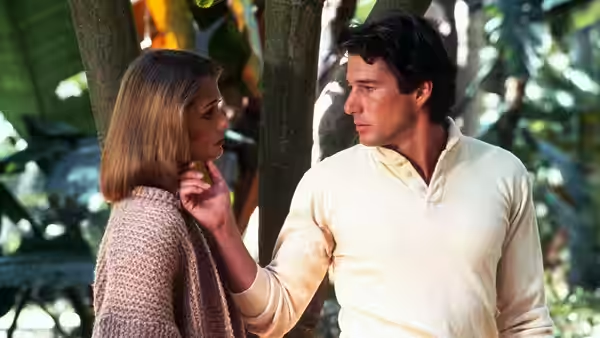
Lauren Hutton has the harder job and the worse part. Michelle Stratton is a senator’s wife who wants Julian for nothing, which in this world is the one thing he cannot price, and Schrader writes her as a position rather than a person. She arrives, stares, leaves, arrives again. Hutton plays it cool to the point of inertness, and the scenes between them are dim and polite. We never believed she would risk anything for him, and the film needs us to.
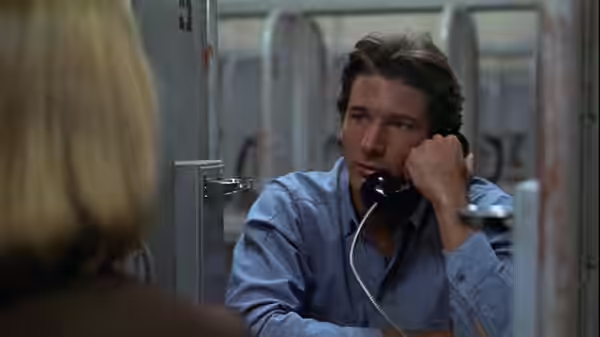
The plot is a frame. A job in Palm Springs with a couple who like an audience (Tom Stewart and Patricia Carr) goes somewhere Julian would rather not think about, a body turns up, and Héctor Elizondo’s Detective Sunday starts eating sandwiches in Julian’s flat and asking where he was. Elizondo is rumpled and patient and the best company in the film. Bill Duke’s Leon James, the pimp who sent Julian to the desert, has a stillness that frightens more than any line he says. But the mystery is see-through, and the second half is a long run of Julian ringing doorbells and being turned away from them. Around the point where he tears his own flat apart, cushions and drawers and the perfect wardrobe, we felt the floor go; then for forty minutes we were bored, and then we noticed we did not mind what happened to him. Schrader may have intended that.
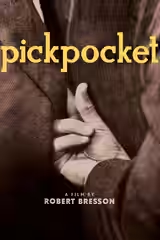
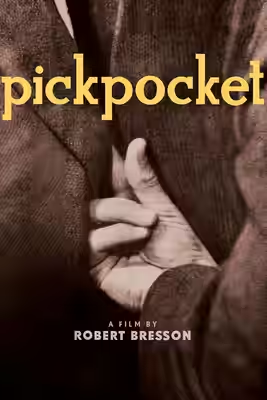
Richard Halsey cuts the first hour at a lounge tempo, letting the drives and the dressing run, and then has to hurry the police stretch along with nothing to hurry. The model, as the film all but announces, is Bresson’s Pickpocket (1959), another story of a man who works with his hands and a woman who waits for him to notice her. The second half takes a turn we will not describe, except to say that it is lifted from Bresson, that it is the one moment the film moved us, and that nothing Julian has done has paid for it.
Watch it for the clothes, the light and Gere, and watch it at home, where the slow stretches are easier to sit through. Do not go in expecting a thriller. The suits are the plot.