Michael Keaton makes a vain actor’s troubles funny and unexpectedly affecting. The continuous-shot illusion keeps this backstage comedy moving, although the screenplay works too hard to explain what the performances have already made clear.
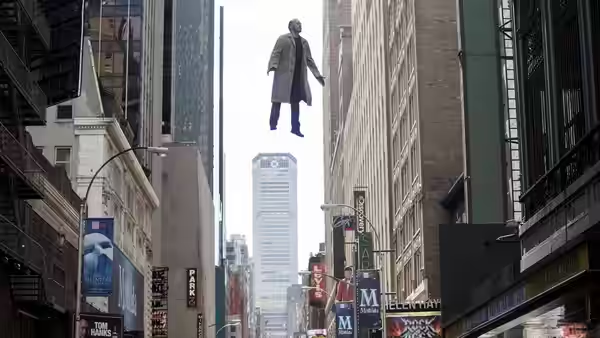
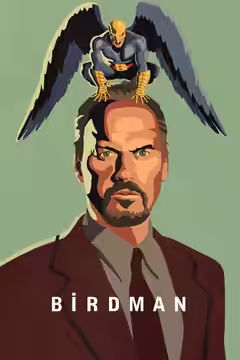
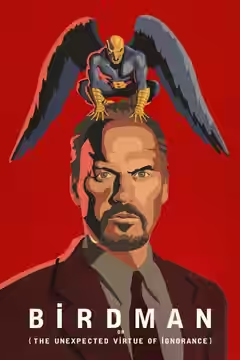
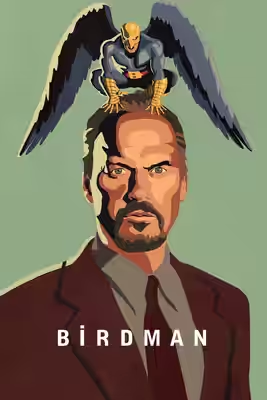
Birdman or (The Unexpected Virtue of Ignorance) is a funny, restless backstage comedy whose actors are more persuasive than its speeches about art. Alejandro G. Iñárritu follows a faded Hollywood actor trying to recover his standing by mounting a Broadway play, and gives his vanity room to become painful. Riggan needs an audience to take him seriously, which is a difficult starting point for making anything with other people. We recommend the film, though its desire to explain celebrity eventually becomes wearing.
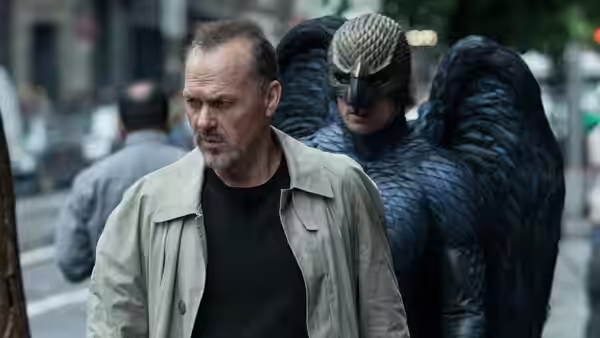
Michael Keaton makes Riggan’s hunger for respect difficult to dismiss, even when the man himself is difficult to like. His self-pity is embarrassing because he seems aware of how needy he is and unable to stop showing it. We were moved by the uncertainty on his face, especially because Riggan is so busy feeling sorry for himself. The performance keeps this from becoming two hours spent being asked to admire a famous person’s unhappiness.
Emmanuel Lubezki’s camera keeps moving through the theatre, and the apparent absence of cuts makes every encounter feel liable to spill into another. Editors Stephen Mirrione and Douglas Crise sustain that continuity without letting the technique become the only thing to follow. The effect is particularly useful in a comedy about people who cannot stop performing: nobody seems to have much chance to recover in private. It can be exhausting, but that exhaustion suits the people trying to get this play on.
Production designer Kevin Thompson’s theatre feels too small for the people trying to be important inside it, which is useful for the comedy. Antonio Sánchez’s jazz score gives the production’s bustle a nervous rhythm, keeping things lively without telling us that Riggan deserves our sympathy. Together, the music and the moving camera can also become rather insistent; there are moments when we would welcome some peace.
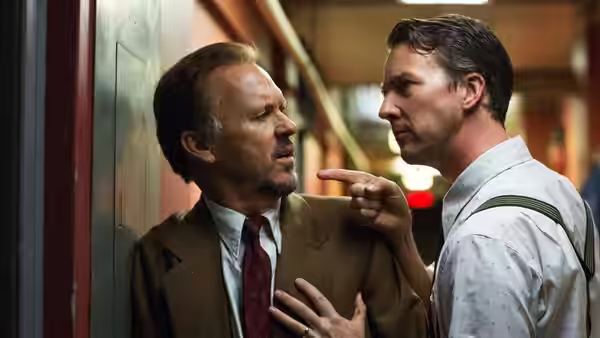
Edward Norton is especially good at making self-regard entertaining without making it attractive. His Mike gives Michael Keaton someone forceful enough to keep Riggan’s misery from filling every available moment, while Emma Stone gives Sam a welcome sharpness. The pleasure comes from watching performers who understand how much comedy there is in taking yourself seriously. Their competing demands make the theatre feel busy, and prevent Riggan’s troubles from becoming the only thing that matters.
The screenplay, by Alejandro G. Iñárritu, Nicolás Giacobone, Armando Bo and Alexander Dinelaris, is less willing to let us reach our own conclusions. Its points about fame and artistic seriousness sometimes arrive as explanations of things the performances have already made plain. The treatment of theatre criticism is particularly thin, inviting us to share a performer’s grievance without making the opposing case credible. These passages flatten a comedy that elsewhere allows us to find Riggan ridiculous and still care about him.
Backstage comedy works for us when the effort of putting on a show feels worth all the bad behaviour. Here the continuous-shot illusion lets us feel the concentration required to keep a performance going, and the cast gives us enough reasons to stay interested in the people doing it. We believe that this production matters to them, even when their reasons are selfish. Come for the actors, and be prepared to hear more about fame than anyone needs.