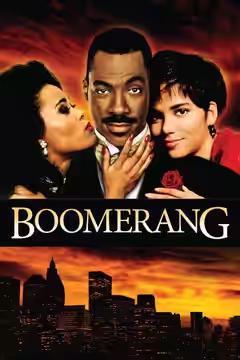
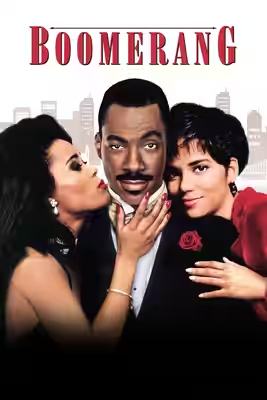
A role-reversal comedy with a sharp premise and no stomach for it. Murphy is funny as the player played, the supporting cast runs off with every scene it is handed, and the film goes soft the moment its hero might actually have to lose.
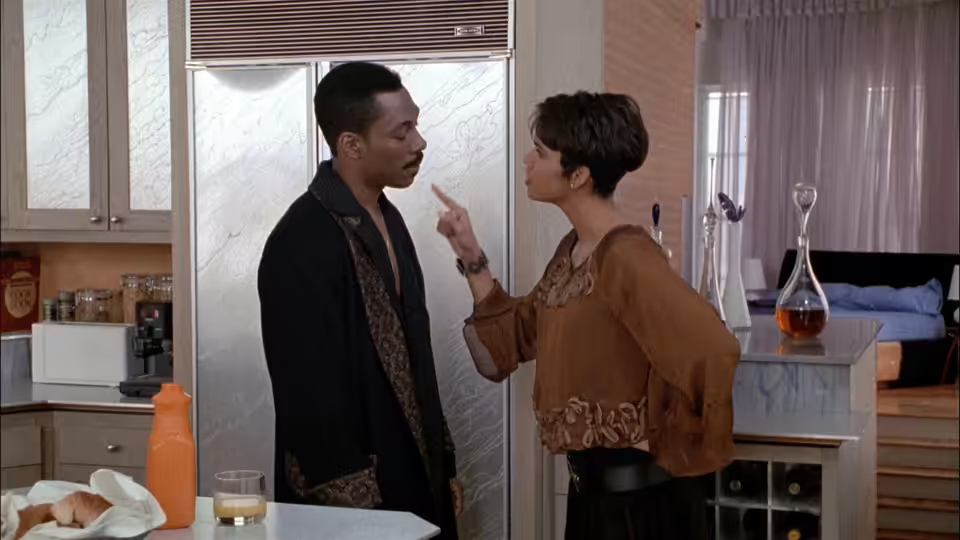
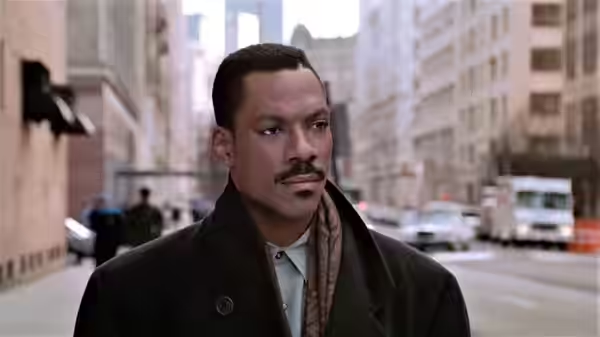
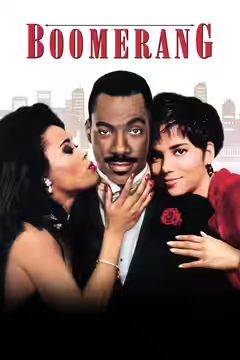
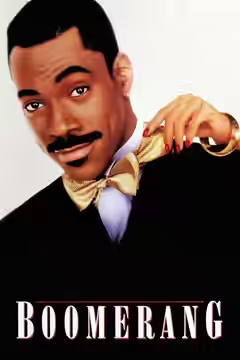
Marcus Graham (Eddie Murphy) is an ad-man, and he runs his private life on the same principles as his work: identify the product, close the deal, move on. Reginald Hudlin’s film sets out to punish him for it. Jacqueline Broyer (Robin Givens) arrives above him, and Jacqueline turns out to treat men exactly as Marcus treats women. It is a good idea for a comedy, and the film knows it, which is why the trailer gives it away in a sentence.
The idea lasts about twenty minutes. Barry W. Blaustein and David Sheffield’s script has Marcus kept waiting by a telephone, dismissed in a hotel room and talked over in meetings, and Murphy, who supplied the story, is funny playing it: the grin stays fixed while the eyes start to panic. He has never been more watchable than when he is losing. Then the film loses its nerve. It cannot bear to have Murphy be the villain of his own picture for long, so it hands him Angela Lewis (Halle Berry), who is kind and patient and plainly written as the prize, and a comedy about a man getting what he deserves becomes a romance about a man getting what he wants.
The harshest reviews called this a cop-out, and they have a point. Givens is sharp and unapologetic as Jacqueline, a woman who enjoys her work and her evenings and sees no reason to confuse the two, and the film spends its second half quietly deciding she is the problem. Berry does what she can with a part that is mostly reaction shots. The scenes between the two women are few, and the film has no interest in what they might make of each other.
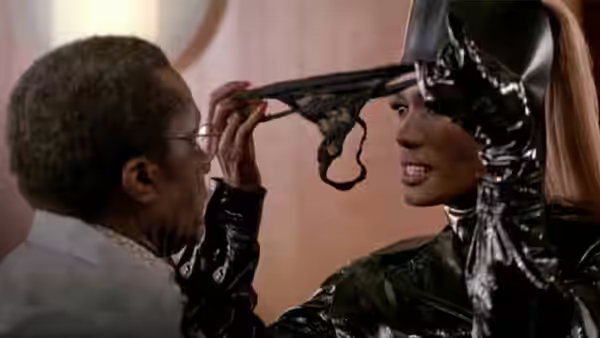
What keeps it upright is everybody else. Eartha Kitt’s Lady Eloise purrs at Marcus across a dinner table as if he were pudding. Grace Jones’s Strangé storms through her scenes shouting about her own genitals while Geoffrey Holder’s Nelson waves his arms and approves of everything. David Alan Grier’s Gerard is the nervous friend, Martin Lawrence’s Tyler the one who finds a conspiracy in every room, Chris Rock’s Bony T the voice from the post room. None of them has more than a few minutes and all of them use the time.
We laughed hardest, and most helplessly, at the dinner with the parents, a scene of a couple of minutes in which John Witherspoon’s Mr. Jackson is handed a table and simply runs off with it, talking over everyone and pleased with every word. It has nothing to do with the plot and it is the funniest thing in the film. That is a compliment to Witherspoon and a judgement on the rest.
The craft is glossy and of its moment. Woody Omens shoots the offices in glass and brass and the apartments in low lamplight, and Jane Musky’s production design gives Marcus a flat of black leather and chrome that tells you who he is before he opens his mouth. Francine Jamison-Tanchuck’s costumes do a good deal of the characterisation the script does not bother with, the elders in colours the young men would never risk. Marcus Miller’s score is slap bass and saxophone over everything, including conversations that did not need it. Three editors are credited, Earl Watson, Michael Jablow and John Carter, and the 117 minutes still carry a slack half hour in the middle, where Marcus mopes and the film mopes with him.
Hudlin’s House Party, two years earlier, was small, fast and knew exactly how long a joke should run. This is bigger, slower and nervous of its own star. Murphy had just come off Coming to America, where he was allowed to be ridiculous, and here he is allowed to be ridiculous only until it might cost him anything.
Worth an evening if you want Murphy on his back foot and a supporting cast doing cartwheels around him. Switch off when Angela starts being understanding; the film already has.