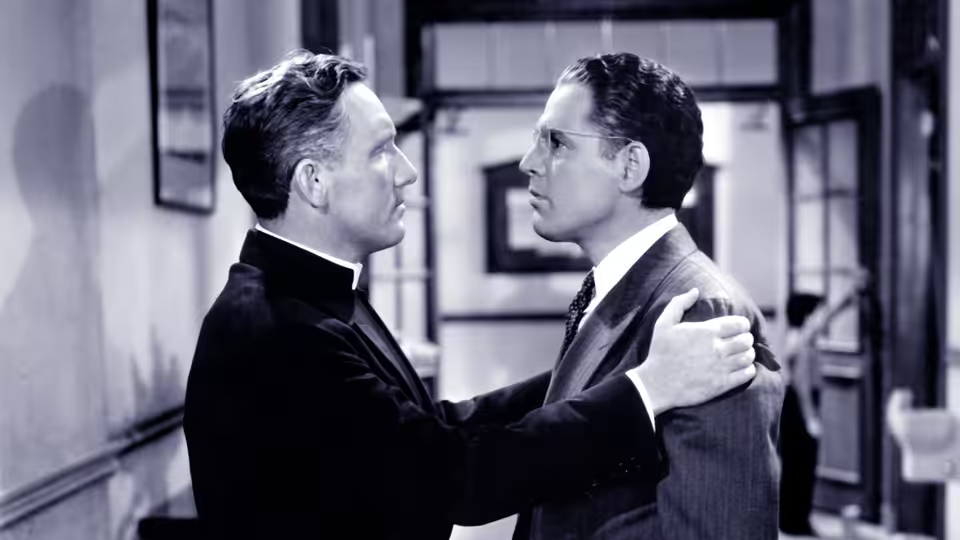
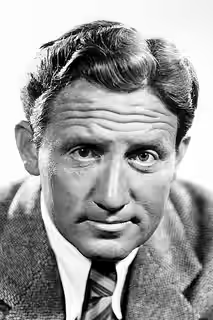
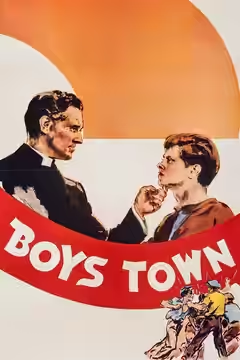
Spencer Tracy plays Father Flanagan with a patience that never tips into piety, and he is the reason to watch. Around him, Norman Taurog’s film about the real home for wayward boys is so eager to admire its subject that it forgets to doubt it.
Boys Town was a real place when this film was made and it still is, and that is the first thing to know about Norman Taurog’s film. It is a portrait of Father Flanagan’s home for homeless and delinquent boys outside Omaha, and it takes the founder’s creed, that no boy is bad if given a chance, as something to be demonstrated rather than tested. It demonstrates it in 96 minutes and never once lets a boy fail. Spencer Tracy is so good that for long stretches this does not matter. When he leaves the screen, it does.
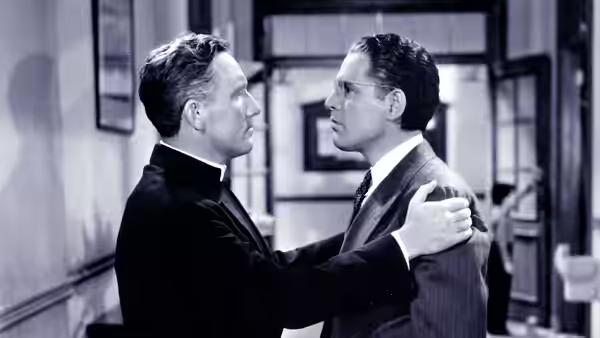
Tracy plays the priest by doing less than anyone around him. In the opening scene he sits in a cell with a condemned man, Dan Farrow (Leslie Fenton), and Farrow tells him that one friend at the right age would have kept him out of there. Sidney Wagner keeps the camera close on both men, and the speech lands not on Fenton, who is working hard, but on Tracy, who is not. We were caught off guard by it. We had settled in for a sermon and got a man deciding something in silence, and the film’s whole case is made in that minute.
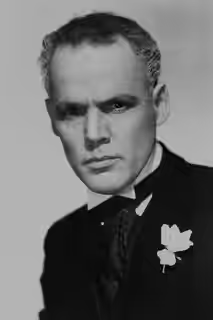
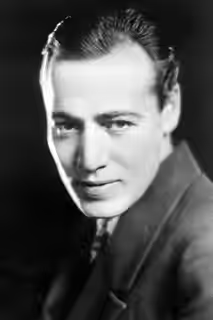
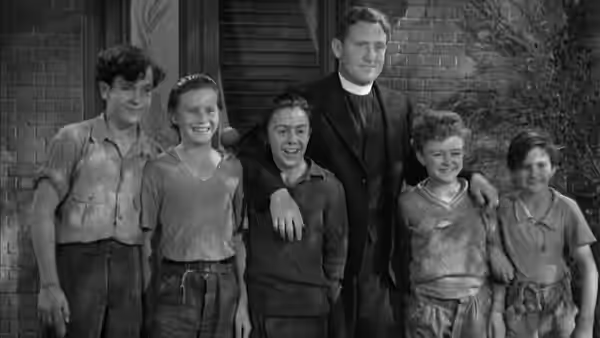
Dore Schary and John Meehan’s screenplay, from a story by Schary and Eleanore Griffin, then hurries. Flanagan begs money from Dave Morris (Henry Hull), a pawnbroker who complains about every dollar and hands it over anyway, and Hull’s grumbling is the film’s best running joke. Elmo Veron runs the years past in a montage of foundations and doorways, and soon there is a town, with a chapel, a school, dormitories and a mayor elected by the boys. Wagner shoots the finished place in wide, bright, tidy frames, every lawn mown, every shirt tucked in. It looks like the brochure.
Mickey Rooney arrives around the halfway mark as Whitey Marsh, kid brother of a convicted gangster, Joe Marsh (Edward Norris), and the film changes gear. Rooney plays him with a cigar in his teeth, a hat pushed back and a line of patter that never stops, and for twenty minutes it is funny to watch him try to sneer at people who will not be sneered at. Then it goes on. Rooney has one setting, and Taurog lets him keep it long after the boy underneath should have started to show. When Whitey does change, the script hands him a crisis so large that nobody could stay hard through it, and asks us to take the rest on trust.
Bobs Watson’s Pee Wee, the smallest boy, adores Whitey on sight and is placed in front of the camera whenever the film wants us to cry. Edward Ward’s score joins in, with the boys’ choir swelling under the chapel scenes and strings under everything else. We will admit that we sniffed once, and were slightly cross with ourselves, because the film had not earned it; it had pointed a small child at us and waited. Tracy, in the same scenes, does nothing at all, and is the reason the sniff came.
Every institution has boys it fails, and this film does not have one. Tony Ponessa (Gene Reynolds), who gets about on a crutch, is there to be brave; Skinny (Martin Spellman) is there to be loyal; the judge (Addison Richards) sends Flanagan his hard cases and is glad to see the back of them; the bishop (Minor Watson) worries about the debts and is reassured. Nobody asks whether a town run by a priest and policed by its own children might have a dark corner. The film is not interested in the question, and after a while we were.
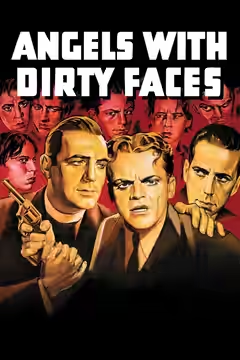
Against the other priest-and-hoodlum films of 1938, this is the gentle one. Angels with Dirty Faces (1938) let its boys stay dangerous and made its priest work for them; here the danger is a costume Whitey takes off. It is still worth an evening for Tracy, for Hull, and for those first ten minutes, which are as plain and serious as anything American cinema made that decade. Bring a handkerchief, and know that the film will be watching to see whether you use it.