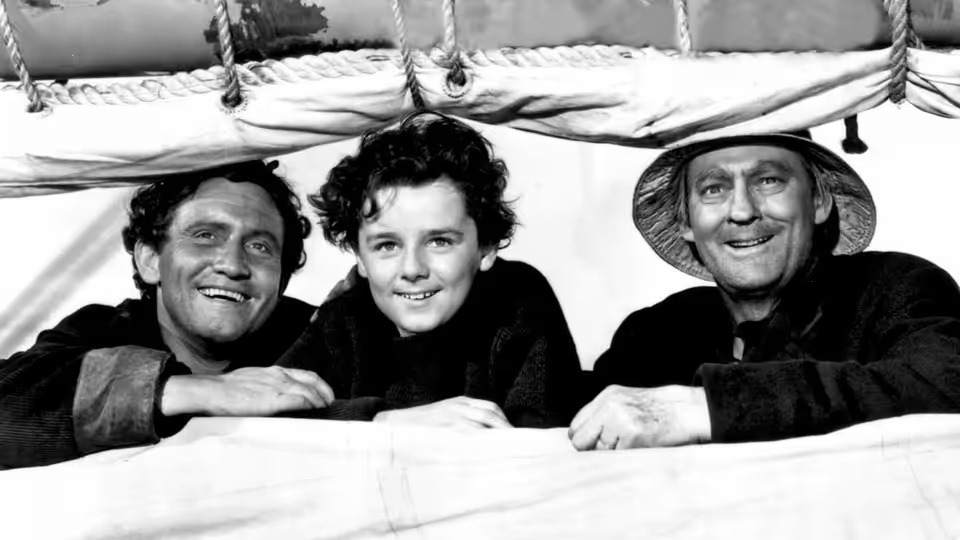
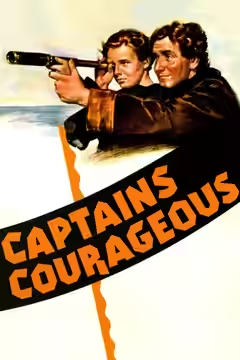
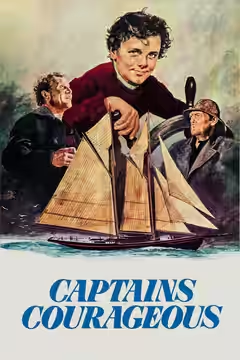
Victor Fleming’s film of Kipling’s novel puts a spoilt rich boy on a Gloucester fishing schooner and lets the sea and Spencer Tracy sort him out. It is sentimental, it knows it, and it earns most of what it asks for.
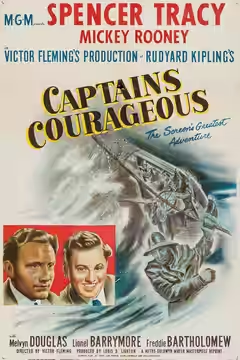
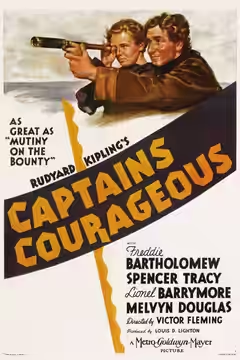
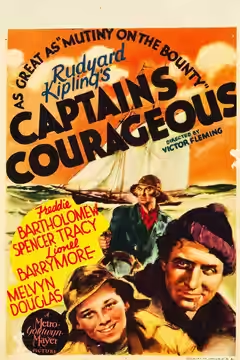
The poster called it as great as Mutiny on the Bounty, which is the sort of thing posters said in 1937. For once the boast is close to true. Victor Fleming’s film of Rudyard Kipling’s novel, from a screenplay credited to Marc Connelly, John Lee Mahin, Dale Van Every and Tom Kilpatrick, is a big studio picture about a small moral: a boy who has never had to do anything is made to do something. It is sentimental from the first reel to the last, and it is honest about how men on a working boat talk and behave, and the second keeps the first from going soft.
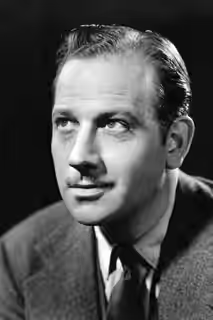
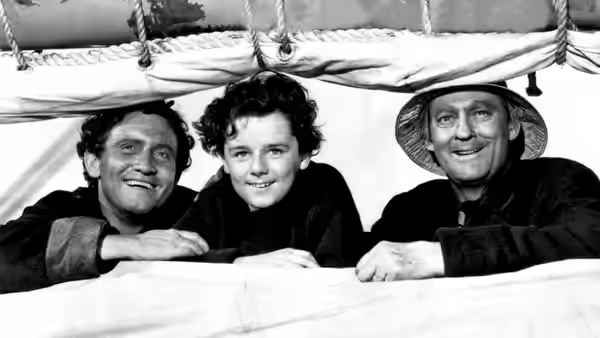
Freddie Bartholomew plays Harvey properly, which means unpleasantly. For the first twenty minutes he lies, sulks, threatens the crew with his father’s lawyers and tries to buy his way ashore, and Bartholomew does not soften any of it. The film needs a boy you would not want in your house, and gets one. Melvyn Douglas, as the father who signs cheques instead of turning up, is good in the little he is given. He is given little.
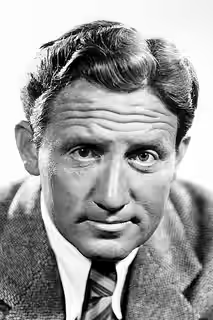
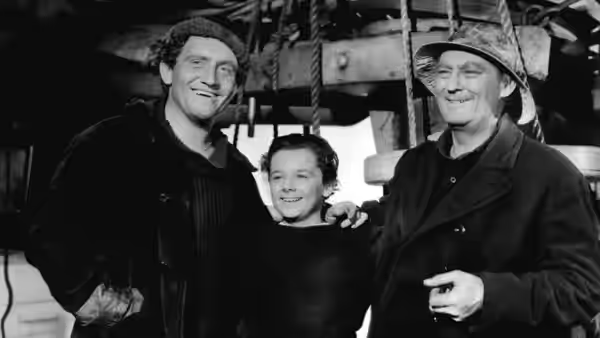
Then there is Spencer Tracy. Manuel Fidello has tight curls, a rolling accent from somewhere between Lisbon and a music hall, and a hurdy-gurdy he plays badly while singing “Yeah Ho, Little Fish”. For ten minutes we winced. Then we stopped, because Tracy plays the man as someone who likes his boat, his catch and this wretched boy, in roughly that order, and never asks us to find him lovable. When Manuel tells Harvey about his dead father, whom he still talks to at night over the side of the dory, and Harvey does not know what to say, we found we did not either. It is the scene we would use to explain the film to a stranger.
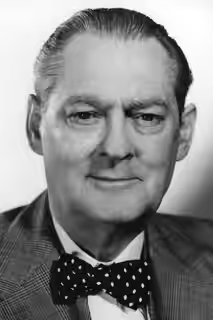
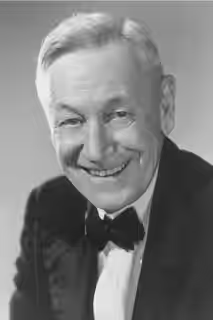
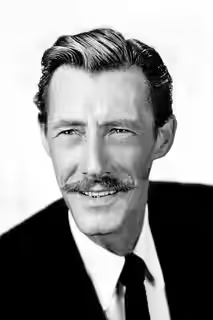
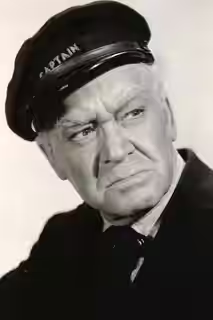
Lionel Barrymore’s Disko Troop runs the We’re Here like a ledger: a boy who eats will fish. Barrymore keeps the gruffness low and does not perform it. Mickey Rooney’s Dan is the boat’s other boy, the one who has never been asked whether he wants to work, and Rooney plays the cheerfulness of someone who has not noticed the question. John Carradine’s Long Jack takes an immediate dislike to Harvey and is right to. Charley Grapewin’s Uncle Salters mutters at the edge of most scenes.
Harold Rosson shot a good deal of it on real schooners under sail, and it shows. Dories go out into fog, the fleet sits on grey water with nothing behind it but more grey water, and men gut fish on a deck that is moving. There are stretches where the plot stops and the film just watches men work, and those were the stretches we liked best. The join with the studio tank is visible: rear projection behind Tracy in the dory has that lit-from-the-wrong-side look, and one storm is plainly a model in a bath. Elmo Veron cuts the fishing on the swing of a line and is at his slackest whenever the film goes back to land. Franz Waxman’s score stays out of the way for long stretches, then leans on Manuel’s tune whenever it wants us to feel something.
The faults are the ones you would guess. The scenes ashore, with Douglas in offices and hotel rooms, stop the film every time. The second half takes a turn we will not describe, and after it the film pushes hard for twenty minutes, with the music up and the boy’s face held longer than it needs to be. That is where we noticed the film’s hand. We minded less than we expected. At 115 minutes it could lose ten.
Fleming made The Wizard of Oz and Gone with the Wind two years later, and neither has a scene as unshowy as Manuel rowing in the fog. Louis D. Lighton’s production has the money to build a liner and a schooner and the sense to keep the camera on the schooner. Among films that make a rotten child good through hardship, and there are many, this one is unusual in letting the hardship be dull, wet and repetitive.
Watch it with a child of about ten if you have one to hand. They will be restless through the school and the liner and not at all once the dory hits the water. Keep a handkerchief within reach. You will know exactly what the film is doing to you and hand it over anyway.