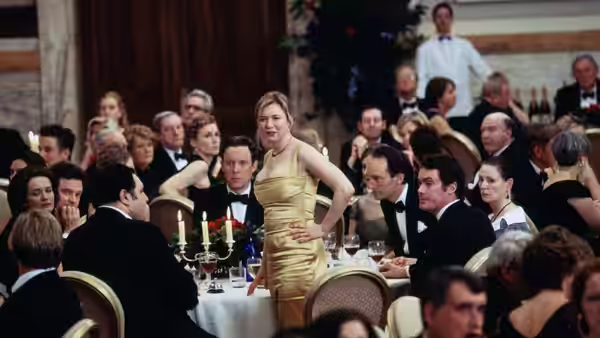
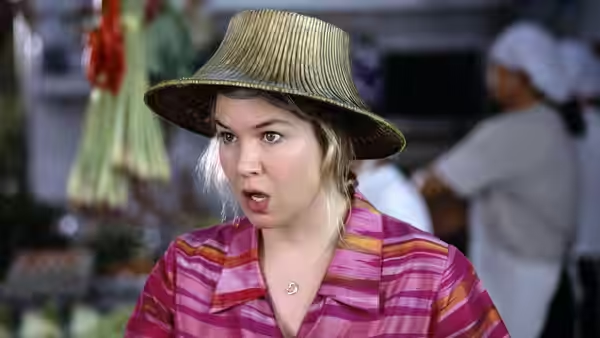
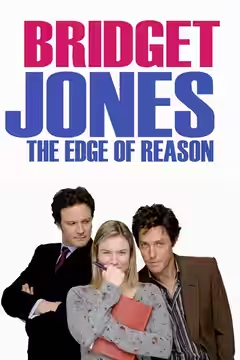
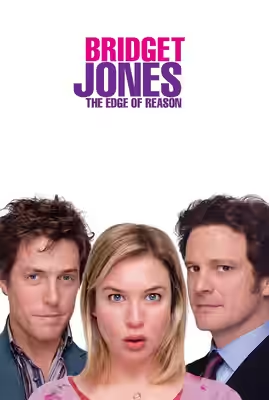
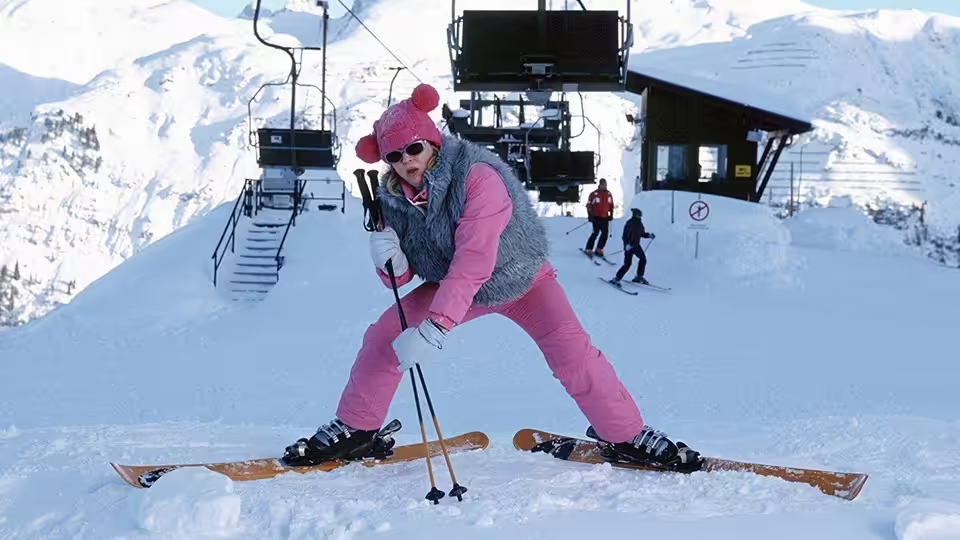
Bridget Jones (Renée Zellweger) poses on skis in pink clothes outside a snowy mountain lodge
Film review

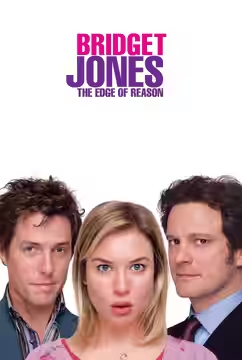
Bridget Jones: The Edge of Reason

2004 · Directed by Beeban Kidron · 1h 48m

In a sentenceHugh Grant makes bad company look preferable to another evening of Bridget worrying

Bridget (Renée Zellweger) faces more relationship trouble as Mark (Colin Firth) and Daniel (Hugh Grant) return to her romantic life. She wants to feel secure about love, but her own doubts make that difficult, while her renewed attraction to Daniel complicates matters. The comedy follows Bridget through the anxieties of keeping a relationship going when reassurance never quite lasts. Mark and Daniel offer different prospects, and Bridget’s tendency to question herself leaves her struggling to decide which feelings she should trust.

Fi1m review

Renée Zellweger and Hugh Grant provide scattered laughs, but this sequel gives Bridget too little to do beyond doubting herself again. The familiar company helps; the recycled romantic troubles make it difficult to recommend.

Bridget Jones: The Edge of Reason is an intermittently funny sequel that asks its cast to compensate for a shortage of fresh writing. Beeban Kidron keeps the romantic comedy agreeable, but too much depends on Bridget getting herself into another muddle. The appeal is easy to understand: spending more time with a character whose romantic anxieties have not been tidied away. The trouble is that those anxieties seldom lead to anything we have not already been asked to laugh at.

The screenplay credits Adam Brooks, Andrew Davies, Helen Fielding and Richard Curtis, but the writing keeps returning to the same limited source of trouble: Bridget’s lack of confidence. A passing worry can be funny, particularly when the audience recognises how foolish it is. Repeated often enough, it starts to make the character seem incapable of learning anything. We grew tired of her self-doubt because the film keeps using it to restart the romantic difficulties, rather than allowing her a thought that might change them.

Renée Zellweger works hard to stop that happening, and her comic energy deserves better material. She makes Bridget’s eagerness for affection understandable even when the writing makes her behaviour exasperating. Colin Firth, as Mark, offers a steadier presence, but the romance needs more than a contrast between her agitation and his composure. Both actors retain their appeal through scenes that give them little new to play.

Hugh Grant fares better as Daniel because his dry delivery gives even familiar material a little sting. We laughed at the ease with which he makes bad behaviour sound reasonable. The pleasure comes from the actor’s timing, with just enough charm to explain why Bridget might be tempted again. The comedy becomes much less effortful when someone is allowed to enjoy being objectionable, instead of being made to suffer for being awkward.

Adrian Biddle’s cinematography makes the locations look inviting, and Gemma Jackson’s production design contributes to the comfortable finish. The surroundings are pleasant to spend time in, which helps a film dependent on our willingness to indulge its characters. But that polish does little to sharpen the jokes or make the romantic discomfort more interesting. Beeban Kidron is better at keeping the performers likeable than at finding a fresh way to stage their troubles.

Greg Hayden’s editing gives individual comic passages momentum, yet the film still feels stretched at 108 minutes because the story keeps circling the same concerns. The music credited to Harry Gregson-Williams and Stuart Roslyn does little to distinguish one bout of romantic anxiety from the next. Familiar songs are more conspicuous, sometimes arriving where a scene needs to find its own feeling. The soundtrack keeps offering reassurance that we are having the expected romantic evening.

A romantic sequel need not discard everything people liked, but it does need to give familiar characters something fresh to do. Here the cast supply enough scattered amusement to prevent a complete waste of an evening, while the writing does little to justify asking them back. Those already fond of Bridget may forgive that more readily than we were able to. Return only if spending time with this cast matters more than seeing Bridget given a decent new story.
Critical consensus AI synthesised

48
Positive
1
Mixed
5
Negative
4

The reviews lean mixed to negative, with praise clustering around the returning cast rather than the sequel’s story. Renée Zellweger’s comic performance and Hugh Grant’s delivery provide the most consistent pleasures, even for critics who find the material weak. The more receptive reviews enjoy the familiar romance and find enough laughs to forgive the repetition. Few, though, suggest that the sequel gives Bridget much fresh ground to cover.

The divide is over how far that familiarity remains enjoyable. Some find a safe but entertaining reprise; others see stale jokes, thin plotting and a heroine whose insecurity has become exhausting. Eye for Film offers the clearest support, praising the craft, physical comedy and unapologetic romance. Slant Magazine objects more sharply to the comedy’s treatment of Thai women, finding it politically callous. The spread is broad, but enthusiasm is scarce.

Screen Daily
28 October 2004 · Geoffrey Macnab
64*

The accessible page identifies this as a review, but its critical verdict is unavailable. The paywall shell does not reveal what the critic praised or criticized.

Read the full review →
Time Out
· DC
64*

The available text gives no clear verdict, noting only that the critic cannot fully compare the sequel with the original. It does not reveal a specific point of praise or complaint.

Read the full review →
Radio Times
★★★ · Brian Pendreigh
60

Pendreigh suggests the sequel plays it safe by sticking closely to the original’s formula. The excerpt highlights Bridget’s relationship troubles and renewed attraction to Daniel, but offers no specific praise.

Read the full review →
The Guardian
25 February 2005 · Rob Mackie
60*

Mackie finds the sequel unnecessary but quite entertaining, with its appeal rooted in indulgence of familiar romantic pleasures. He praises the casting and a nice twist, but criticizes the haphazard use of familiar music.

Read the full review →
Total Film
12 November 2004 · ★★★ · Total Film
60

The critic finds the sequel funny but overfamiliar and thinly stretched. Zellweger’s charisma and Grant’s comic performance are singled out for praise, while the Thai-jail interlude draws criticism.

Read the full review →
Empire
1 January 2000 · Caroline Westbrook
35*

Westbrook finds the sequel a hit-and-miss retread that is often dragged down by weak plotting and familiar jokes. She praises Renée Zellweger’s comic performance and Hugh Grant’s return as a villain, while noting the film’s attractive locations.

Read the full review →

Straight answers AI written, from our review

Is Bridget Jones: The Edge of Reason worth watching?
Bridget Jones: The Edge of Reason is difficult to recommend beyond existing fans of its cast; we score it 48 out of 100. Renée Zellweger’s comic energy and Hugh Grant’s dry timing provide scattered laughs, but Bridget’s repeated self-doubt leaves the romance feeling recycled and the film stretched.
How long is Bridget Jones: The Edge of Reason, and what is it rated?
Bridget Jones: The Edge of Reason runs 1h 48m. It is a comedy and romance film.
Where can I watch Bridget Jones: The Edge of Reason in Japan?
Bridget Jones: The Edge of Reason is streaming on Netflix in Japan, and it is also available to rent from Amazon Prime Video from ¥330. Availability is checked daily; the links above go straight to each service.
How violent or frightening is Bridget Jones: The Edge of Reason, and is it suitable for children?
Bridget Jones: The Edge of Reason carries a UK 15 certificate, making it unsuitable for children under 15. Its story centres on romantic anxiety, but we cannot infer specific levels of violence or frightening material from the certificate alone, or promise that it suits every older teenager.
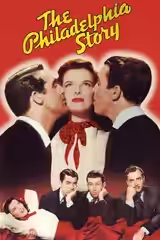
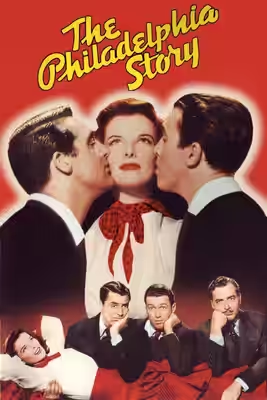
How does Bridget Jones: The Edge of Reason compare to The Philadelphia Story?
Bridget Jones: The Edge of Reason is the weaker choice beside The Philadelphia Story, which we recommend for sharper dialogue and romantic characters capable of surprising one another. Bridget’s sequel offers familiar company and scattered laughs; the society comedy offers more rewarding exchanges, though its treatment of Tracy Lord can make forgiveness sound uncomfortably like a duty.
Is Bridget Jones: The Edge of Reason based on a true story or a book?
Bridget Jones: The Edge of Reason is adapted from a novel by Helen Fielding, rather than presented as a true story. We find its repeated romantic doubts tiring as screen comedy, but that judgement does not establish how faithfully it follows the book or whether reading it first adds anything.
What should I watch after Bridget Jones: The Edge of Reason?
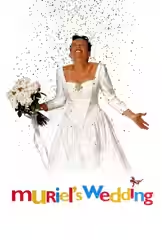
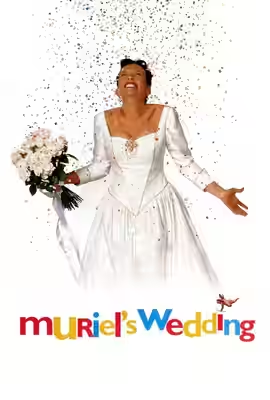
After Bridget Jones: The Edge of Reason, try The Philadelphia Story (1940, Fi1m 84): Romantic indecision gets sharper dialogue and characters capable of surprising one another. Then Muriel's Wedding (1994, Fi1m 81): Another awkward romantic dreamer, treated with more bite and greater tenderness.

Cast

If you liked this, try…

  1. The Philadelphia Story (1940, Fi1m 84)Romantic indecision gets sharper dialogue and characters capable of surprising one another.

  2. Muriel's Wedding (1994, Fi1m 81)Another awkward romantic dreamer, treated with more bite and greater tenderness.

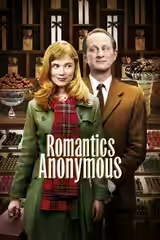
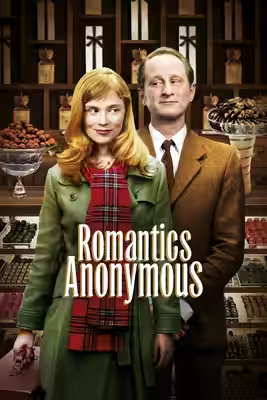
  3. Romantics Anonymous (2010) · not reviewed yetFor romantic anxiety handled gently, with room for both people to be ridiculous.

  4. Man Up (2015) · not reviewed yetBritish romantic embarrassment with enough verbal sparring to keep the evening moving.

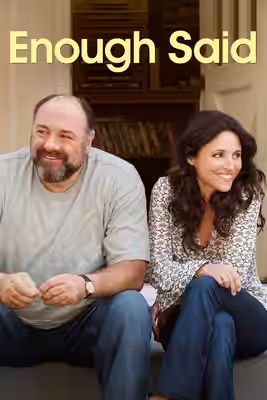
  5. Enough Said (2013) · not reviewed yetSelf-doubt complicates adult courtship without making either person an exhausting fool.

Free account

Know what to watch tonight

Two lists that know where things are streaming, collections you can share, your own score beside ours, and Discover that remembers what you have seen.

  • Want to see, sorted by what is streaming now
  • Seen, with your score out of ten
  • No adverts, ever