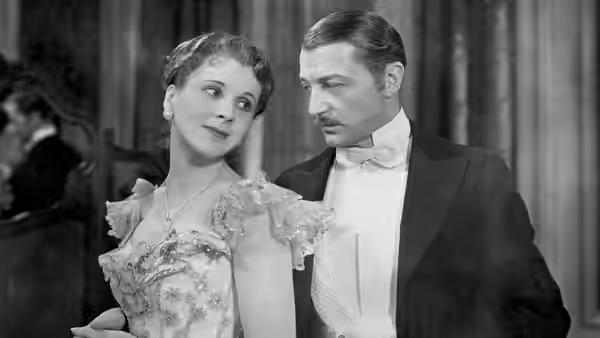
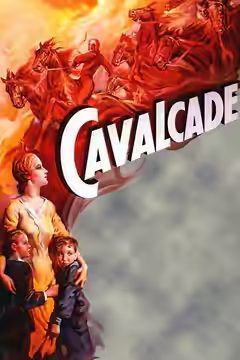
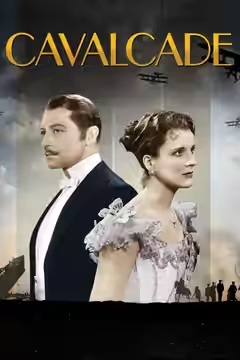
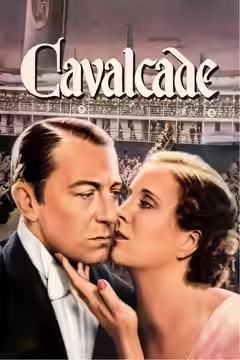
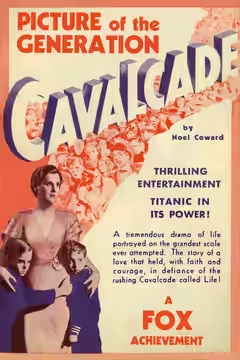
Frank Lloyd’s screen version of Noël Coward’s pageant is handsomely built and fatally polite. Diana Wynyard holds it together with her face; around her the film salutes the flag, weeps on cue and never asks a hard question of either.
Frank Lloyd has taken Noël Coward’s stage pageant and given it a studio’s worth of streets, docks and drawing rooms. Cavalcade follows one London family, the Marryots, and the couple who serve them, the Bridges, from New Year’s Eve 1899 to New Year’s Eve 1933, and it arranges for every public calamity of those years to pass in front of the same window. It is handsome, sincere and expensively dressed. It is also, for most of its 112 minutes, dead on its feet. That is the verdict; what follows is the reasons.
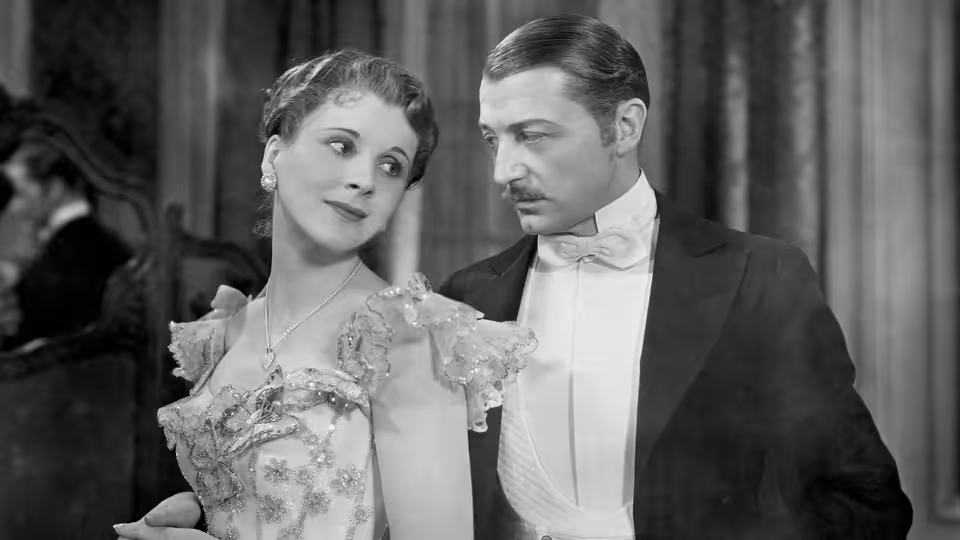
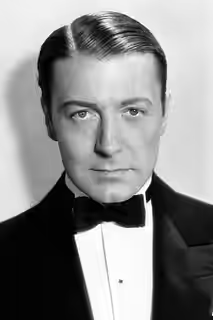
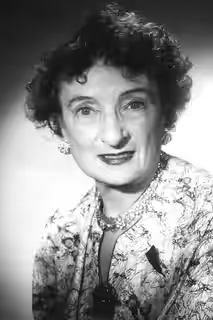
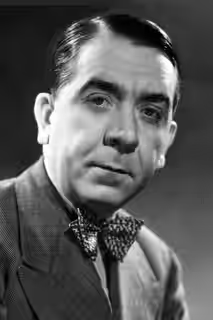
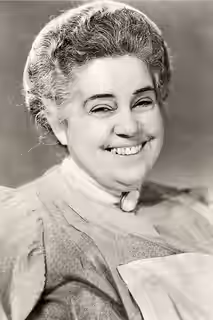
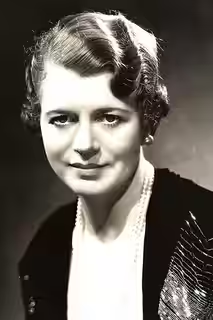
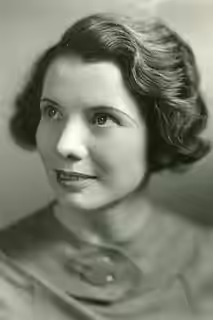
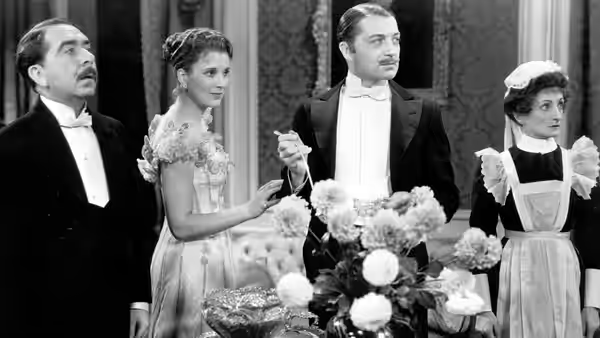
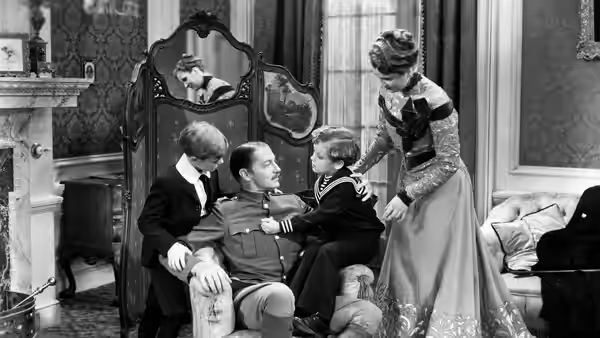
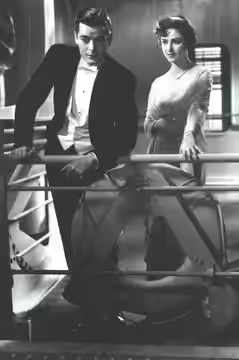
Diana Wynyard is the reason to watch. She plays Jane Marryot from young wife to grandmother’s age with little help from the make-up department and none from the script, which hands her the same speech about waiting three or four times over. She takes bad news standing up, her face going still rather than crumpling, and Lloyd is wise enough to hold on it. Clive Brook’s Robert is a decent chap with a moustache and a flag, which is all he is asked to be. Una O’Connor, as Ellen Bridges, has the only live comedy in the film and plays it with a sniff, and Herbert Mundin gives Alfred Bridges the one life the script lets go somewhere it has not already approved.
The set pieces are the studio showing what it can do. Ernest Palmer puts the camera high above a dock packed with extras as a troopship pulls out for South Africa, and the wives on the quay become a single grey mass with a few white handkerchiefs in it. Queen Victoria’s funeral is watched from a balcony, the family in black at the rail and the procession moving slowly through the street below. Margaret Clancey handles the war years as a montage, marching feet, the dates laid over them, crosses multiplying, and it is the one stretch where the film moves faster than a stage could. The four credited composers, Louis De Francesco, Arthur Lange, Peter Brunelli and John Stepan Zamecnik, lean on marches and hymns, so every public event arrives with a band. Earl Luick’s costumes take the women from bustles to dropped waists and do most of the work of telling us what year it is.
Between the set pieces the film stands still. Reginald Berkeley’s screenplay keeps the shape of Coward’s play, so a scene starts when someone comes through a door and ends when someone leaves, and people stand facing us and speak in turn. History arrives on a schedule: a date on a card, a disaster, a drawing room absorbing it. The servants are loved so long as they know their place, and when Ursula Jeans’s Fanny Bridges climbs out of it the film’s manners cool towards her. Robert makes a speech about England and what it stands for, and the film plainly agrees with every word, which is its right, but nobody in the room is allowed to answer him.
We were moved, once, and against our will. Early on, at the quay, Jane and Ellen stand side by side watching the ship, one in furs and one in a shawl, and for the length of the shot nobody is anybody’s employer. We felt it in the throat, and then we felt the film notice that we had, and reach for the band. By the middle hour we were bored, because every scene had the same shape, and then we were irritated, because so much money and care had gone into keeping it that way.
Set against what came after, it looks older than 1933. Powell and Pressburger’s The Life and Death of Colonel Blimp (1943) covers forty years of the same England and argues with itself the whole way; this film never does. Coward’s own Brief Encounter (1945) found more of the country in a station buffet than this finds in a Boer War, a royal funeral and a war to end wars. The trouble is not that Cavalcade is old. It is that it is polite about everything, including death.
See it for Wynyard, and as a record of what a Hollywood studio believed England to be, which is a subject of some interest in itself. It carries a U certificate, and the certificate is exact: there is nothing in it to alarm anyone, and that is rather the problem.