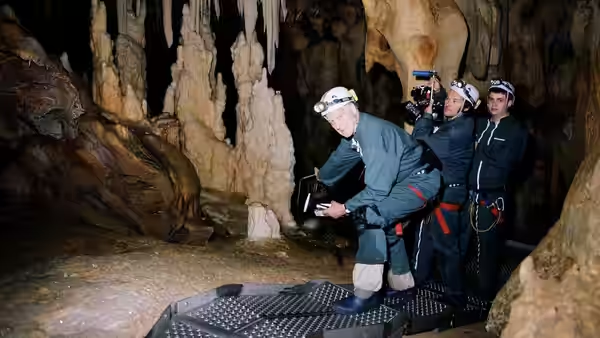
Herzog takes a 3D camera into a cave nobody else may enter and comes back with the closest thing to a time machine the cinema has managed. The film around the paintings is looser, and the score will not let a silence alone.
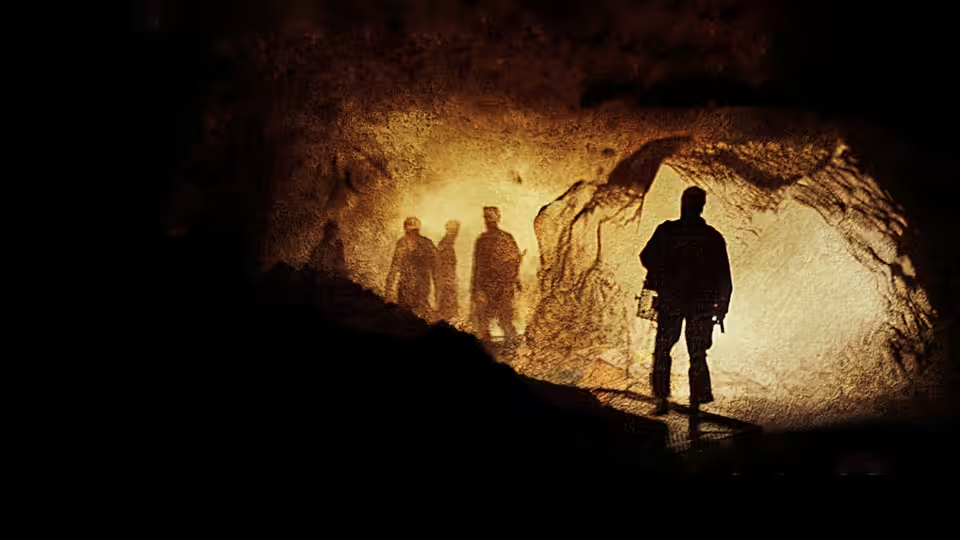
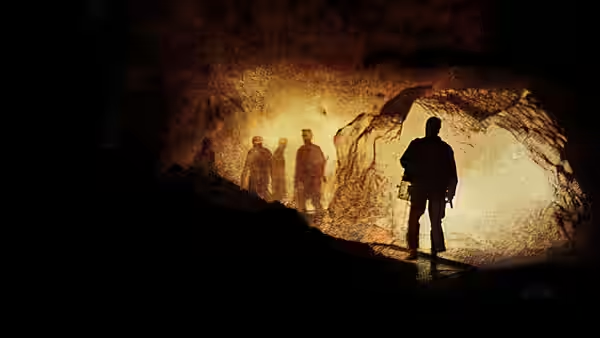
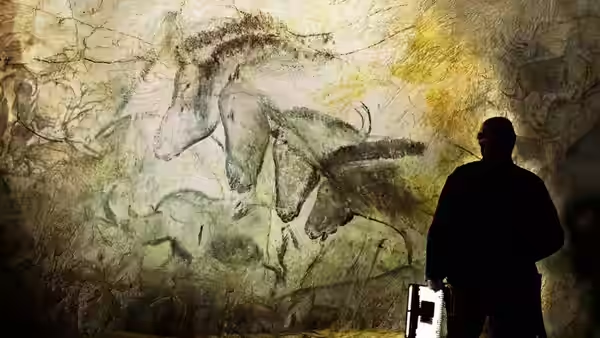
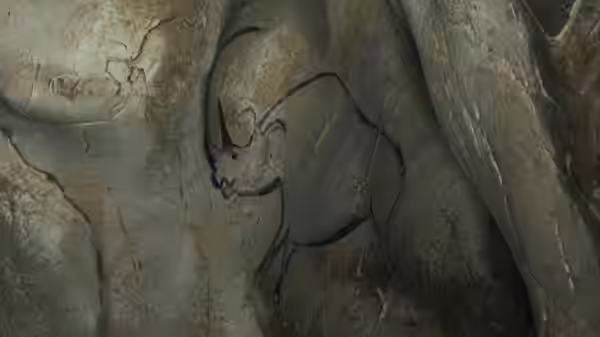
Werner Herzog has taken a 3D camera into a cave closed to everyone else and come back with forty minutes of the most remarkable footage we have seen in the format. The Chauvet cave, in the Ardèche gorge in southern France, was found in 1994 and sealed almost at once. Its walls carry horses, lions, rhinoceroses and bears drawn around 32,000 years ago, and a rockfall sealed it some 20,000 years before anyone found it, so bear skulls and charcoal still lie where they fell. Roughly half of its 90 minutes is the cave, and that half is why you should see it.
The other half is Herzog being Herzog. He interviews the scientists, asks them whether the painters dreamed, and meets a perfumer who sniffs the hillside for hidden caves. Some of it is wonderful, some is padding, and Ernst Reijseger’s score sits on top of nearly all of it. The film is good, often better than good. It would be better still with the music off for ten minutes.
Peter Zeitlinger’s camera does something we had not seen 3D do. The paintings sit on bulges and folds of limestone, and the artists used the rock: a horse’s neck runs along a ridge, a lion’s shoulder sits on a swelling and seems to turn away from you. Flat, this is a curiosity you have to be told about. In 3D you simply see it, and when Zeitlinger moves a lamp across the surface the shadows travel and the animals seem to shift. Herzog suggests the painters worked by firelight and meant them to move; the footage bears him out.
We had expected to be interested and were instead moved, and it was the panel of horses that did it: four heads, one above the other, mouths open, drawn with a confidence no first attempt could have. Somebody stood where the walkway now runs and knew exactly what they were doing, and then the door shut for 20,000 years. Herzog holds on it and says nothing.
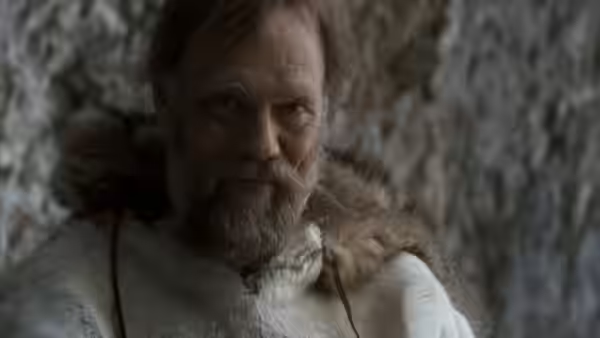
The scientists are good company. Dominique Baffier, who looks after the cave, and Jean-Michel Geneste, who leads the research, talk about it like people who know they are lucky. Jean Clottes gets closest to what Herzog is after. Wulf Hein turns up in reindeer skins with a bone flute and plays a tune on it that no ice-age hunter would recognise.
The trouble is the surround. Reijseger’s score, cello and voices and organ, is lovely for a minute and then it is on every shot. Herzog asks the crew for silence so we can hear the cave, and the film lays a heartbeat under the quiet, which it should not have done. The editors, Maya Hawke and Joe Bini, return to the same walls several times; by the third pass over the lions we knew the shot. The 3D is dark in the wider views.
Set against his own documentaries this is tamer than Grizzly Man (2005) or Encounters at the End of the World (2007), because the cave sets the rules and he cannot break them. That suits him. He is at his best when something enormous and indifferent is in front of him and all he can do is look. Here it is a wall, and it is 32,000 years old, and he looks.
See it in 3D; the point of the film is depth, and flat, at home, it becomes a slideshow of good photographs with a cello underneath. Certificate U, 90 minutes, and a postscript, set some way from the cave, that you will either love or want cut. We wanted it cut.