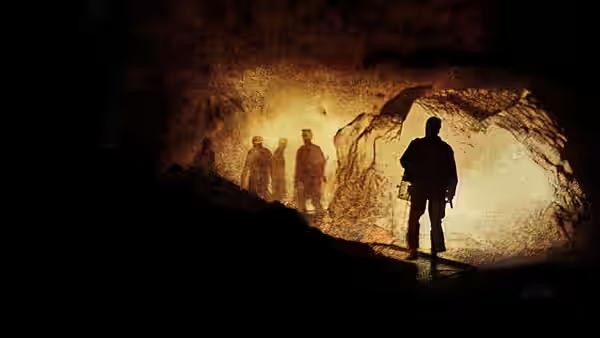
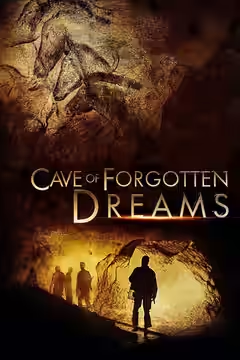
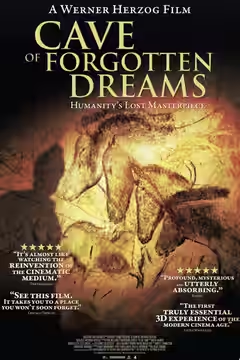
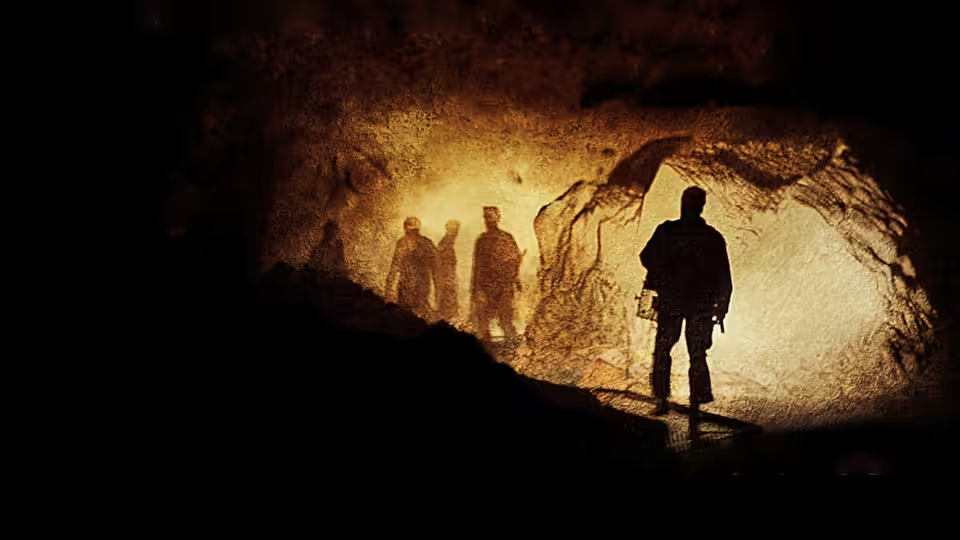
Silhouetted visitors stand inside a cave beside a brightly lit passage
Film review

Cave of Forgotten Dreams

2010 · Directed by Werner Herzog · 1h 30m

In a sentenceThirty-two-thousand-year-old lions in 3D, a man in reindeer skins with a bone flute, and Herzog asking the rock what it dreams

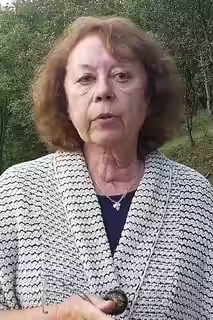
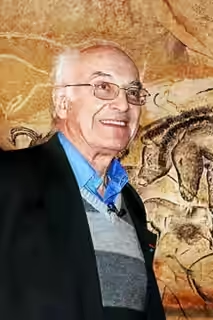
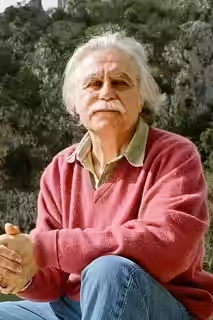
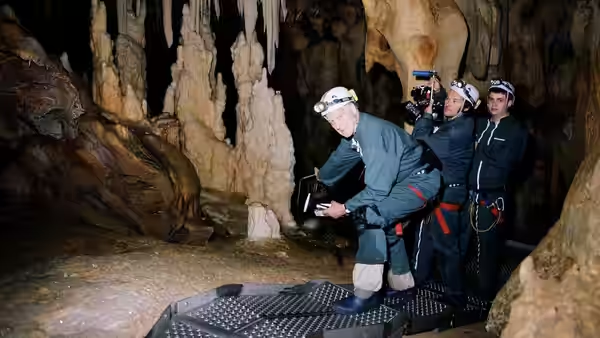
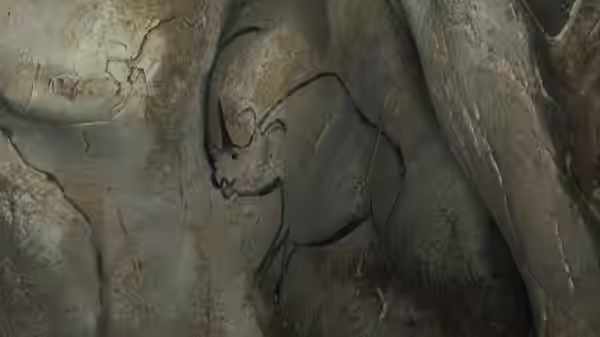
Southern France, the Ardèche gorge. In 1994 three cavers found a way into a limestone cave near the Pont d’Arc that a rockfall had sealed some 20,000 years earlier. Inside were hundreds of paintings, horses, lions, rhinoceroses and bears, around 32,000 years old, and the authorities shut the door on them almost at once. Werner Herzog is let in with a small crew and a 3D camera, for a few hours at a time, and may not step off a narrow metal walkway. He films what he can and talks to the people who study the place: Dominique Baffier, who looks after the cave; Jean Clottes; Jean-Michel Geneste, who leads the research; and Michel Philippe, who knows the cave bears whose skulls still lie on the floor.

Plays from YouTube when you press play; nothing loads from them until then.

Fi1m review

Herzog takes a 3D camera into a cave nobody else may enter and comes back with the closest thing to a time machine the cinema has managed. The film around the paintings is looser, and the score will not let a silence alone.

Werner Herzog has taken a 3D camera into a cave closed to everyone else and come back with forty minutes of the most remarkable footage we have seen in the format. The Chauvet cave, in the Ardèche gorge in southern France, was found in 1994 and sealed almost at once. Its walls carry horses, lions, rhinoceroses and bears drawn around 32,000 years ago, and a rockfall sealed it some 20,000 years before anyone found it, so bear skulls and charcoal still lie where they fell. Roughly half of its 90 minutes is the cave, and that half is why you should see it.

The other half is Herzog being Herzog. He interviews the scientists, asks them whether the painters dreamed, and meets a perfumer who sniffs the hillside for hidden caves. Some of it is wonderful, some is padding, and Ernst Reijseger’s score sits on top of nearly all of it. The film is good, often better than good. It would be better still with the music off for ten minutes.

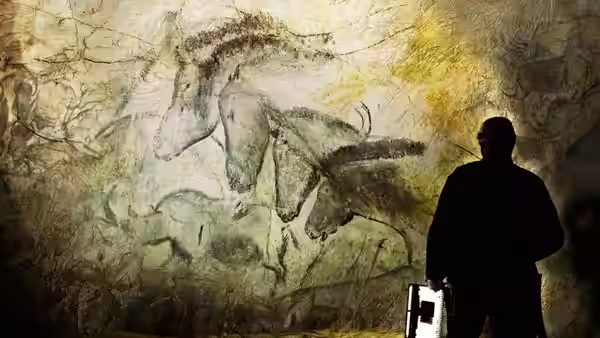
Peter Zeitlinger’s camera does something we had not seen 3D do. The paintings sit on bulges and folds of limestone, and the artists used the rock: a horse’s neck runs along a ridge, a lion’s shoulder sits on a swelling and seems to turn away from you. Flat, this is a curiosity you have to be told about. In 3D you simply see it, and when Zeitlinger moves a lamp across the surface the shadows travel and the animals seem to shift. Herzog suggests the painters worked by firelight and meant them to move; the footage bears him out.

We had expected to be interested and were instead moved, and it was the panel of horses that did it: four heads, one above the other, mouths open, drawn with a confidence no first attempt could have. Somebody stood where the walkway now runs and knew exactly what they were doing, and then the door shut for 20,000 years. Herzog holds on it and says nothing.

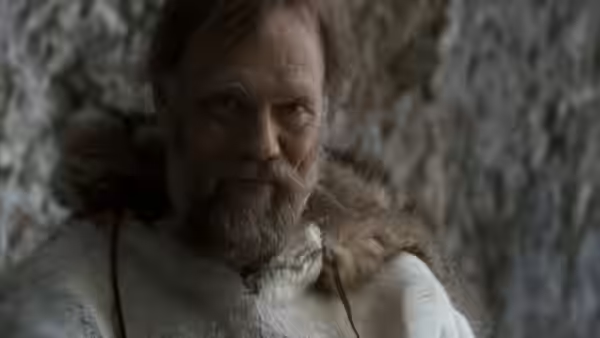
The scientists are good company. Dominique Baffier, who looks after the cave, and Jean-Michel Geneste, who leads the research, talk about it like people who know they are lucky. Jean Clottes gets closest to what Herzog is after. Wulf Hein turns up in reindeer skins with a bone flute and plays a tune on it that no ice-age hunter would recognise.

The trouble is the surround. Reijseger’s score, cello and voices and organ, is lovely for a minute and then it is on every shot. Herzog asks the crew for silence so we can hear the cave, and the film lays a heartbeat under the quiet, which it should not have done. The editors, Maya Hawke and Joe Bini, return to the same walls several times; by the third pass over the lions we knew the shot. The 3D is dark in the wider views.

Set against his own documentaries this is tamer than Grizzly Man (2005) or Encounters at the End of the World (2007), because the cave sets the rules and he cannot break them. That suits him. He is at his best when something enormous and indifferent is in front of him and all he can do is look. Here it is a wall, and it is 32,000 years old, and he looks.

See it in 3D; the point of the film is depth, and flat, at home, it becomes a slideshow of good photographs with a cello underneath. Certificate U, 90 minutes, and a postscript, set some way from the cave, that you will either love or want cut. We wanted it cut.
Critical consensus AI synthesised

79
Positive
15
Mixed
6
Negative
0

Most critics are won over, and the praise gathers in one place: the paintings themselves and Herzog’s decision to film them in 3D. Review after review says the format earns its keep here, letting the animals follow the curve of the rock so their depth and texture register as they could not flat. Herzog’s narration and the odd questions he puts to his scientists are counted among the pleasures, and Variety singles out Ernst Reijseger’s music for its mood of awe.

The reservations are about the man rather than the cave. Several find his metaphysical musings reach too far, and the more measured reviews call the film overlong and repetitive, the slow scans of the walls wearing thin. The Independent objects to a heartbeat laid over a moment of silence, and Slant finds the 3D often dark and unnatural. The spread runs from full marks to the mid-fifties, with no outright dismissals, and a recurring line even among admirers that this is not Herzog at his best.

Time Out
22 March 2011 · ★★★★★ · Ben Walters
100

The review text is unavailable, so its overall verdict cannot be established. The visible metadata offers no specific praise or criticism.

Read the full review →
Empire
11 February 2011 · Adam Smith
90*

Smith finds the documentary astonishing, mesmerizing and profoundly absorbing. He especially praises Herzog’s use of 3D to bring the cave paintings to life, while noting that his philosophical musings may turn off some viewers.

Read the full review →
IndieWire
24 April 2026 · A- · Eric Kohn
90

Kohn finds the film an extraordinary production feat, though he notes that one section briefly dulls its sense of wonder. He praises the immersive 3D presentation of the cave paintings and their mysterious beauty.

Read the full review →
Los Angeles Times
29 April 2011 · Kenneth Turan
90*

Turan gives the film an enthusiastic, deeply appreciative verdict, calling the chance to experience the cave a privilege and pleasure. He especially praises the ancient paintings’ beauty and the film’s effective use of 3-D to show how they follow the cave’s contours.

Read the full review →
The Guardian
24 March 2011 · Peter Bradshaw
90*

Bradshaw calls the documentary a remarkable success, full of wonder and mystery. He especially praises how 3D brings the Chauvet cave’s ancient paintings to life.

Read the full review →
The Hollywood Reporter
14 October 2010 · festival review · Kirk Honeycutt
90*

Honeycutt finds the documentary fascinating and praises Herzog’s imaginative exploration of ancient art, spirituality and human nature. He particularly singles out the cave’s extraordinary art and the effective use of 3D to reveal its spaces and movement.

Read the full review →

Straight answers AI written, from our review

Is Cave of Forgotten Dreams worth watching?
Cave of Forgotten Dreams is worth watching for anyone curious about the oldest paintings anyone has found, and we scored it 80. The forty minutes inside the Chauvet cave are the best 3D footage we have seen, so see it in 3D if you can. The scenes around the cave are looser, and Ernst Reijseger's score rarely lets a silence alone.
How long is Cave of Forgotten Dreams, and what is it rated?
Cave of Forgotten Dreams runs 1h 30m. It is a documentary film.
Where can I watch Cave of Forgotten Dreams in Croatia?
Cave of Forgotten Dreams is not on any streaming or rental service in Croatia at the moment. It is available in 13 other countries; change your country at the top of the page to see where. Availability is checked daily.
How does Cave of Forgotten Dreams compare to Grizzly Man?
Cave of Forgotten Dreams is the calmer of the two Herzog documentaries, because the cave sets the rules and he cannot break them. Grizzly Man is funnier and more disturbing, built from Timothy Treadwell's own footage of a man whose love of bears outran his judgement. Choose the cave for wonder, the bears for character; both find Herzog looking at something enormous and indifferent.
What should I watch after Cave of Forgotten Dreams?
After Cave of Forgotten Dreams, try Grizzly Man (2005, Fi1m 85): Herzog looking at something enormous and indifferent, this time with teeth. Then Nostalgia for the Light (2010, Fi1m 83): Guzmán’s Chilean desert, where astronomers and grieving women both dig into the past; and Sans Soleil (1983, Fi1m 82): Chris Marker’s essay film: a narrator who wonders aloud and earns it.

Cast

If you liked this, try…

  1. Grizzly Man (2005, Fi1m 85)Herzog looking at something enormous and indifferent, this time with teeth.

  2. Nostalgia for the Light (2010, Fi1m 83)Guzmán’s Chilean desert, where astronomers and grieving women both dig into the past.

  3. Pina (2011) · not on Fi1m yetWenders makes the other good case for 3D, with dancers instead of lions.

  4. Sans Soleil (1983, Fi1m 82)Chris Marker’s essay film: a narrator who wonders aloud and earns it.

  5. Fire of Love (2022, Fi1m 76)Two volcanologists film the earth up close; the earth eventually films back.

Cave of Forgotten Dreams (2010) review: Herzog makes the case for 3D (Croatia) | Fi1m