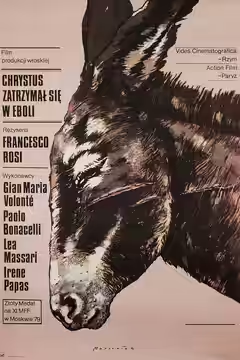
Francesco Rosi’s film of Carlo Levi’s memoir of exile is slow, plain and unusually humane, with Gian Maria Volonté at its centre doing almost nothing and holding four hours together. It asks for an evening and a half. Give it.
Mussolini’s government sent Carlo Levi to a village in the far south of Italy for the crime of opposing it. The memoir he wrote afterwards is less about his punishment than about the place, and Francesco Rosi’s film, written with Tonino Guerra and Raffaele La Capria, keeps to that. It runs 220 minutes and it takes its time because Levi did. It is among the best things Rosi made. It is also a film most people will want to see across two evenings, and it loses nothing that way.
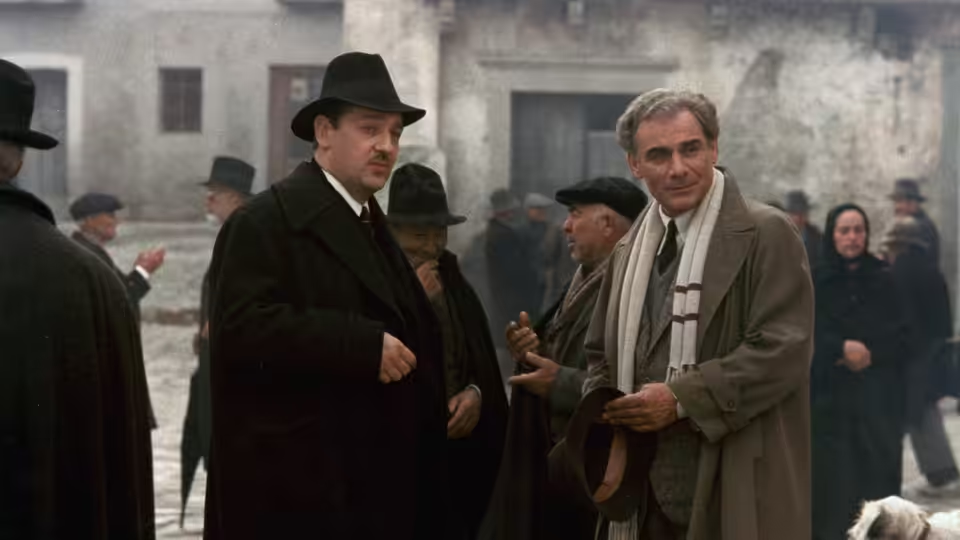
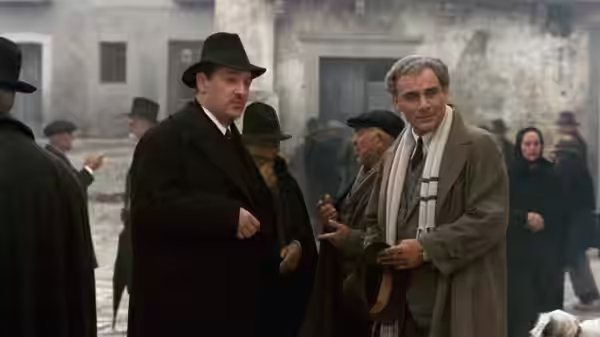
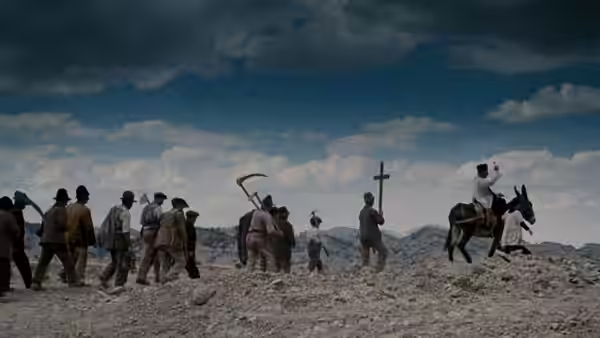
Pasqualino De Santis shoots Gagliano as a strip of pale houses along a ridge, above grey clay gullies that look poured rather than made. The light is thin and even, the sky mostly white, and people are placed small against the land so we understand what it is to live at the end of a road. Andrea Crisanti gives Levi a bare rented room, an easel and the canvases he fills as the months pass, and gives the podestà an office with the Duce on the wall. Enrico Sabbatini puts the women in black from head to foot and the men in cloth worn to the colour of the earth. Piero Piccioni’s music is a few bars now and then; the film runs long stretches on wind, goats and footsteps.
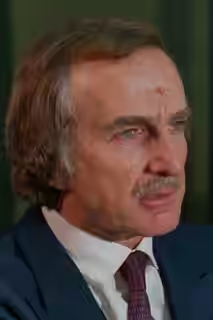
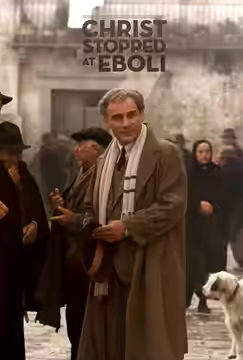
Gian Maria Volonté plays Levi as a man who listens. He arrives with a suitcase, a coat too good for the place and a look of polite attention, and for long stretches the performance is what his face does while other people talk. When the peasants find out he is a doctor and turn up with their fevers he treats them with the little he has and no fuss. It is a large performance made of small movements, and it carries the film.
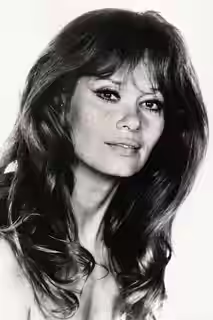
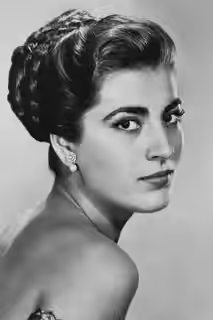
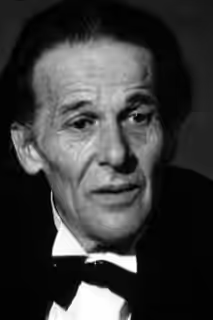
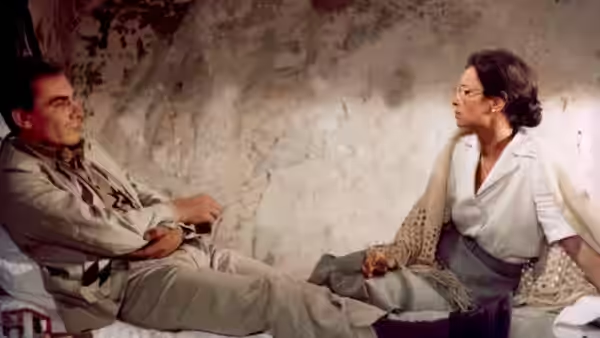
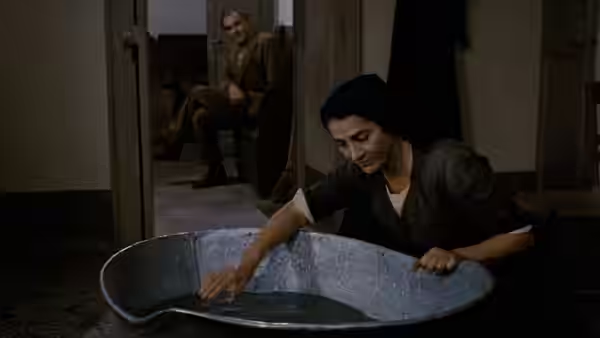
The village is full of well-drawn people. Paolo Bonacelli’s Don Luigi Magalone, the podestà, is a vain, sentimental little man who cannot decide whether his prisoner is a burden or the most distinguished guest the town has had. François Simon’s Don Traiella is a priest sent here in disgrace and drinking his way through it, and Simon gives him a ruined dignity that is hard to look at. Alain Cuny’s Baron Rotunno owns the land and does nothing with it. Irene Papas plays Giulia Venere, the housekeeper, with a stillness that makes the village talk of witches sound reasonable. Lea Massari’s Luisa, Levi’s sister, arrives from the north and brings the film’s plainest anger with her.
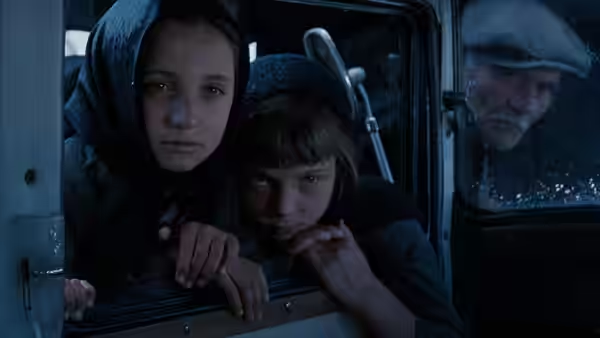
That anger is where the film got to us. On her way in, Luisa is followed by children with swollen bellies and running eyes who ask her not for coins but for quinine. Rosi does not underline it; De Santis keeps the camera at a walking pace and lets the children come to it. We were not ready for it, and hours of film later we were still thinking about it. It is the moment the film tells us what it is about, and Levi is not even in the scene.
The film has faults, and length is not the main one. Levi is never wrong, never petty, never bored, and Rosi admires him as openly as the villagers do; a man exiled to a place with no plumbing surely had worse days than this. The peasants are mostly faces at a door or in a field, seen with great tenderness and rarely allowed to speak for themselves. Ruggero Mastroianni cuts slowly and holds shots a beat past comfort, but somewhere in the third hour we felt the length and grew restless. A scene of the village gathered round a radio for a speech from Rome, the voice rolling on over faces that could not care less, brought us back.
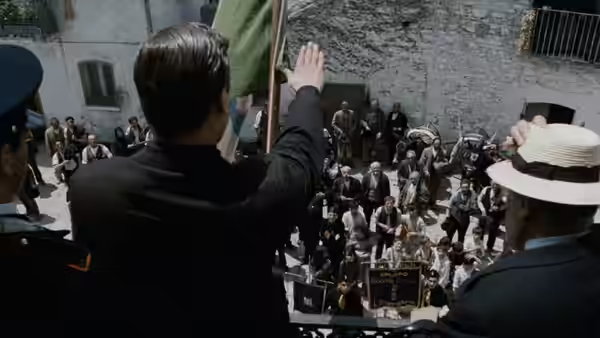
The Fascists here are small officials, not villains, and the subject is what they stand in front of: a south that Rome has taxed and conscripted and otherwise forgotten.
See it over two nights if you must, but do not skip the walking, because the walking is where it lives. Levi arrives expecting nowhere and, over four hours, finds somewhere.