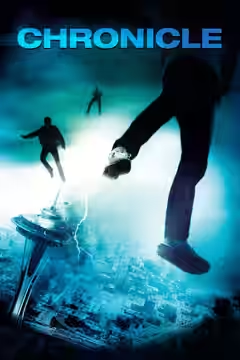
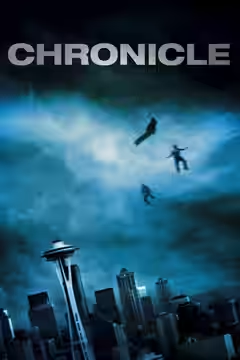
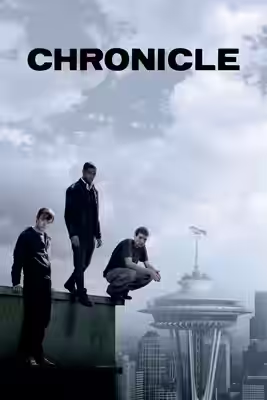
Josh Trank’s first film hands three teenagers telekinesis and a camcorder, and for an hour it makes something lively and odd out of both. The final stretch is louder and more familiar, and the coda is softer than it earned.
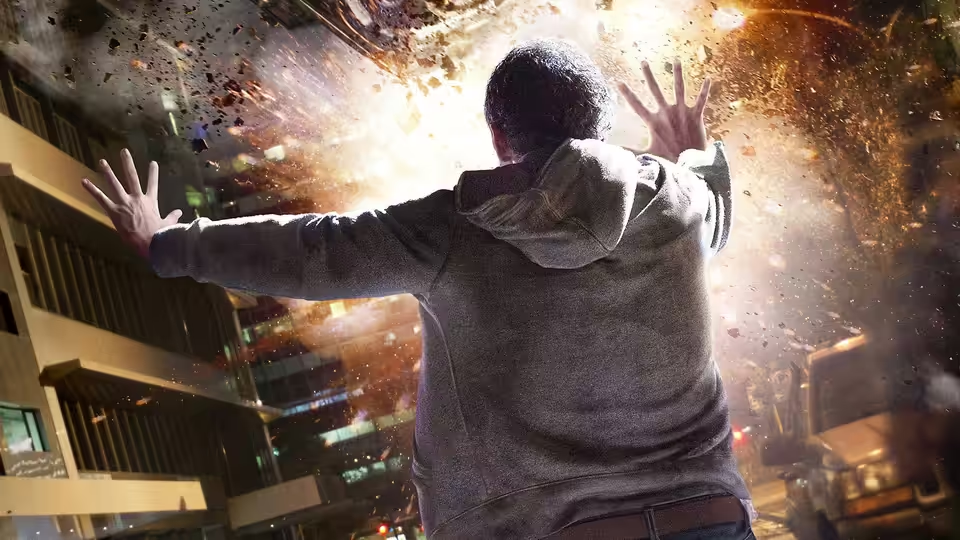
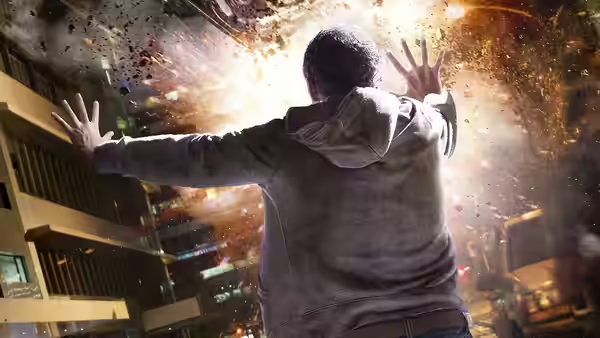
Josh Trank’s first film takes the oldest story in the superhero book, three ordinary kids find something in the ground and come out changed, and tells it through a camcorder held by the one you would least want to have the power. It runs 84 minutes, written by Max Landis from a story by Landis and Trank, and for most of it it is quicker, funnier and nastier than the premise suggests. The last stretch is a loud fight over a city centre, and the film gets more ordinary the louder it gets.
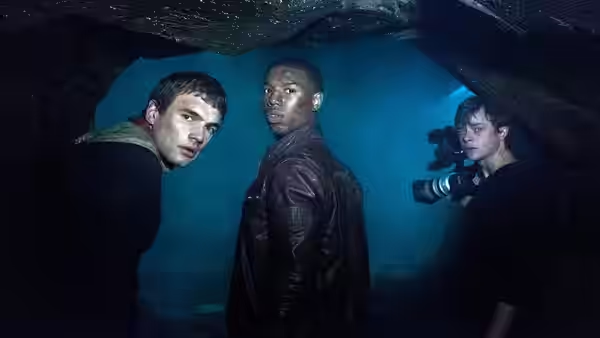
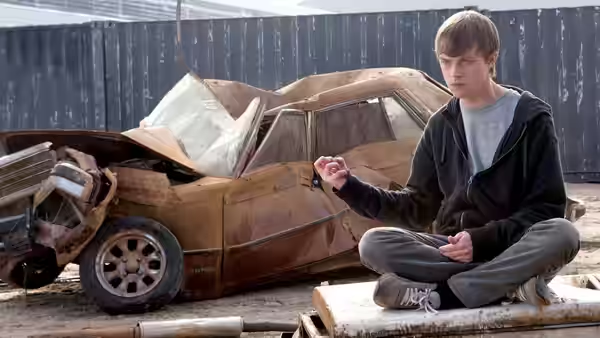
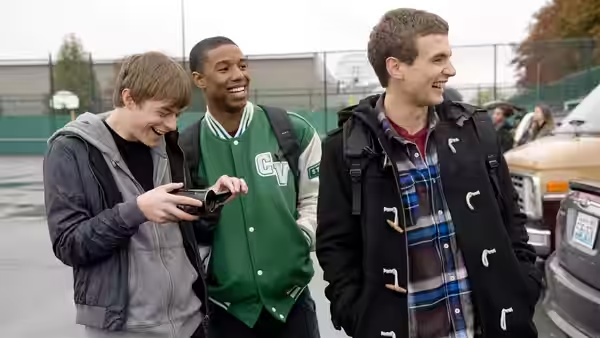
The camera is the idea. Andrew Detmer (Dane DeHaan) buys one to put between himself and a father who hits him, and he films everything because filming is the only way he can look at anything. When the powers arrive, the camera stops needing a hand. Andrew floats it over his shoulder, hovers it above the three boys as they walk, parks it in a corner of his bedroom and talks to it. Matthew Jensen gets shots out of this that found footage normally cannot: a slow drift round a kitchen, a steady view from forty feet up. It also answers the question that sinks most found-footage films, why anyone is still filming: he cannot stop.
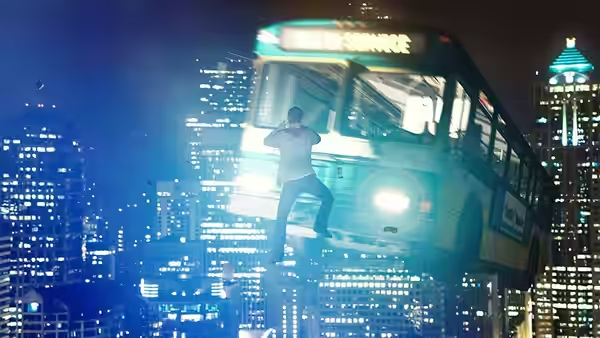
The three boys are well chosen. DeHaan plays Andrew with his hood up and his mouth closed, and lets you watch the pleasure arrive in his face the first time he moves a baseball without touching it. Alex Russell’s Matt is the cousin who quotes philosophers in the car and means well in the way of someone who has never been hit. Michael B. Jordan’s Steve is the popular one, and Jordan plays him so openly, so pleased to have found two new friends, that the film is warmest whenever he is in it. The first flight, above the clouds with a football, is the scene people remember, and rightly; we grinned through all of it and were sorry when they came down.
On the ground it is darker. Stephen Altman’s production design gives the Detmers a small house with the curtains drawn, Andrew’s mother Karen (Bo Petersen) in a back bedroom with an oxygen line, and Michael Kelly’s Richard drinking in the front room. Kelly is good, but the part has one setting, and every time the script needs Andrew pushed it sends Richard through his bedroom door. The scene we have not shaken is quieter: Andrew alone with a spider, taking it apart in the air and talking evenly to the camera. We were chilled, because of how little it cost him, and because DeHaan plays it like a boy doing his homework.
That scene also shows the script’s problem. Landis knows where Andrew is going and marks each step so plainly, a speech about apex predators, a bully dealt with in a corridor, that the second half has the shape of a diagram. The girls, Casey Letter (Ashley Hinshaw) and Monica (Anna Wood), exist to hold a second camera or to be impressed. When the finale comes the film drops its own rule, cutting between phones, news helicopters and security cameras so the fight can be seen from everywhere. Elliot Greenberg stitches it cleanly, but a found-footage film that can see from anywhere is just a film, and a smaller one than the version with one boy and one lens. Youssef Guezoum’s music is barely there, rightly.
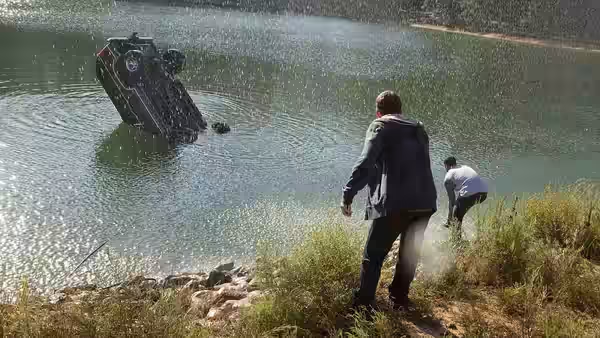
Chronicle owes something to Carrie, to Akira, and to every lonely boy with a gift since, and it does not pretend otherwise. Where it beats most of them is in scale: these powers are used for pranks in a supermarket before anything else, because a teenager handed a gift will first use it to show off. Where it falls short is the ending, and a coda gentler than what came before, as though someone had decided the audience needed a hand on the shoulder on the way out.
Watch it with a teenager if you have one. At 84 minutes it does not outstay anything, and the hour before the shouting is as good a case for the camcorder as the genre has made.