Brad Silberling’s remake of Wings of Desire is hushed, handsome and oddly moving for an hour, with Nicolas Cage staring and John Seale’s gold light on the beach. Then it remembers it is a studio romance and goes soft.
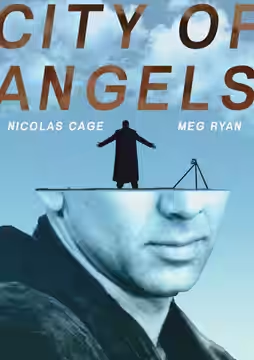
Brad Silberling has remade Wim Wenders’s Wings of Desire, the 1987 film in which angels in overcoats drift through Berlin listening to what people think, and he has moved it to Los Angeles and given it a love story with a proper ending. Dana Stevens’s screenplay keeps the premise and loses the politics. Seth (Nicolas Cage) watches over the city, Maggie (Meg Ryan) cuts open hearts for a living, and the question is whether an angel would give up forever to be with her. For about an hour the film is stranger and quieter than its tagline suggests. Then it becomes the film the tagline promised, and we liked it a good deal less.
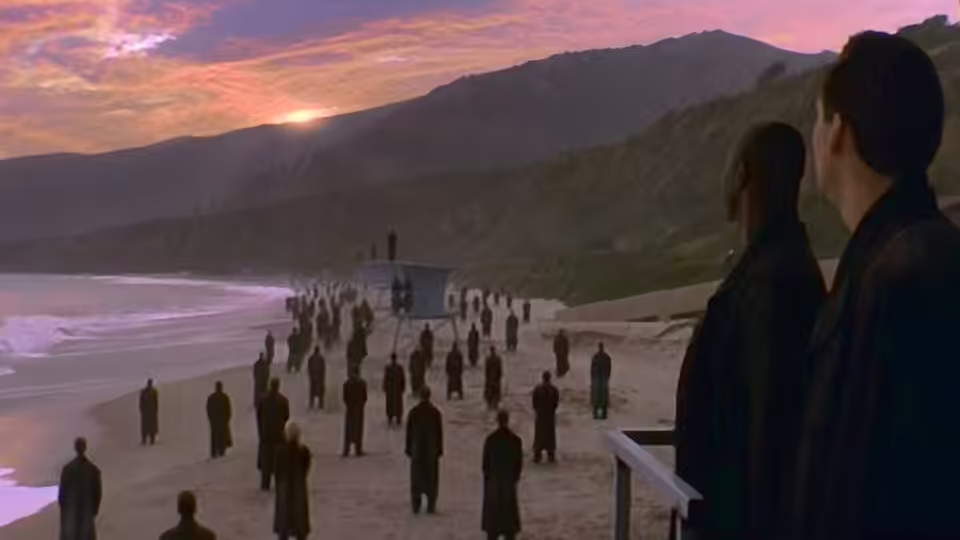
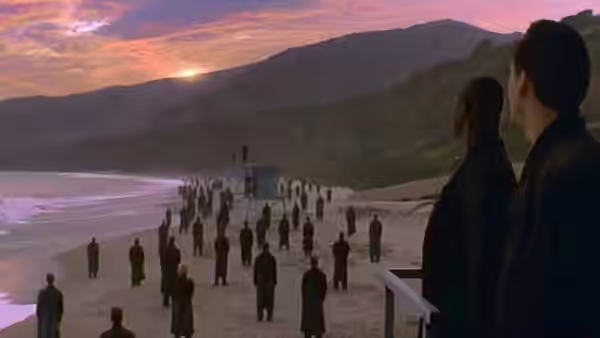
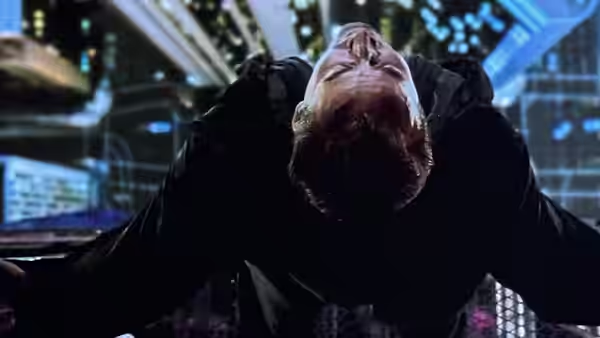
The first hour is the case for it. John Seale shoots the city in a gold haze, wide and still, and puts the angels where nobody looks: on the Hollywood sign, on freeway gantries, on a steel beam over a building site. At dawn and dusk they gather on the beach in a long dark row to listen to the sun, and Shay Cunliffe’s black overcoats make them look like a convention of undertakers who have wandered onto the sand. Lilly Kilvert gives them a downtown library to loiter in, reading over shoulders. These scenes are patient and nearly silent, and Lynzee Klingman cuts them at the angels’ pace rather than ours.
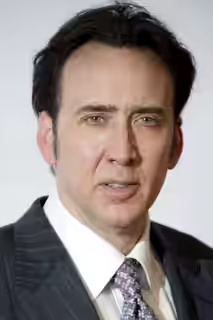
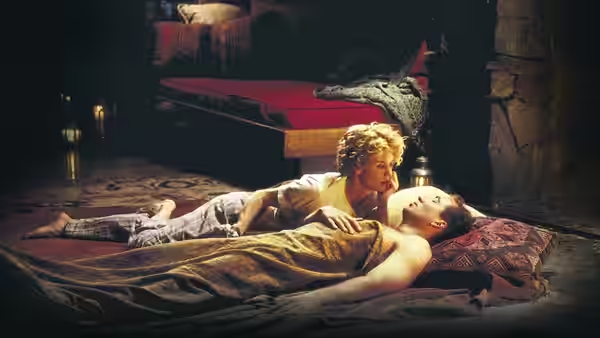
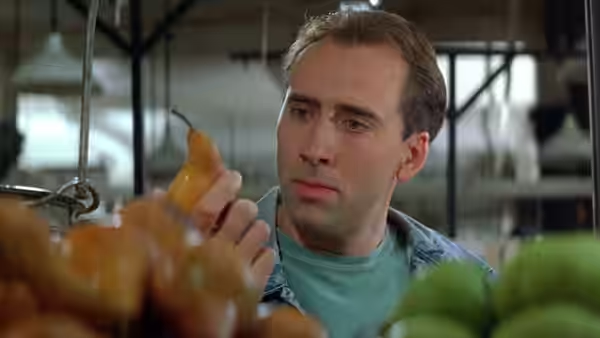
Cage plays Seth without blinking. He tilts his head, half smiles, and stares at people the way you might stare at a painting, and the effect sits somewhere between tenderness and the man outside your window at night. The film knows this and gets some mileage out of it. He is at his best early, at the bedside of a small girl, Susan (Sarah Dampf), who is dying; he asks her what she liked best, and she says pyjamas. That exchange got to us, and we had not planned on letting it, because Cage does nothing at all and Silberling holds the shot and trusts the line.
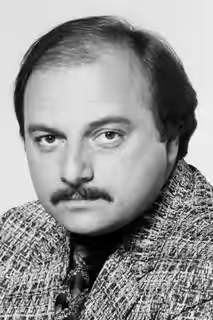
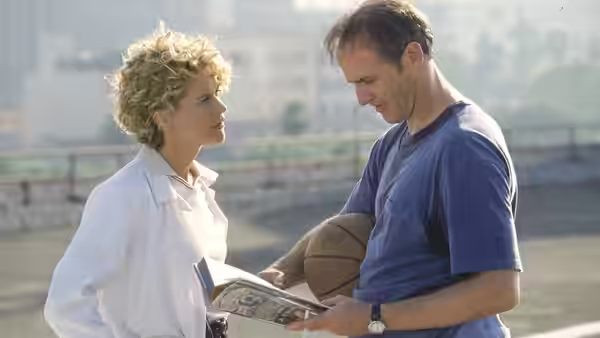
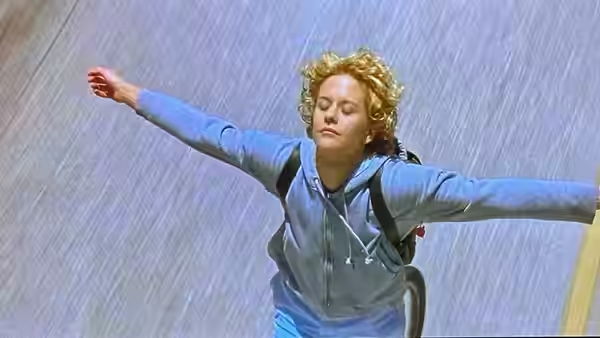
Ryan is good in a part that asks less of her than it should. Her Maggie is tired and competent and furious with herself after losing a man on the table she was sure she had saved, and Ryan plays the fury without any of the dimples she is usually asked for. Dennis Franz, as her patient Messinger, is the best thing in the film: a bypass case who treats his diet sheet as a rumour, talks with his mouth full and is the only person on screen who seems glad to be alive. Every scene he walks into gets louder and better. Andre Braugher’s Cassiel, the colleague who watches Seth drift, has a stillness the film could have used more of, and Colm Feore’s Jordan is there to be the man Maggie should not end up with.
Then there is the second half, and the second half is where most of the complaints belong. Once Seth has made his choice the film stops being about the city and becomes a romance of the kind that comes with a soundtrack album. Gabriel Yared’s score swells on cue; the pop songs arrive on cue; the camera slows down whenever anyone is happy. A late turn, which we will not describe, is staged with every tool in the box, and by then we felt we were being worked on and resented it. The last half hour asks us to feel what the first hour had already made us feel, and asks loudly.
Wenders’s angel fell for the whole of life, cold hands and coffee included. Seth falls for Maggie, and the film treats the two as the same thing, which they are not. That is not a crime; a studio romance has every right to exist, and this one is better made than most. But it means the strangeness that makes the first hour worth watching is exactly what the film is in a hurry to be rid of.
See it for Franz, for the beach at dawn, and for the little girl and her pyjamas. If you find yourself reaching for a tissue in the last ten minutes, the film is doing precisely what it set out to do, and you may or may not thank it. At 114 minutes it does not overstay; it simply stops being the film we wanted somewhere around the hour mark.