Anthony Minghella’s Civil War film is handsomely built and full of good faces met on the road. The love story it is walking towards has hardly been written, and Law and Kidman cannot supply what the script left out; see it for the journey.
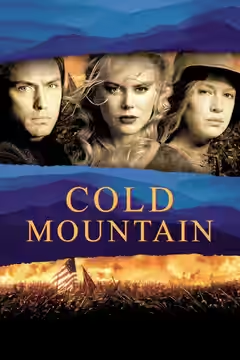
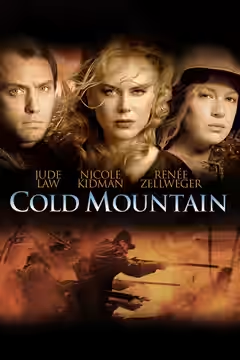
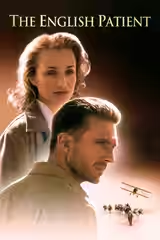
Anthony Minghella, after The English Patient (1996) and The Talented Mr Ripley (1999), turns to Charles Frazier’s novel about a Confederate deserter walking home in the last year of the Civil War. He films it with care and a fine cast, and most of the strangers Inman meets on the road are worth the trip. The trouble is at the end of the road: Inman is walking towards Ada, and when he gets there we still do not know what they see in each other.
The film opens at Petersburg, Virginia, in 1864, and the battle is as good as anything Minghella made. Union sappers set off a mine under the Confederate line; the earth lifts, and the men who charge into the hole find they cannot climb out. John Seale shoots the aftermath in grey dust so thick the flags are the only colour, and Walter Murch cuts from Inman’s face to the pit and back with nothing wasted. We were horrified, by men firing down into a crater full of other men as if into a well, and by the film declining to look away.
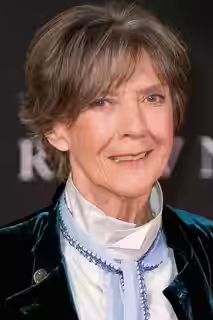
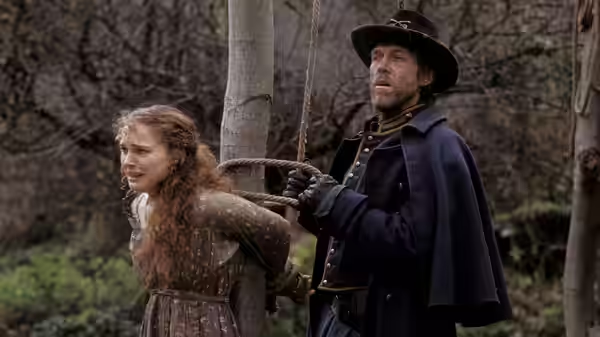
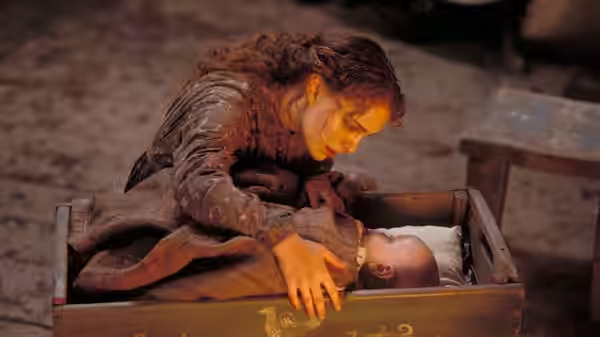
Jude Law plays Inman with his mouth shut and his eyes on the ground, and he hands each scene to whoever is opposite him. They are the reason to watch. Philip Seymour Hoffman’s Reverend Veasey is a coward who talks like a bishop and steals every minute. Giovanni Ribisi’s Junior runs a house where the welcome curdles. Eileen Atkins, as Maddy, alone with her goats, makes a few minutes of kindness feel like the first warmth. Natalie Portman’s Sara, a young widow with a baby and a rifle, gives the film its most affecting stretch; it moved us more than anything between the leads, because Minghella lets two frightened people sit in a room and say almost nothing.
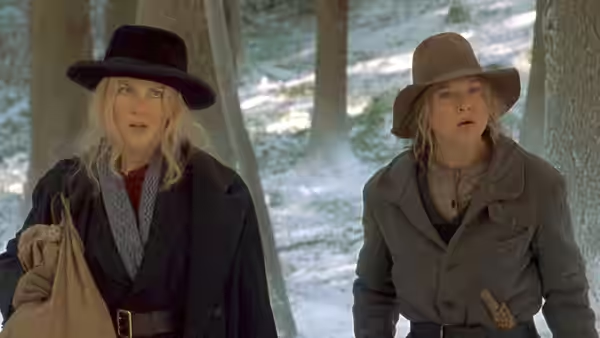
Back on the mountain the engine is Renée Zellweger. Ruby Thewes arrives to save Ada’s farm and bites the head off a rooster, and Zellweger plays the whole part at that pitch, loud and squinting. Several critics found it far too much. We found it a relief, because Nicole Kidman’s Ada, a lady who cannot boil an egg, is played with tact and a fading pallor, and the film wakes up every time Ruby shouts at her. Brendan Gleeson is warm and disgraceful as Ruby’s fiddler father, and Ray Winstone’s Teague, leading the Home Guard that hunts deserters, is a steady villain.
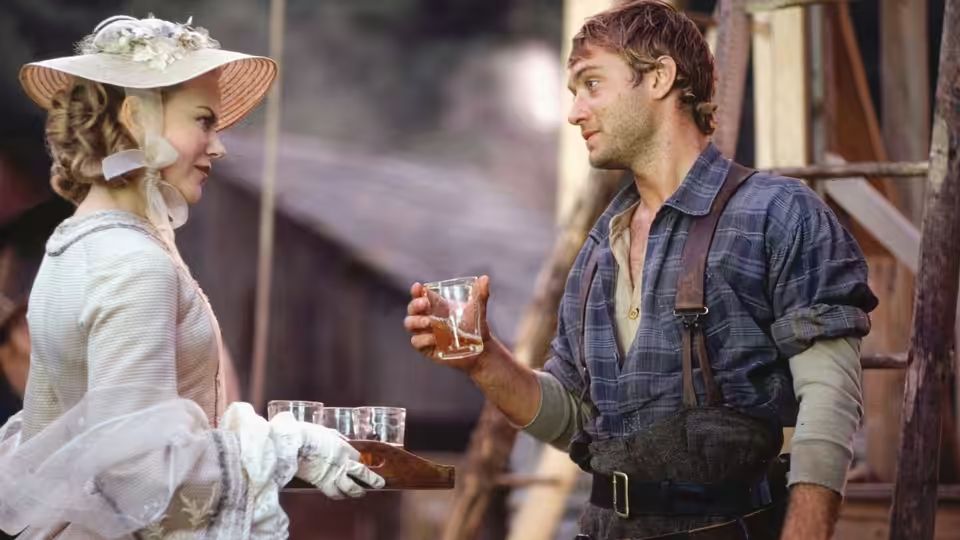
Dante Ferretti builds a town of raw timber and an unfinished church, and Ann Roth and Carlo Poggioli dress Ada in silks that give way to somebody else’s boots. Seale shoots the valley in low autumn light that makes every field look like a place worth walking home to, and that is part of the problem: the place is so lovely that the film has to keep sending Teague up the hill to remind us there is a war. Slavery, the thing the war is about, is barely spoken of and mostly seen at the edge of the frame, and a film this long could have found the time.
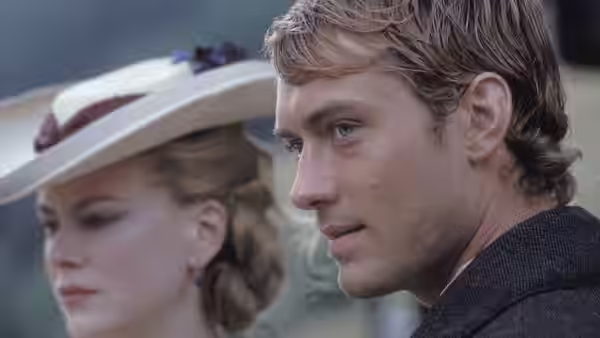
The romance itself is a handful of flashbacks: a first look across a church, a few sentences at a window, a kiss as the men march out. That is what Inman is walking towards, and Minghella’s screenplay asks it to carry two and a half hours. Law and Kidman are good actors playing people who have barely met, and they play exactly that. Ada’s letters, read in voiceover, do some of the work, and Gabriel Yared’s strings do more, swelling to tell us the yearning is enormous when the scenes have shown us something polite.
The English Patient also cut between a wound and a memory, and there the memory was an affair we had watched from first glance to last. Here we return to a courtship that never began. It runs 154 minutes and carries a 15 certificate, and most critics have found it about half as good as it looks; we are a little warmer, for the road and the battle. Watch it for the journey, and do not expect the destination to explain the walk.