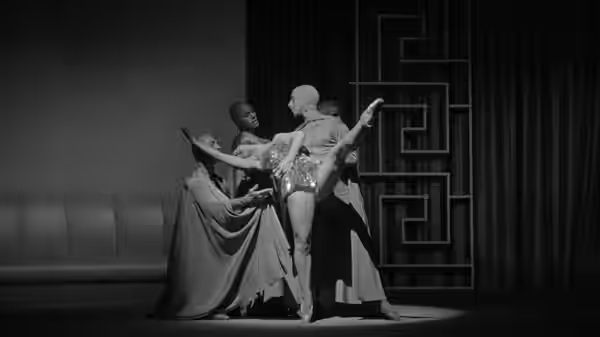
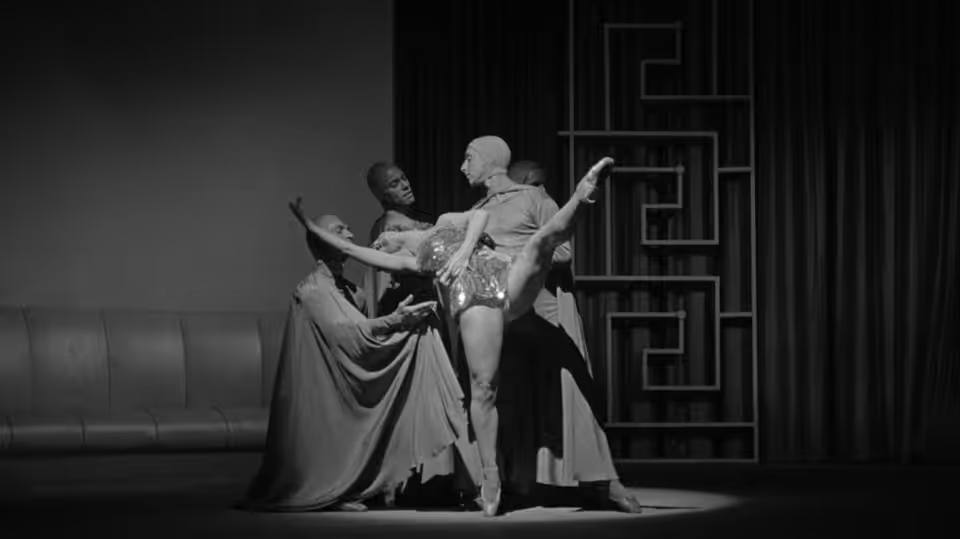
A ballerina balances in an arabesque as other dancers support her in a studio
Film review

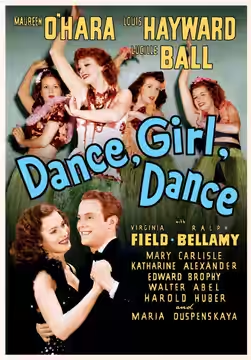
Dance, Girl, Dance

1940 · Directed by Dorothy Arzner · 1h 30m

In a sentenceLucille Ball looks ready for stardom; the men look ready for another subplot

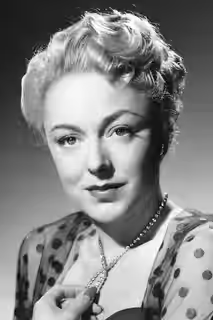
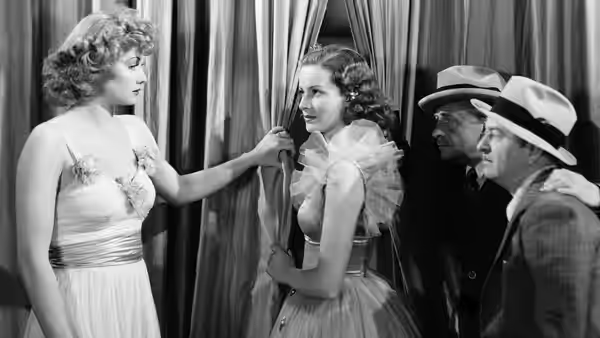
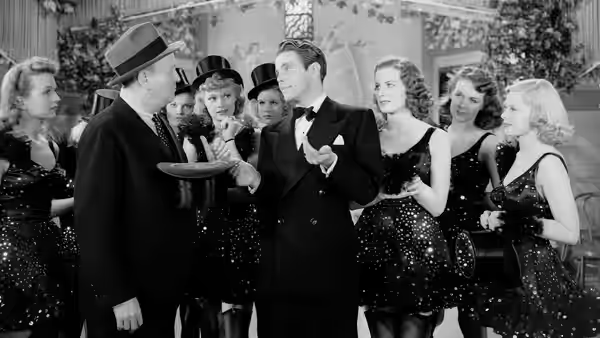
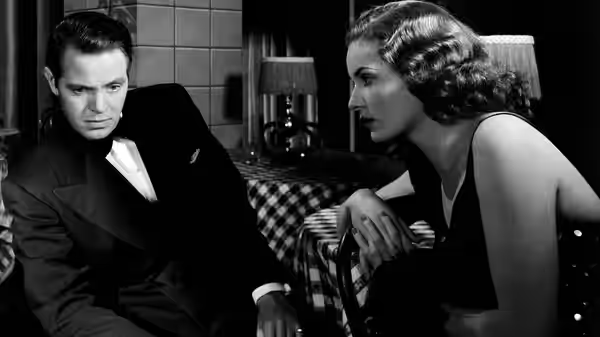
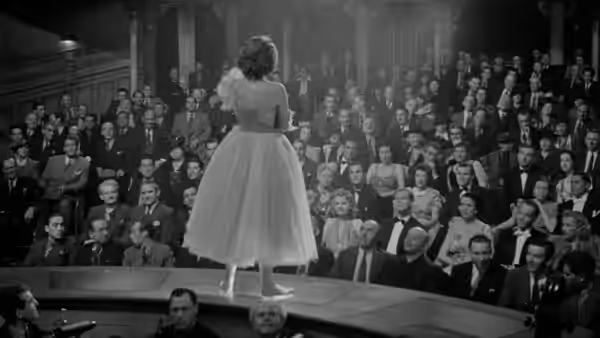
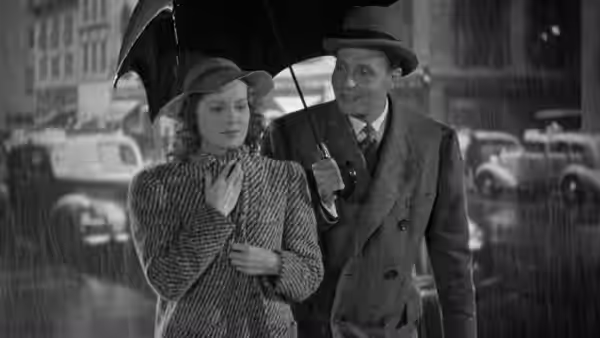
Judy (Maureen O’Hara) and Bubbles (Lucille Ball) are performers whose ambitions put them in competition. Their rivalry develops alongside romantic complications, with Jimmy Harris (Louis Hayward), Elinor Harris (Virginia Field) and Steve Adams (Ralph Bellamy) in their orbit. Both women face expectations about what they should offer an audience, and how much of themselves they should put on display. Getting noticed brings pressure to be sexually appealing, while personal attachments add to the difficulties of pursuing a career. Their competing ambitions make the relationship between the women difficult to separate from the demands of performing.

Fi1m review

Lucille Ball makes Dorothy Arzner’s uneven drama worth considering, and its interest in women’s working lives has force. The romance repeatedly gets in the way.

Dorothy Arzner’s Dance, Girl, Dance has a worthwhile subject and a persistent habit of getting distracted from it. The pressure on women to make themselves sexually appealing in pursuit of success gives the film something sharp to examine. Too often, the romance interrupts that examination without offering much interest of its own. This is an uneven 90 minutes, worth considering for Lucille Ball and for the seriousness with which women’s professional ambitions are treated.

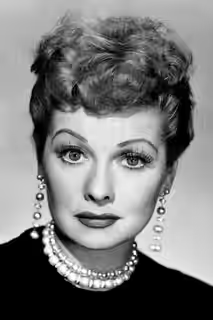
Lucille Ball makes Bubbles entertaining without making her ambition look like a defect. We perked up whenever she appeared. There is such assurance in the performance that even the business of attracting attention becomes interesting: she seems to have assessed what will work before anyone else has understood the situation. She also gives the film some badly needed fun, keeping its concerns about women’s careers from weighing down every exchange.

Maureen O’Hara’s Judy is less immediately arresting, but there is a sincerity in the performance that the film needs. A story concerned with the price of being noticed ought to have room for a woman who does not dominate every exchange. The difficulty is that the writing does too little to make her compelling on those quieter terms. Beside Bubbles, Judy too often has to get by on our sympathy, and the contrast becomes dramatically limiting.

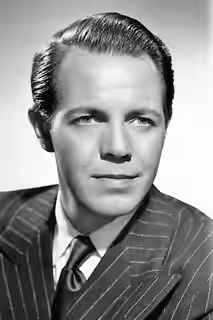
The screenplay by Tess Slesinger and Frank Davis has trouble making its male characters worth the time spent on them. Neither Louis Hayward as Jimmy Harris nor Ralph Bellamy as Steve Adams can supply the interest missing from the writing. Romantic complications require some curiosity about the people involved, and here they too often arrive as obligations. The women have already given the film a subject; the men do too little to justify taking attention away from it.

Joseph H. August and Russell Metty’s cinematography gives the performers room to register, with Lucille Ball’s assurance doing much of the work within the frame. The visual interest depends heavily on the actors, which makes the weaker characterisation difficult to overlook. Robert Wise’s editing keeps things moving without curing that imbalance. The shifts back into romance remain awkward because the characters have not earned the attention.

Edward Stevenson’s costume design helps make appearance part of the drama: these women are being judged on what others see. Dorothy Arzner takes that scrutiny seriously enough to give the rivalry some weight beyond the usual competition for attention. The film is at its most persuasive when it lets ambition be an understandable response to the demands made of a performer. That concern supplies a reason to stay interested even when the comedy and romance fail to support it.

Within the backstage drama, Dorothy Arzner finds something worth examining in the conditions attached to a woman’s success. The treatment is too uneven to make this a recommendation for everyone, but there is enough intelligence here to reward an interest in performers’ working lives. Keep expectations for the romance modest and let Lucille Ball take charge.

Critical consensus AI synthesised

3 of 6
Positive
1
Mixed
1
Negative
1
Slant Magazine
9 June 2020 · ★★★½ · Clayton Dillard
70

The review finds the film compelling but held back by its male love interests. It praises Lucille Ball’s magnetic performance and the film’s critique of how women are expected to sexualize themselves for stardom.

Read the full review →
The New York Times
29 January 1975
64*

The headline indicates a review discussing rivalry and sympathy, but the article text is inaccessible. Its verdict and any specific praise or complaint cannot be verified.

Read the full review →
Radio Times
★★ · Robyn Karney
40

Karney finds the film uneven, blaming its inadequate script and miscast Maureen O’Hara. She says Dorothy Arzner brings it to life at times, especially when Lucille Ball is on screen.

Read the full review →

Straight answers AI written, from our review

Is Dance, Girl, Dance worth watching?
Dance, Girl, Dance is worth considering for Lucille Ball and its serious interest in women’s working lives; we score it 66 out of 100. Ball gives the backstage drama assurance and fun, but the romantic complications repeatedly distract from the more compelling business of women pursuing careers under pressure to be sexually appealing.
How long is Dance, Girl, Dance, and what is it rated?
Dance, Girl, Dance runs 1h 30m. It is a drama and comedy film.
Where can I watch Dance, Girl, Dance in Australia?
Dance, Girl, Dance is not on any streaming or rental service in Australia at the moment. It is available in 1 other country; change your country at the top of the page to see where. Availability is checked daily.
How does Dance, Girl, Dance compare to The Red Shoes?
Dance, Girl, Dance is the more qualified recommendation beside The Red Shoes, which makes a dancer’s ambition feel more urgent and dangerous. Both concern performers facing demands that leave little room for themselves, but we recommend The Red Shoes more broadly; Dance, Girl, Dance chiefly rewards an interest in women’s working lives and Lucille Ball’s performance.
What should I watch after Dance, Girl, Dance?
After Dance, Girl, Dance, try The Red Shoes (1948, Fi1m 92): For another dancer facing demands that leave little room for herself. Then Stage Door (1937, Fi1m 85): More performers chasing scarce opportunities, with friendship complicating the competition; and All About Eve (1950, Fi1m 90): Theatrical ambition and female rivalry, with sharper writing and colder smiles.

Cast

If you liked this, try…

  1. The Red Shoes (1948, Fi1m 92)For another dancer facing demands that leave little room for herself.

  2. Stage Door (1937, Fi1m 85)More performers chasing scarce opportunities, with friendship complicating the competition.

  3. All About Eve (1950, Fi1m 90)Theatrical ambition and female rivalry, with sharper writing and colder smiles.

  4. The Young Girls of Rochefort (1967) · not on Fi1m yetSisters with artistic ambitions, in a musical more generous about pleasure.

  5. The Fits (2015) · not on Fi1m yetA young dancer’s wish to belong becomes something strange and unsettling.

Dance, Girl, Dance (1940) review: Sharp women let down by romance (Australia) | Fi1m