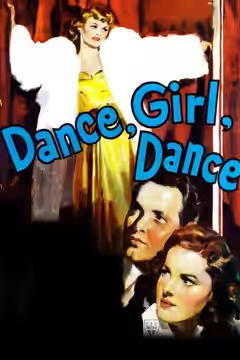
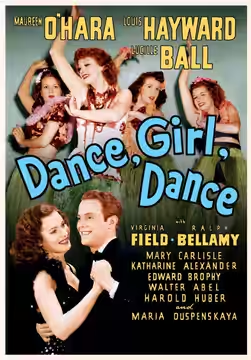
Lucille Ball makes Dorothy Arzner’s uneven drama worth considering, and its interest in women’s working lives has force. The romance repeatedly gets in the way.
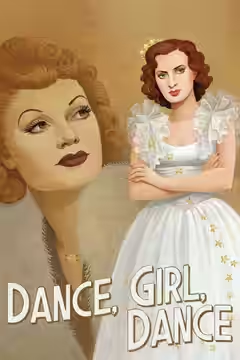
Dorothy Arzner’s Dance, Girl, Dance has a worthwhile subject and a persistent habit of getting distracted from it. The pressure on women to make themselves sexually appealing in pursuit of success gives the film something sharp to examine. Too often, the romance interrupts that examination without offering much interest of its own. This is an uneven 90 minutes, worth considering for Lucille Ball and for the seriousness with which women’s professional ambitions are treated.
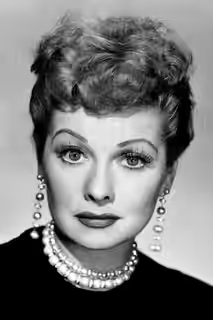
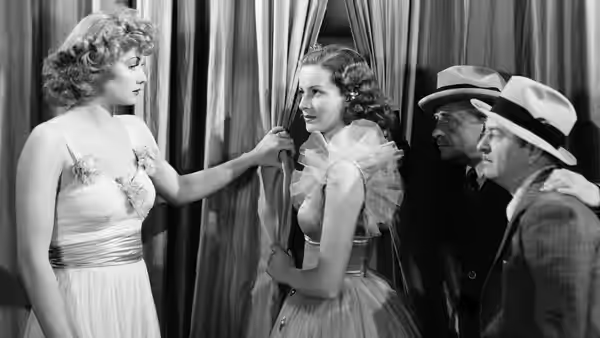
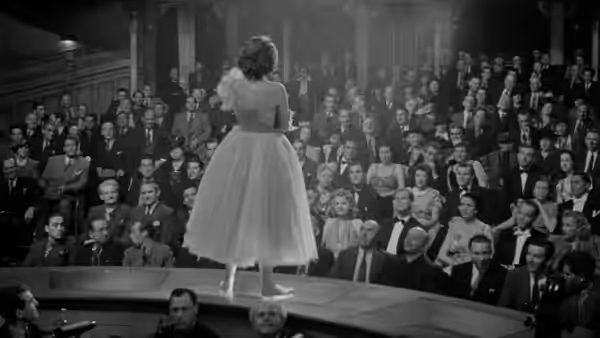
Lucille Ball makes Bubbles entertaining without making her ambition look like a defect. We perked up whenever she appeared. There is such assurance in the performance that even the business of attracting attention becomes interesting: she seems to have assessed what will work before anyone else has understood the situation. She also gives the film some badly needed fun, keeping its concerns about women’s careers from weighing down every exchange.
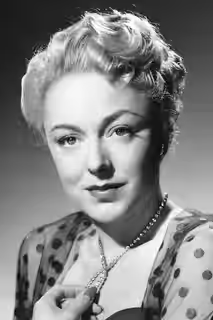
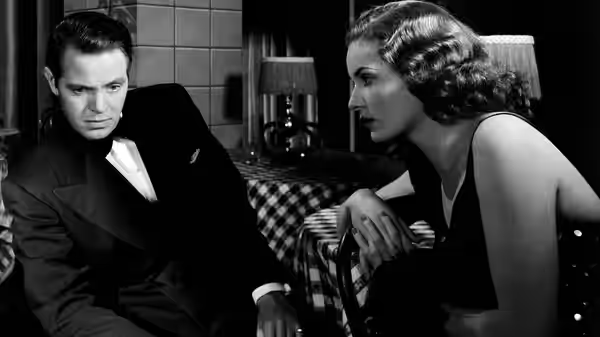
Maureen O’Hara’s Judy is less immediately arresting, but there is a sincerity in the performance that the film needs. A story concerned with the price of being noticed ought to have room for a woman who does not dominate every exchange. The difficulty is that the writing does too little to make her compelling on those quieter terms. Beside Bubbles, Judy too often has to get by on our sympathy, and the contrast becomes dramatically limiting.
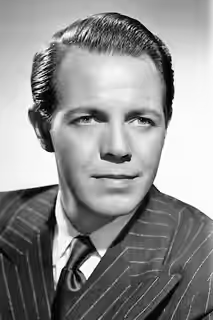
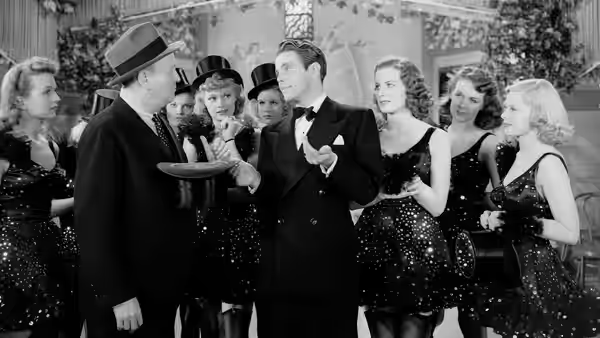
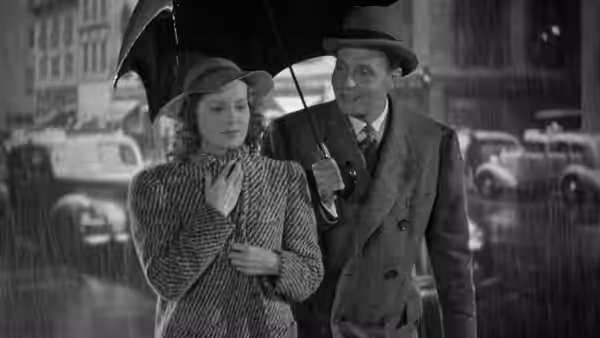
The screenplay by Tess Slesinger and Frank Davis has trouble making its male characters worth the time spent on them. Neither Louis Hayward as Jimmy Harris nor Ralph Bellamy as Steve Adams can supply the interest missing from the writing. Romantic complications require some curiosity about the people involved, and here they too often arrive as obligations. The women have already given the film a subject; the men do too little to justify taking attention away from it.
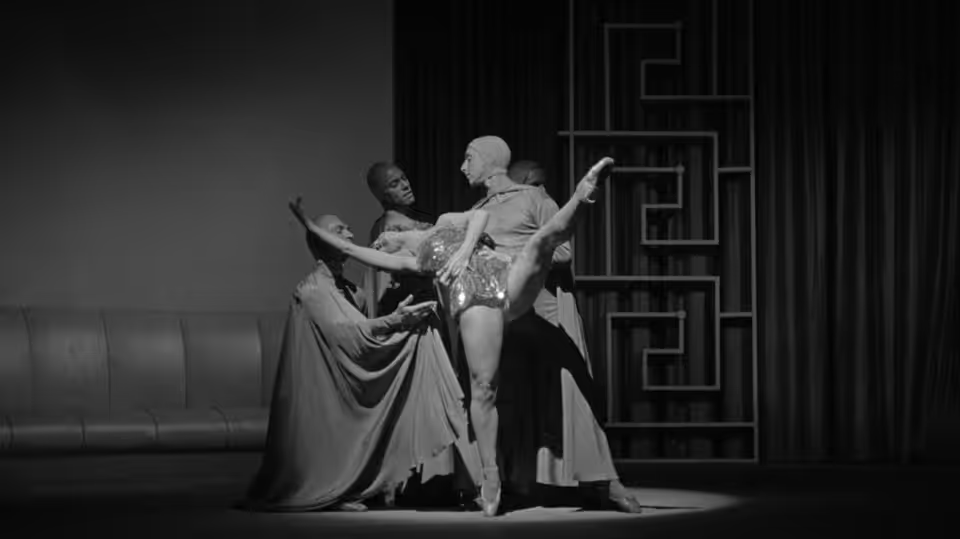
Joseph H. August and Russell Metty’s cinematography gives the performers room to register, with Lucille Ball’s assurance doing much of the work within the frame. The visual interest depends heavily on the actors, which makes the weaker characterisation difficult to overlook. Robert Wise’s editing keeps things moving without curing that imbalance. The shifts back into romance remain awkward because the characters have not earned the attention.
Edward Stevenson’s costume design helps make appearance part of the drama: these women are being judged on what others see. Dorothy Arzner takes that scrutiny seriously enough to give the rivalry some weight beyond the usual competition for attention. The film is at its most persuasive when it lets ambition be an understandable response to the demands made of a performer. That concern supplies a reason to stay interested even when the comedy and romance fail to support it.
Within the backstage drama, Dorothy Arzner finds something worth examining in the conditions attached to a woman’s success. The treatment is too uneven to make this a recommendation for everyone, but there is enough intelligence here to reward an interest in performers’ working lives. Keep expectations for the romance modest and let Lucille Ball take charge.