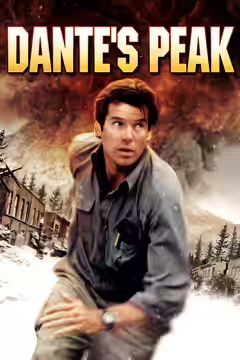
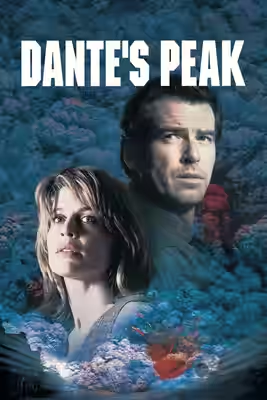
Roger Donaldson keeps the mountain quiet for an hour of meetings and brown tap water, then lets it go, and the last forty minutes do what the poster promised. Fine for a wet afternoon; slow for anything else.
Dante’s Peak is a disaster film built to the old plan: a town, a warning nobody wants to hear, and then the roof comes off. Roger Donaldson directs from a script by Leslie Bohem, it runs 108 minutes, and it spends the first hour of them making sure we know the mountain is going to go. It is a decent Saturday-afternoon picture with a long wait at the front, and we would not pretend it is more.
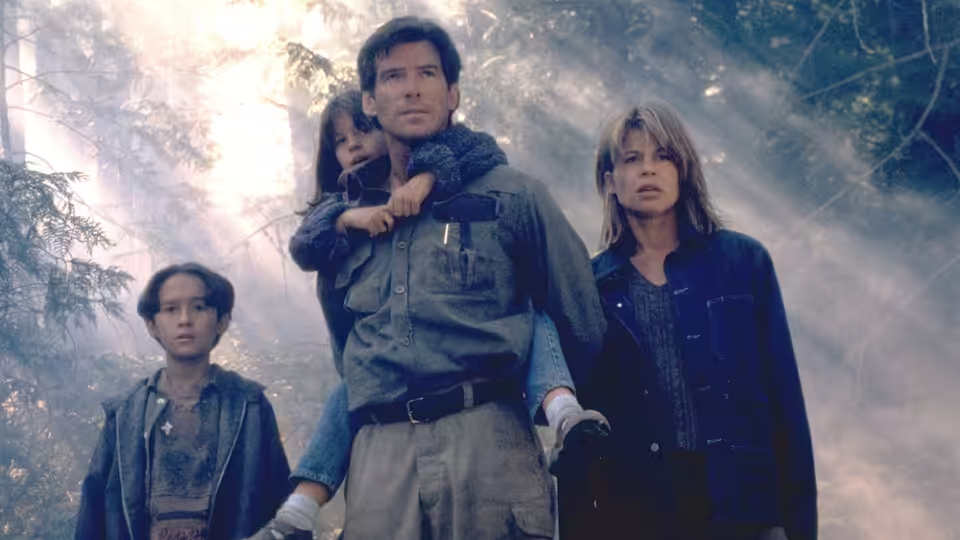
The opening is the best piece of writing in it. Harry Dalton (Pierce Brosnan) is in Colombia when a volcano erupts, and he loses the woman he loves to a lump of rock through a windscreen. Donaldson stages it fast and dirty, ash on the lens and a truck that will not start, and the film is never again as frightened as it is in those five minutes. Then Harry goes to Dante’s Peak, Washington, and the film sits down.
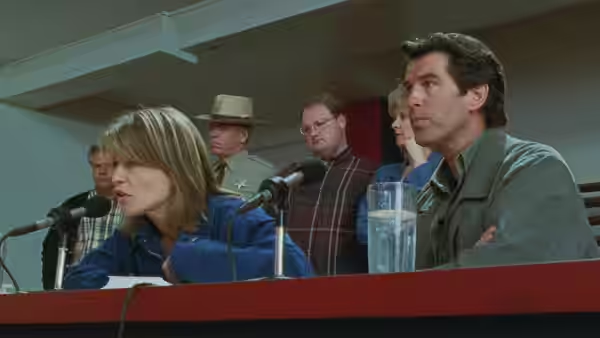
What follows is a procedural. Harry drives up the mountain and finds dead trees. He tests a lake and it eats his instrument. Two swimmers have been boiled in a hot spring, and we winced, properly, at the sight of the bodies; Bohem and Donaldson are wise enough to show them for a second and cut away. Paul Dreyfus (Charles Hallahan) flies in with a team, Greg (Grant Heslov), Terry (Kirk Trutner), Stan (Tzi Ma) and Nancy (Arabella Field), and tells Harry he has seen false alarms empty towns before. Hallahan plays him as a reasonable man rather than a villain, which is the film’s one bit of generosity to its own plot. Les Worrell (Brian Reddy) has a cheque for the town and does not want to hear about sulphur. By the forty-minute mark we were restless, and we were still restless at sixty.
Brosnan, fresh from GoldenEye, plays the whole thing in a fleece, reading dials and frowning, and it suits him better than it sounds; he is good at competence and the part asks for nothing else. Linda Hamilton gets a coffee shop, two children, a mother-in-law and a job title, and no scene in which she does anything but worry. The children, Jamie Renée Smith and Jeremy Foley, are fine and are written as errands. Elizabeth Hoffman’s Ruth lives up the mountain and refuses to come down, and anyone who has seen a disaster film knows what that is for. Isis Mussenden dresses the town in plaid and the scientists in survey jackets, and nobody looks as if they have ever been somewhere other than a hardware shop, which is right.
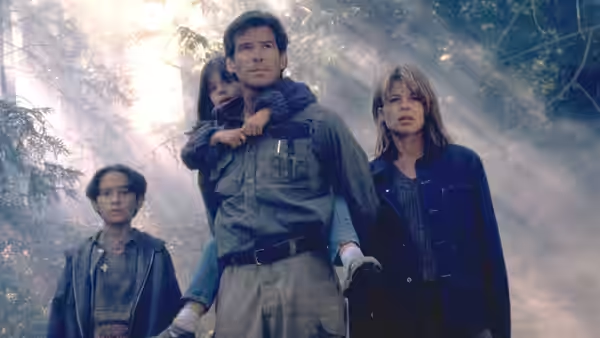
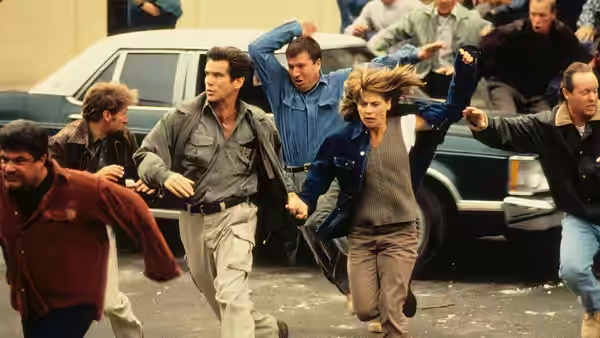
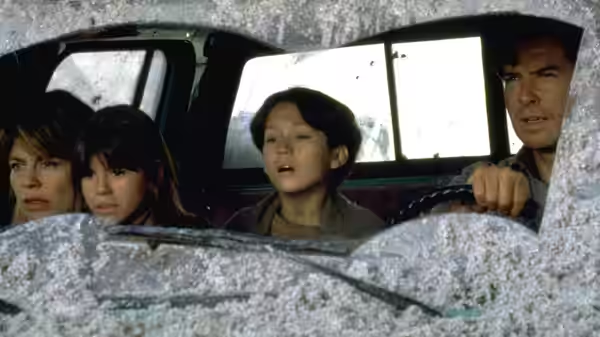
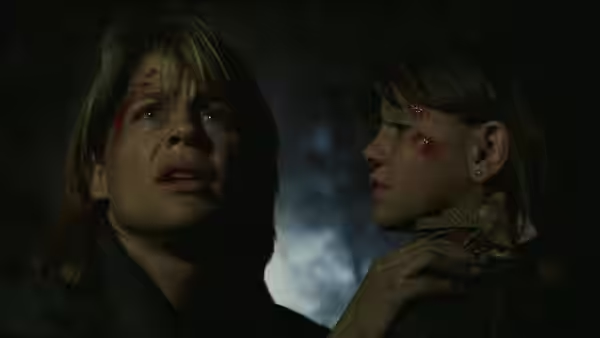
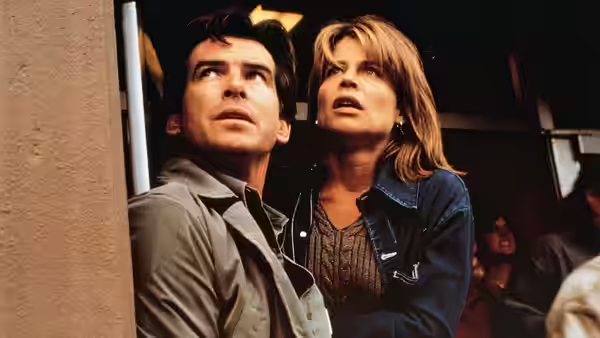
Then the mountain goes, and the film wakes up. Donaldson and his effects crew favour ash, water and falling masonry over the obviously drawn, and the result has lasted far better than most of its decade. Andrzej Bartkowiak shoots the ash-fall in flat grey light so that J. Dennis Washington’s Main Street, built to be wrecked, looks like a photograph of itself before the first window breaks. The sequence the film is remembered for, a pyroclastic cloud coming down through the pines at the speed of a train, is the one that got us: we sat forward and stopped noticing the dialogue, because there was none. Tina Hirsch, Howard E. Smith and Conrad Buff IV cut the escape as a run of short, clear shots, and for twenty minutes you can always tell where everyone is and what will kill them.
The weaknesses are the ones the genre always has, and the film does nothing to disguise them. Nobody in Dante’s Peak panics convincingly; the evacuation is a traffic jam with extras in it. John Frizzell and James Newton Howard are both credited with the music, and the score does the shouting the cast have been told not to.
Donaldson’s No Way Out, from 1987, had a story with a spring in it. This one has a timetable. Set against The Towering Inferno, which gave its people decisions to make while the building burned, Dante’s Peak gives its people a mountain and asks them to look up at it. Most critics have landed where we have, mildly entertained and mildly bored, and we see no reason to argue.
The 12 certificate earns its moments, the hot spring especially, so think twice about younger children. Otherwise this is a film for a wet afternoon at home, where the first hour is well suited to making tea and the second to not answering the door.