Roman Polanski’s film of Ariel Dorfman’s play is a three-hander in one house on one night, and it holds. Weaver and Kingsley are superb and the storm is real; the script sometimes stops to argue its case when the actors had already made it.
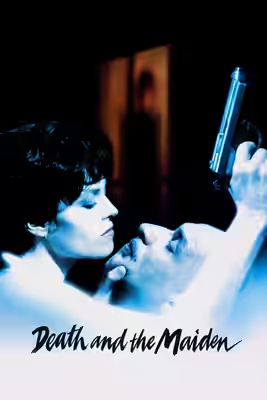
Roman Polanski has always been happiest with a few people in a small space who cannot leave: a boat in Knife in the Water, a flat in Repulsion. Death and the Maiden gives him three people, one house and a storm that has taken the power out, and he is at home. It is tense, well acted and good. It is not quite as good as its best half hour, because Ariel Dorfman and Rafael Yglesias’s screenplay keeps stopping the characters so they can explain the play.
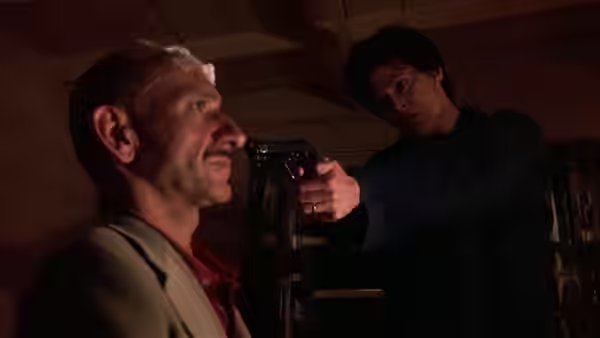
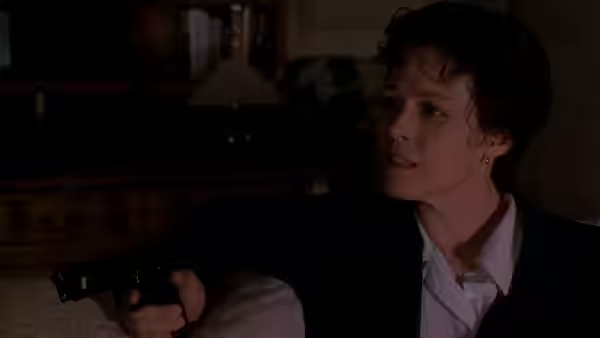
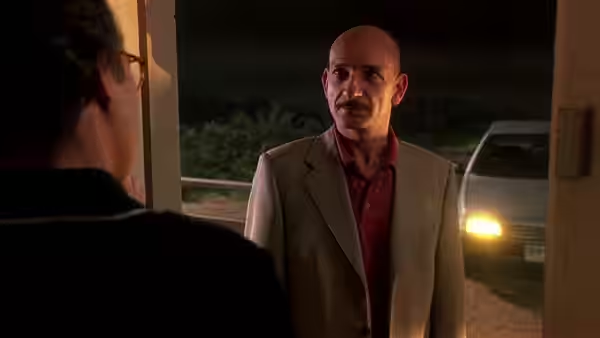
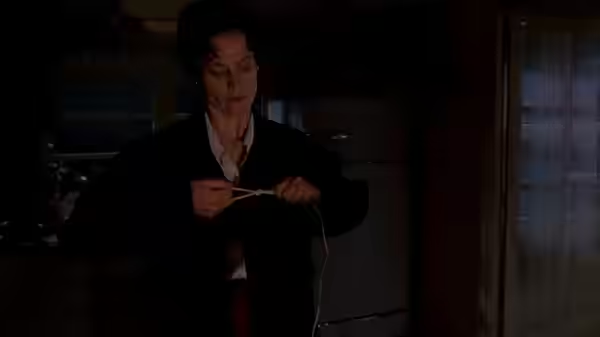
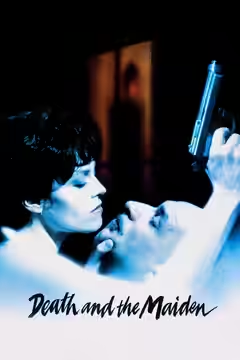
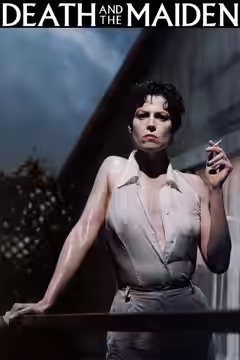
Gerardo Escobar (Stuart Wilson) has been named to a commission that will investigate the regime’s dead but not its living, so it will not investigate his wife. He comes home in the car of a stranger, Dr. Roberto Miranda (Ben Kingsley), who stopped to help on the road. Paulina Escobar (Sigourney Weaver) hears the doctor’s voice from the next room and knows it, or believes she does. Weaver plays the next ten minutes barefoot and almost silent, moving through the dark house like someone who has rehearsed this for years and is appalled to find it happening.
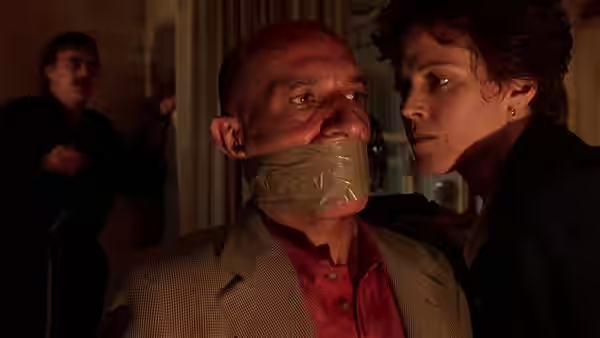
Weaver gives Paulina a hard, flat certainty with something shaking underneath it, and lets us see the shaking only when Gerardo is not looking. Kingsley is her match. Tied to a chair, gagged, then ungagged, he runs through outrage, bargaining, reason, fear and contempt, and never once plays the character as guilty or innocent; he plays a man being accused, which is a harder thing. Wilson has the thankless part, the husband and lawyer who wants procedure where his wife wants a confession, and he makes Gerardo’s decency look like the kind of thing a regime relies on.
Tonino Delli Colli shoots the house by candle and paraffin lamp once the lights go, so faces come and go out of brown dark and the brightest thing in most frames is the rain on the windows. Pierre Guffroy’s house is wood and shutters and a long terrace over the sea, close enough to the cliff that the water never leaves the soundtrack. Milena Canonero puts Paulina in a plain dress and cardigan and the doctor in the suit of a man who expected to be home by midnight. Hervé de Luze cuts with patience, holding on whoever is listening rather than whoever is talking, the right choice in a film about whether to believe a voice. Wojciech Kilar’s score keeps away from the Schubert and lets the quartet do its own work.
And it does work. Paulina describes what was done to her, with the music playing, and the camera stays on Kingsley’s face while she does it. We were horrified, and then we noticed what the film had done to us: in ten minutes we had been sure he was the man, sure he was not, and sure again, and each time it was an actor’s eyes and nothing else that had moved us. It is an unsettling thing to catch yourself doing, and it is the point.
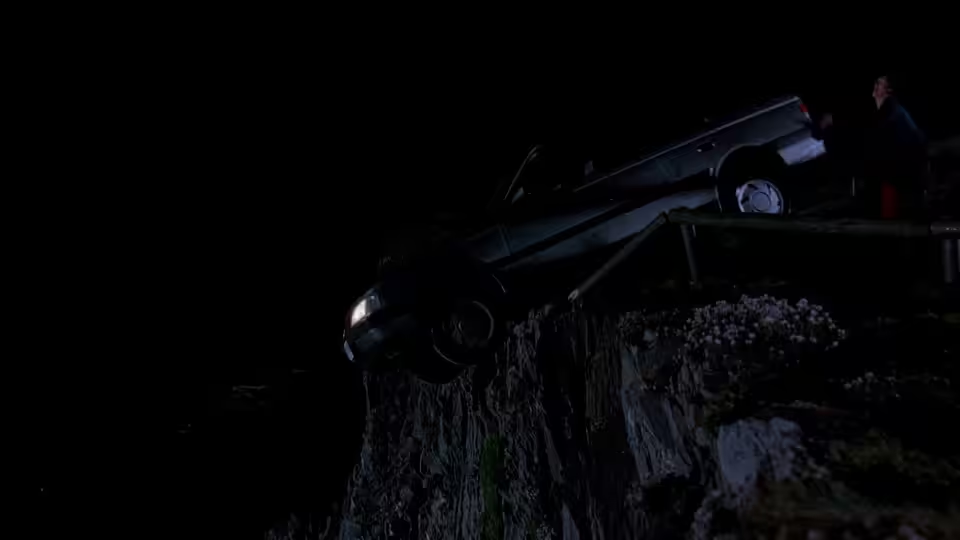
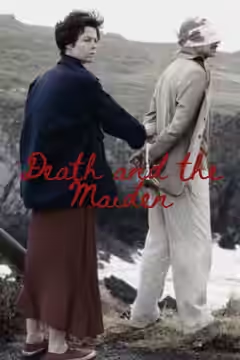
The film does not trust us to have got there. Dorfman’s play is about whether a country can have justice and truth at the same time, and the screenplay has Gerardo say so, more than once, in sentences no frightened husband would form at four in the morning. Paulina, too, is handed lines that belong to a programme note. When the three of them are reacting to one another the film is alive; when one of them explains the dilemma, it goes still. Polanski has opened the play out hardly at all, a road, a cliff, the terrace, and we did not mind that, but the speeches have come along with the single set.
Against Polanski’s own confined films this sits below Knife in the Water, which never explained itself. The last scene is a single long camera movement we will not describe; it says in silence what the script had spent an hour saying aloud, and it is the best thing in the film. Watch it at home, at night, with the lights off, and do not expect to agree with the person beside you about the doctor.