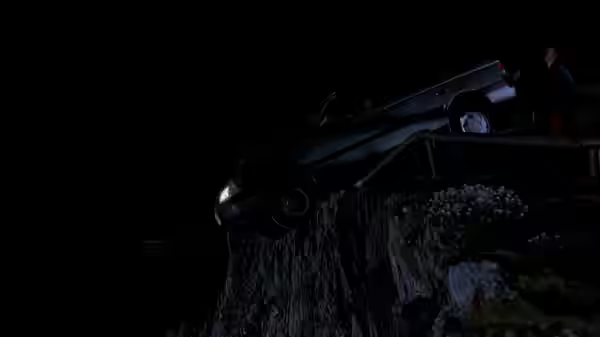
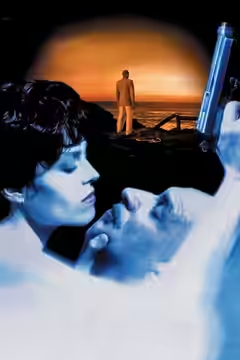
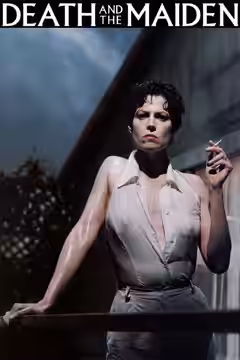
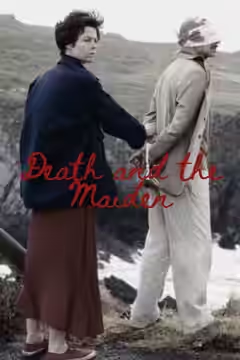
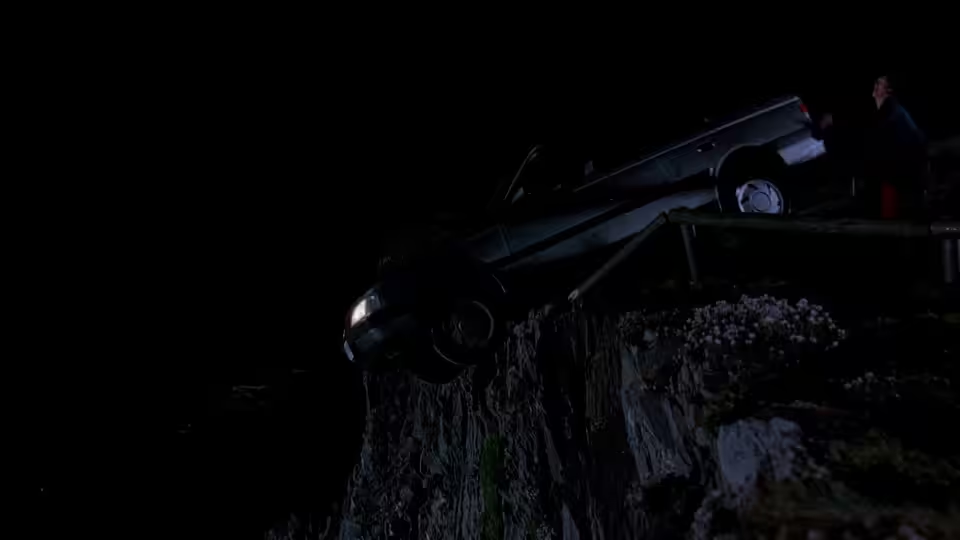
A car hangs nose-down over a rocky embankment as a figure stands nearby
Film review

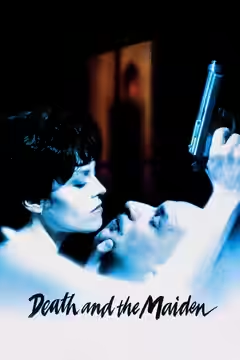
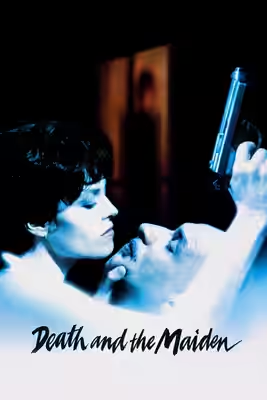
Death and the Maiden

1994 · Directed by Roman Polanski · 1h 43m · Kijkwijzer 12

In a sentenceBen Kingsley pleads innocence so well you start wishing he were guilty

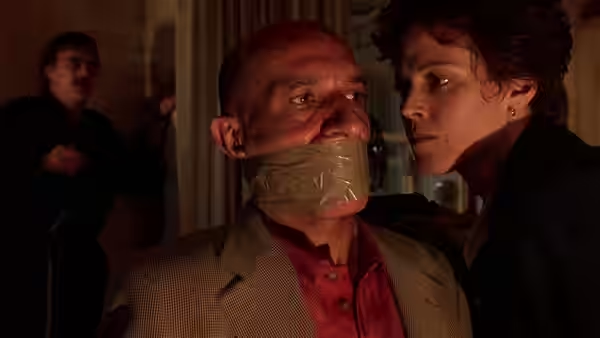
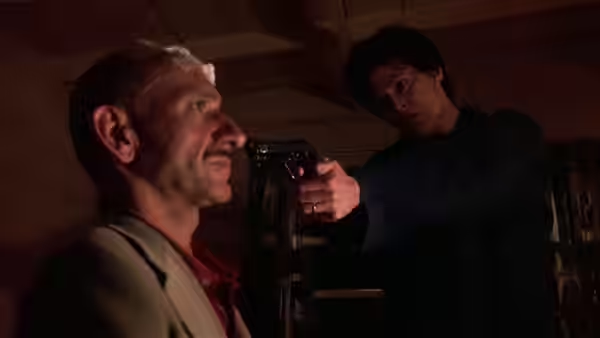
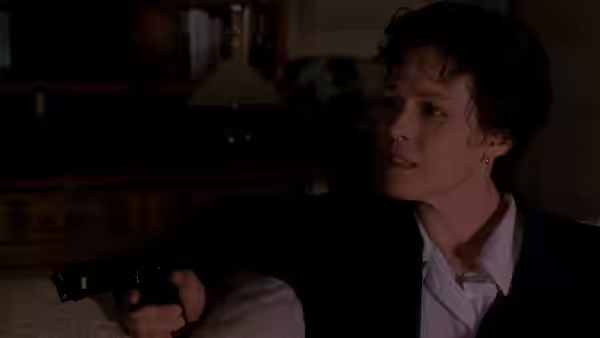
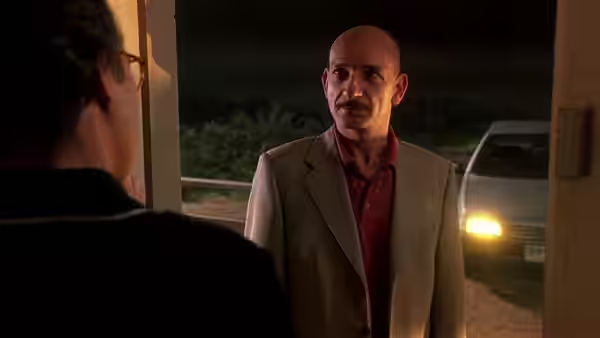
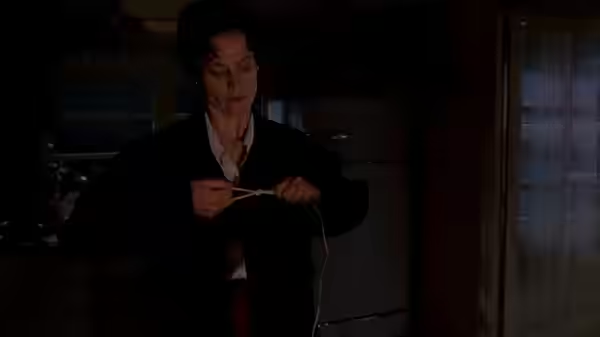
A house on a cliff in an unnamed South American country, months after the dictatorship has fallen. Paulina Escobar (Sigourney Weaver) waits through a storm for her husband Gerardo (Stuart Wilson), a lawyer asked that day to head a commission into the old regime’s crimes, but only those that ended in death. He comes home in a stranger’s car: his own has a flat tyre, and Dr. Roberto Miranda (Ben Kingsley) has given him a lift. Paulina hides, listens, and hears a voice she believes she last heard blindfolded in a cell, while a cassette of Schubert’s Death and the Maiden played. Before dawn she has pushed the doctor’s car off the cliff and tied him to a chair, and Gerardo must decide which of them to believe.

Fi1m review

Roman Polanski’s film of Ariel Dorfman’s play is a three-hander in one house on one night, and it holds. Weaver and Kingsley are superb and the storm is real; the script sometimes stops to argue its case when the actors had already made it.

Roman Polanski has always been happiest with a few people in a small space who cannot leave: a boat in Knife in the Water, a flat in Repulsion. Death and the Maiden gives him three people, one house and a storm that has taken the power out, and he is at home. It is tense, well acted and good. It is not quite as good as its best half hour, because Ariel Dorfman and Rafael Yglesias’s screenplay keeps stopping the characters so they can explain the play.

Gerardo Escobar (Stuart Wilson) has been named to a commission that will investigate the regime’s dead but not its living, so it will not investigate his wife. He comes home in the car of a stranger, Dr. Roberto Miranda (Ben Kingsley), who stopped to help on the road. Paulina Escobar (Sigourney Weaver) hears the doctor’s voice from the next room and knows it, or believes she does. Weaver plays the next ten minutes barefoot and almost silent, moving through the dark house like someone who has rehearsed this for years and is appalled to find it happening.

Weaver gives Paulina a hard, flat certainty with something shaking underneath it, and lets us see the shaking only when Gerardo is not looking. Kingsley is her match. Tied to a chair, gagged, then ungagged, he runs through outrage, bargaining, reason, fear and contempt, and never once plays the character as guilty or innocent; he plays a man being accused, which is a harder thing. Wilson has the thankless part, the husband and lawyer who wants procedure where his wife wants a confession, and he makes Gerardo’s decency look like the kind of thing a regime relies on.

Tonino Delli Colli shoots the house by candle and paraffin lamp once the lights go, so faces come and go out of brown dark and the brightest thing in most frames is the rain on the windows. Pierre Guffroy’s house is wood and shutters and a long terrace over the sea, close enough to the cliff that the water never leaves the soundtrack. Milena Canonero puts Paulina in a plain dress and cardigan and the doctor in the suit of a man who expected to be home by midnight. Hervé de Luze cuts with patience, holding on whoever is listening rather than whoever is talking, the right choice in a film about whether to believe a voice. Wojciech Kilar’s score keeps away from the Schubert and lets the quartet do its own work.

And it does work. Paulina describes what was done to her, with the music playing, and the camera stays on Kingsley’s face while she does it. We were horrified, and then we noticed what the film had done to us: in ten minutes we had been sure he was the man, sure he was not, and sure again, and each time it was an actor’s eyes and nothing else that had moved us. It is an unsettling thing to catch yourself doing, and it is the point.

The film does not trust us to have got there. Dorfman’s play is about whether a country can have justice and truth at the same time, and the screenplay has Gerardo say so, more than once, in sentences no frightened husband would form at four in the morning. Paulina, too, is handed lines that belong to a programme note. When the three of them are reacting to one another the film is alive; when one of them explains the dilemma, it goes still. Polanski has opened the play out hardly at all, a road, a cliff, the terrace, and we did not mind that, but the speeches have come along with the single set.

Against Polanski’s own confined films this sits below Knife in the Water, which never explained itself. The last scene is a single long camera movement we will not describe; it says in silence what the script had spent an hour saying aloud, and it is the best thing in the film. Watch it at home, at night, with the lights off, and do not expect to agree with the person beside you about the doctor.

Critical consensus AI synthesised

66
Positive
3
Mixed
3
Negative
1

Most critics come down in favour of the film, if not warmly. The praise clusters on the three leads, Sigourney Weaver and Ben Kingsley above all, and on the uncertainty the pair keep alive over whether he is the man she says he is. Polanski’s handling of tension inside one confined house is the other recurring compliment; even the reviews that like the film least concede that the menace is expertly sustained.

The reservations are almost all about the writing. Several reviews find the characters turning into mouthpieces for the play’s arguments, and the moral questions put too plainly. The spread is wide: at one end the film is riveting despite the lecturing, at the other the Los Angeles Times finds it too schematic and self-important to feel rich. Three of the seven reviews could not be read in full, so the middle of the range is thinner than the counts suggest.

Slant Magazine
31 May 2003 · ★★★½/4 · Nick Schager
88

Schager finds the film’s moral questions sometimes didactic, but its volatility keeps it riveting. He especially praises the fierce interplay among the three leads and the powerful final crane shot.

Read the full review →
Empire
1 January 2000 · Kim Newman
80*

Newman finds the film a chilling, thought-provoking success, despite its less personal feel and predictable late revelations. He particularly praises Weaver and Kingsley’s performances and Polanski’s tension-building.

Read the full review →
Variety
12 December 1994 · Todd McCarthy
70*

McCarthy finds the film tense and skillfully made, though its characters can feel like mouthpieces for ideology. He praises the three lead performances, particularly the suspenseful ambiguity created by Ben Kingsley and Sigourney Weaver.

Read the full review →
RogerEbert.com
64*

The page is blocked by a browser check, so the critic’s verdict cannot be verified. No specific praise or complaint is available in the provided page text.

Read the full review →
The New York Times
23 December 1994 · Janet Maslin
64*

The page content is unavailable, so the critic’s verdict cannot be verified. No specific praise or complaint can be reliably identified from the accessible text.

Read the full review →
Time Out
· GA
64*

The page identifies this as a film review, but the review text is unavailable. Its verdict and any specific praise or complaint cannot be determined from the accessible content.

Read the full review →

Straight answers AI written, from our review

Is Death and the Maiden worth watching?
Death and the Maiden is worth watching for anyone who likes a tense three-hander in one house on one night, and we scored it 74. Sigourney Weaver and Ben Kingsley are superb, and the storm and candlelit house hold the tension. Our reservation is the screenplay, which stops the characters to explain the play's argument when the actors had already made it.
How long is Death and the Maiden, and what is it rated?
Death and the Maiden runs 1h 43m and is rated 12 by the Kijkwijzer in the Netherlands. It is a drama and thriller film.
Where can I watch Death and the Maiden in the Netherlands?
Death and the Maiden is not on any streaming or rental service in the Netherlands at the moment. It is available in 13 other countries; change your country at the top of the page to see where. Availability is checked daily.
How violent or frightening is Death and the Maiden, and is it suitable for children?
Death and the Maiden is not for children: it carries a US R certificate and has no UK rating, and it is about a woman confronting the man she believes tortured and raped her under a dictatorship. The violence is mostly spoken and threatened rather than shown, with a man tied to a chair and gagged and a long account of what was done to her. Older teenagers who can take that will be fine.
What should I watch after Death and the Maiden?
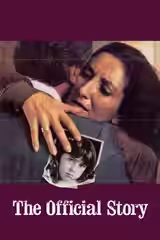
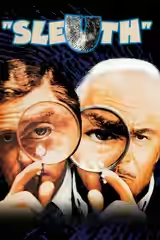
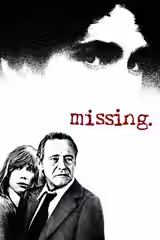
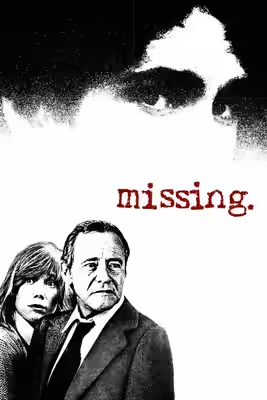
After Death and the Maiden, try The Official Story (1985, Fi1m 81): An Argentine schoolteacher slowly works out where her adopted daughter came from. Then Sleuth (1972, Fi1m 82): Two men, one house, a game of accusation that keeps changing hands; and Missing (1982, Fi1m 80): Jack Lemmon searches a coup-torn capital for his son and loses his faith in his own government.

Cast

If you liked this, try…

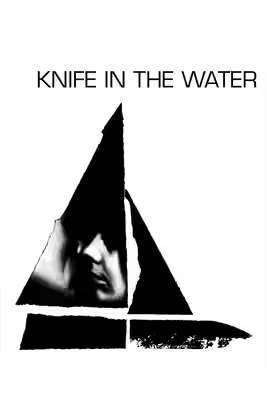
  1. Knife in the Water (1962) · not reviewed yetPolanski’s first feature: three people, one boat, and nobody willing to say what they want.

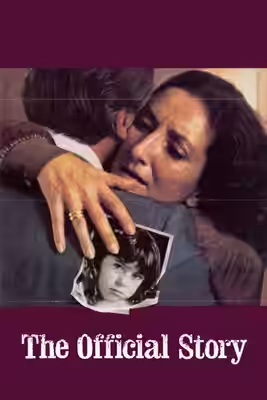
  2. The Official Story (1985, Fi1m 81)An Argentine schoolteacher slowly works out where her adopted daughter came from.

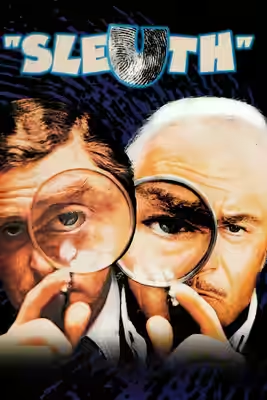
  3. Sleuth (1972, Fi1m 82)Two men, one house, a game of accusation that keeps changing hands.

  4. Missing (1982, Fi1m 80)Jack Lemmon searches a coup-torn capital for his son and loses his faith in his own government.

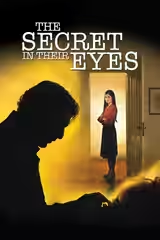
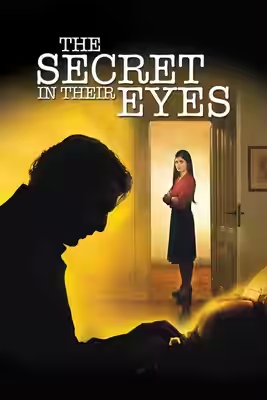
  5. The Secret in Their Eyes (2009, Fi1m 78)A retired Argentine court clerk reopens a case the dictatorship wanted closed.

Free account

Know what to watch tonight

Two lists that know where things are streaming, collections you can share, your own score beside ours, and Discover that remembers what you have seen.

  • Want to see, sorted by what is streaming now
  • Seen, with your score out of ten
  • No adverts, ever