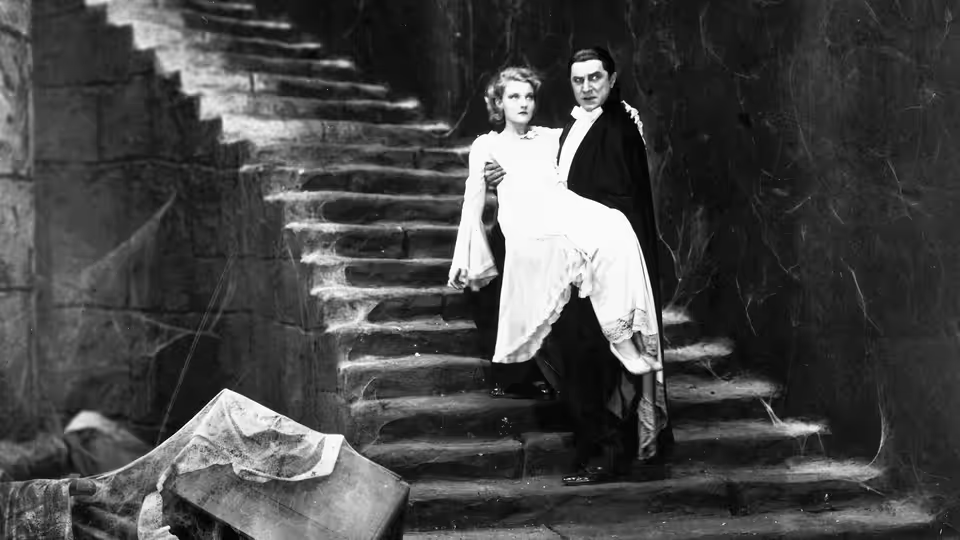
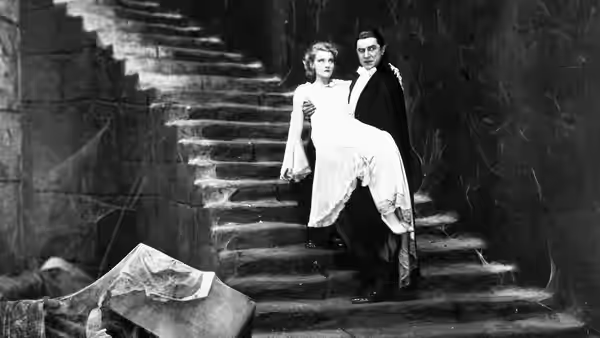
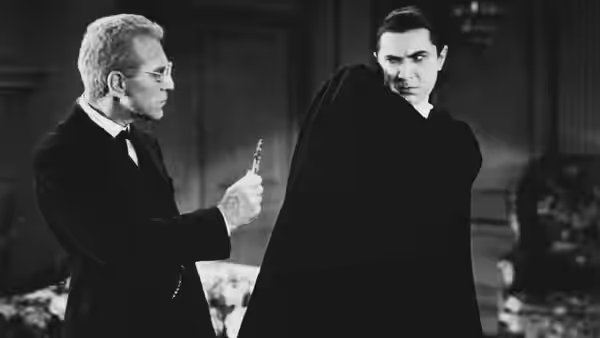
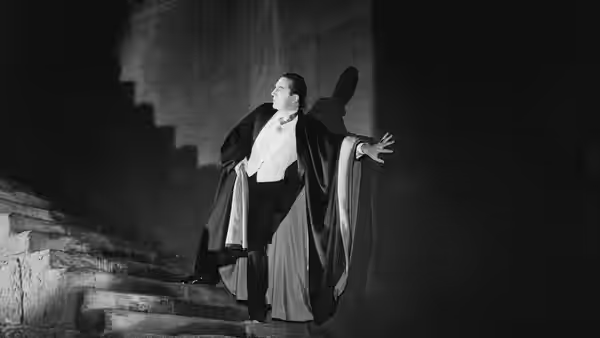
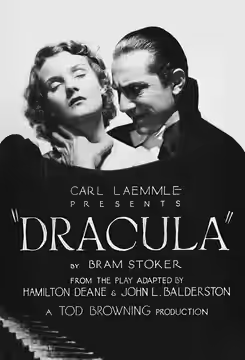
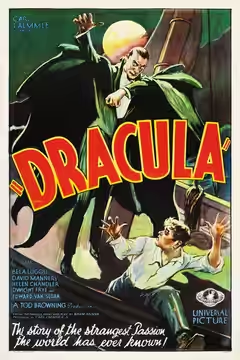
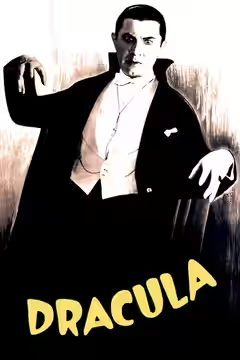
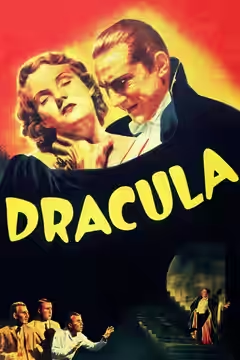
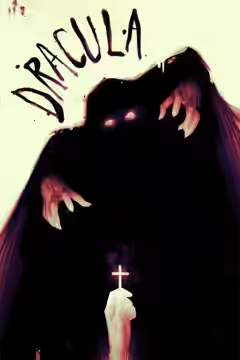
Bela Lugosi remains unsettling in Dracula, even when the film around him grows stiff and talkative. Tod Browning’s horror is worth seeing for its leading performance and an opening that the rest cannot quite match.
Tod Browning’s Dracula is good horror with a persistent problem: it keeps stopping to talk when it has already given us something to fear. Bela Lugosi makes Count Dracula sufficiently compelling to carry us through much of that talk, though not all of it. At 74 minutes, the film ought to feel leaner than it does. Its serious approach to the material deserves respect, but the opening establishes an assurance that the later staging cannot consistently maintain.
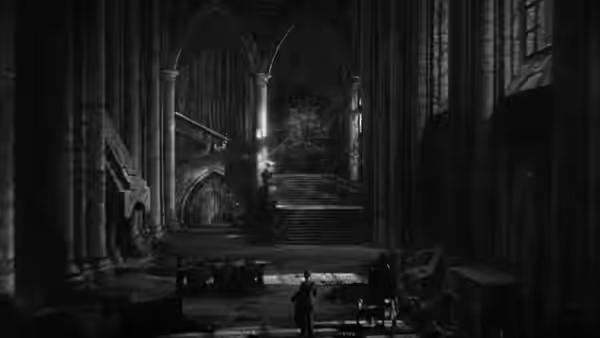
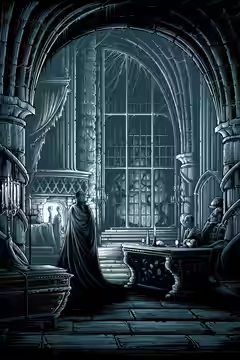
Karl Freund’s cinematography gives those opening scenes a freedom of movement that the talkier passages sorely need. The fluid camera encourages us to keep looking for danger, and the atmosphere develops without having to be explained at every step. John Hoffman and Herman Rosse’s production design contributes to that early unease, giving the horror a persuasive setting. Too often afterwards, the director seems content to let the surroundings do their work while the conversation receives rather less imaginative attention.
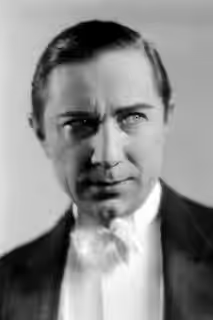
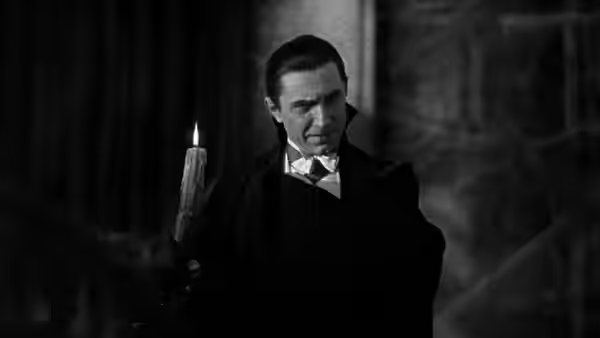
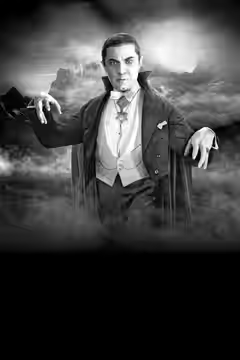
We found Bela Lugosi unsettling, and the deliberateness of his performance is the reason. He gives Count Dracula’s speech such careful weight that ordinary courtesy starts to sound like a warning. There is enough charm to prevent the menace from becoming monotonous, and enough restraint to make us attend to small changes of emphasis. The faint romantic appeal matters: we understand why this figure might hold someone’s attention before we consider whether staying near him is sensible.
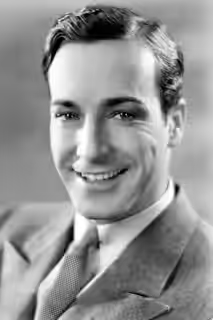
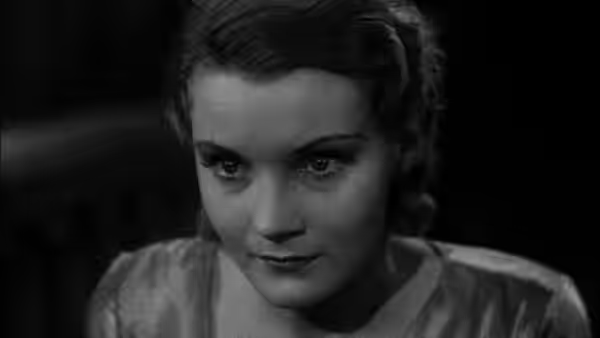
That command also exposes how much less interesting the surrounding dialogue can be. Helen Chandler’s Mina and David Manners’s John Harker struggle to make an equivalent impression, although competing with this Count would be a difficult assignment for anyone. Their performances cannot quite turn the more static conversations into encounters whose every exchange matters. Too many passages retain the stiffness of a staged conversation, with neither the actors nor the camera finding enough within them to justify the time spent listening.
Garrett Fort’s screenplay takes the horror seriously, which helps, but solemnity becomes a habit rather than a response to something disturbing. We do not need a joke or a sudden shock every few minutes; we do need the dialogue to make the danger feel nearer. Milton Carruth’s editing cannot do enough to hurry along scenes that develop so little as they proceed. The running time remains modest, yet individual exchanges can feel as though they have been allotted more time than they have earned.
The opening provides a useful answer to the suggestion that this is simply how older horror films have to move. Its confidence comes from making us look, allowing atmosphere and camera movement to sustain our attention without constant conversation. The later stiffness is disappointing precisely because the film has already demonstrated another way of working. Even so, the central performance remains strong enough to make this a worthwhile evening for anyone who enjoys horror that proceeds with some ceremony. Give it a little patience, but do not feel obliged to find every slow conversation frightening.