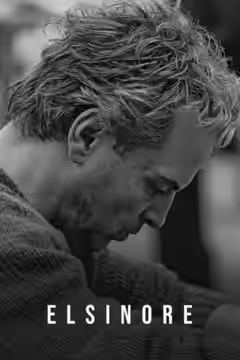
Andrew Scott is remarkable as Ian Charleson, an actor taking on Hamlet while dying of AIDS, and Simon Stone’s film is worth seeing for him. Around the performance is a biopic that explains its feelings and, in the final stretch, insists on them.
Ian Charleson played Hamlet at the National Theatre in 1989 and was dead by the following January, at forty. That is the shape of the story Simon Stone is telling, from a screenplay by Stephen Beresford, and Elsinore does not pretend otherwise; the title is the castle where the prince dies. What the film is trying to do is show a man who knows how it ends and decides to work anyway. Charleson (Andrew Scott, who also produces) is getting sicker, is being offered the biggest stage part of his life, and wants to get through the run on his own terms before anyone starts being kind to him.
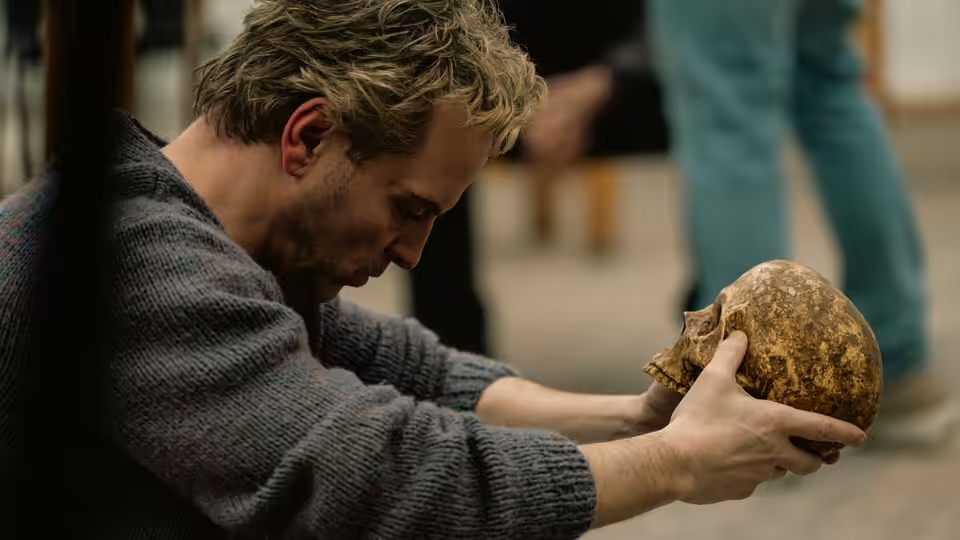
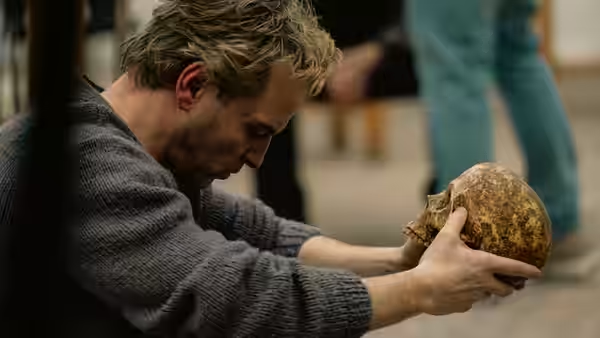
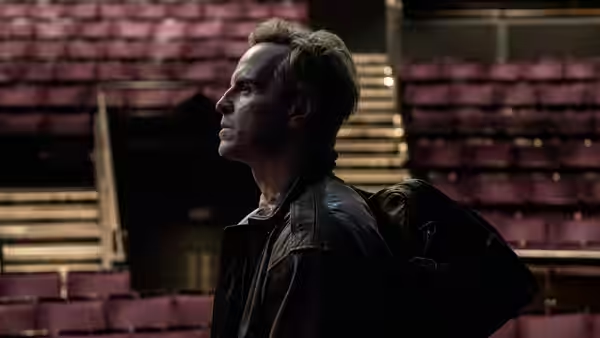
Scott is the reason to see it, and he would be the reason if the film around him were much worse than it is. He plays Charleson as a man managing two performances at once: the Hamlet, and the appearance of a well man who can still do it. Watch him in rehearsal, holding a wall a fraction longer than a fit actor would, then straightening before anyone turns round. In the Hamlet scenes themselves, which Stone stages at length, the lines do the double work they were always going to do, and Scott has the sense to play them small. He is not a dying man doing Hamlet. He is an actor doing Hamlet, and the dying gets in.
Mike Eley shoots the theatre from the wings and the dressing room rather than the stalls, so we see the stage as the actor sees it: a bright rectangle beyond a black edge, other people’s faces lit from below. Helen Scott’s production design gives Charleson a flat full of paperbacks and a hospital that is all wipe-clean surfaces, and Mel Page keeps him in the same soft shirts and cardigans in both, which is a quiet way of saying he is the same person in each. The late 1980s are done without the usual clutter. There is no wall of period songs, and nobody says the year.
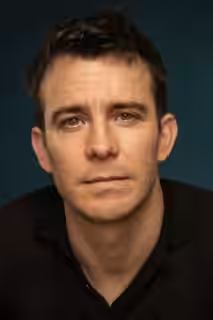
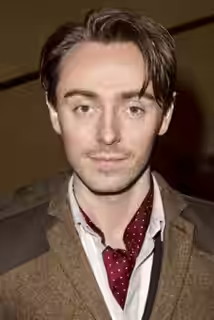
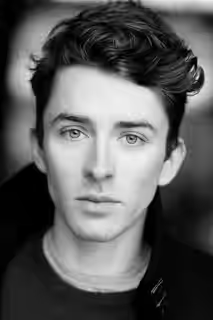
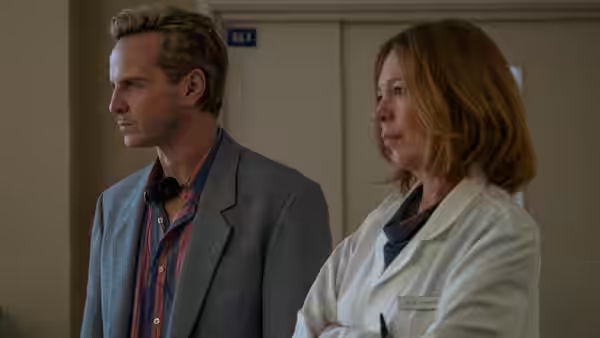
Johnny Flynn plays Richard Eyre with the exact anxiety of a director who has cast someone he loves and fears he has made a mistake. David Dawson’s Derek Jarman gets a couple of scenes and makes them count. Olivia Colman (Margaret Johnson) and Billie Piper (Patsy) are around Charleson as people who know; Monica Dolan and Georgie Glen are among those who do not yet. The scene in which he tells his parents the two things he has been keeping from them undid us, and it was not the speech. It was Glen’s Jean Charleson listening, hands in her lap, working out which piece of news to be frightened of first.
Then there is the rest of it, and the rest of it is a biopic that has seen other biopics. Beresford’s script keeps supplying lines that explain what the scenes have already shown, and Stone, who let The Dig breathe, here hurries. Valerio Bonelli cuts the rehearsal period fast, the way films cut training sequences, so that weeks of work arrive as a handful of shots. Stefan Gregory’s score is good and patient for eighty minutes, mostly piano and low strings, and then in the last stretch it swells under a montage that stacks the film’s best moments on top of one another as if we might have missed them. We had not. We had been in tears ten minutes earlier, and we resented being asked again.
Most critics have been warmer than we are, and we understand why: Scott is that good and the story is that sad. But Beresford’s Pride found jokes and shape in a story about the same years and the same illness, and this one settles for being moving, which is easier. At 104 minutes it does not overstay, and the Hamlet scenes alone justify the ticket.
Go for Scott. Know that the film will tell you when to cry, and that you will already have done so.