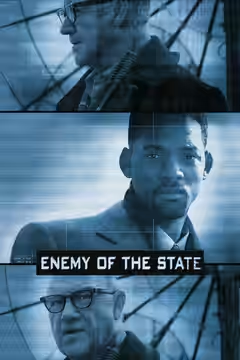
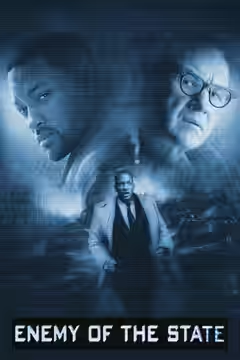
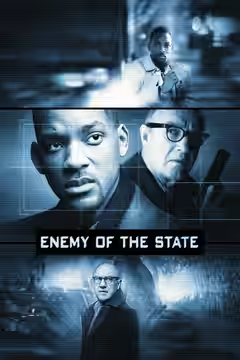
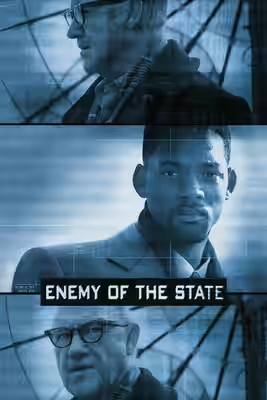
Tony Scott’s surveillance thriller borrows its anxieties from better films and its energy from nowhere but itself. Loud, quick and shallow, it is a good deal of fun, chiefly because Gene Hackman arrives and refuses to be hurried.
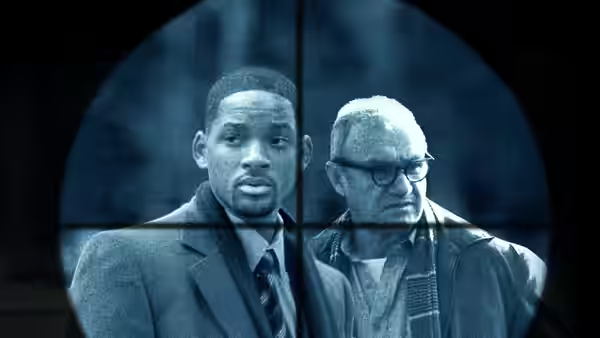
Tony Scott’s Enemy of the State takes the paranoid thriller of the 1970s, the one where a decent man learns the government is listening, and bolts on the toys of 1998: satellites that zoom to a rooftop, telephones that give away your position, a transmitter sewn into a trouser cuff. David Marconi’s script has one idea, that this could happen to anyone, and it tests the idea on the most likeable man in America. The result is loud, quick and not deep, and we had a good time.
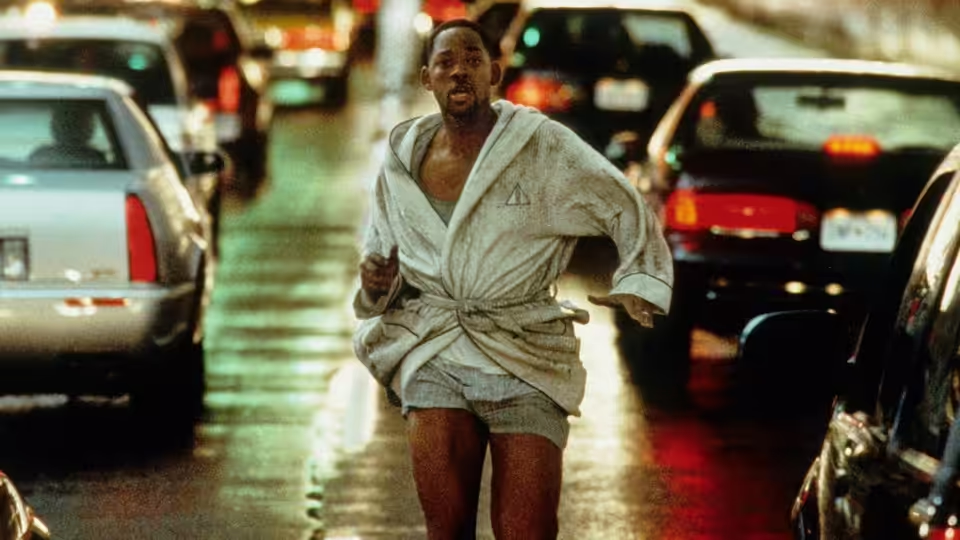
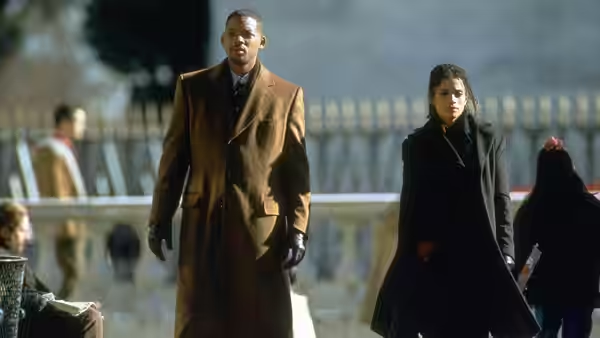
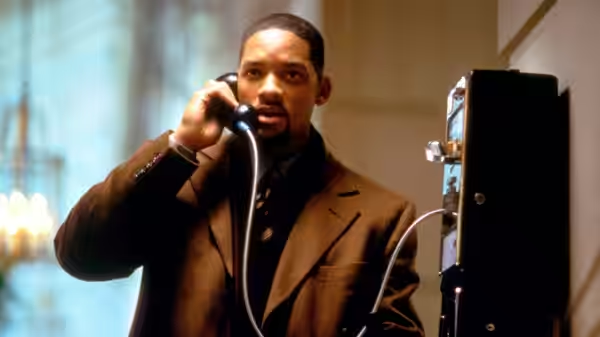
Will Smith plays Robert Clayton Dean, a Washington labour lawyer who talks for a living and keeps talking when the ground goes from under him. Smith’s gift here is to stay funny while frightened, so that a man explaining to his wife why his face is in the paper beside another woman’s is both a joke and a real alarm. Regina King’s Carla has been telling him for years that the government watches everyone, and when she turns out to be right the film gives her too little to do about it. Lisa Bonet, as the ex-girlfriend Rachel Banks, is the link to a source who calls himself Brill, and plays the awkwardness between old lovers more honestly than the script asks.
Dan Mindel shoots Washington in two colours. Dean’s home is amber and lamp-lit; the agency floor is blue and green and glass, and the satellite views that swoop down on streets and roofs carry a grain, as if we were watching through the machine. Chris Lebenzon cuts between the thing happening and the screens on which it is seen, so that we are in two places and safe in neither. Benjamín Fernández gives the agency a floor of monitors and gives Brill a warehouse lined in copper mesh, the one room in the city nothing can see into. Trevor Rabin and Harry Gregson-Williams keep a pulse running under all of it, which is one reason 132 minutes feel shorter than they are.
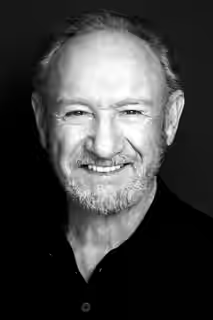
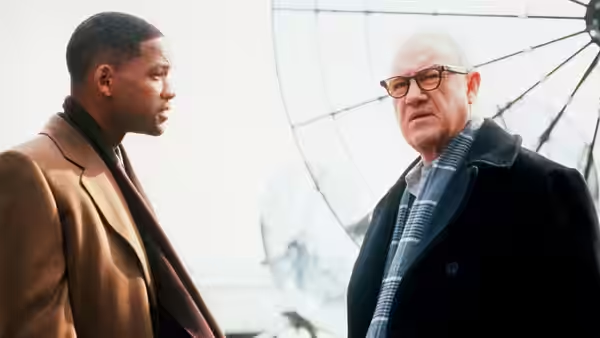
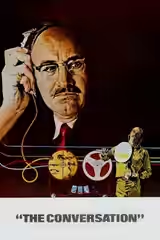
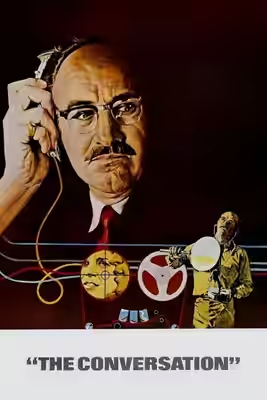
Then there is Gene Hackman. Brill is a retired intelligence man who has not trusted a telephone in decades, and Hackman plays him with a tired contempt for everyone, Dean included. He played a surveillance man once before, in Francis Ford Coppola’s The Conversation (1974), and the film knows it and does not pretend otherwise. There is a scene in which Brill tells Dean, item by item, what the agency has on him, and we felt a cold, slightly pleasurable dread, the sort you feel when a stranger reads your own address back to you. It lasted about five minutes. Then the film went back to running, because Scott is not interested in dread for its own sake.
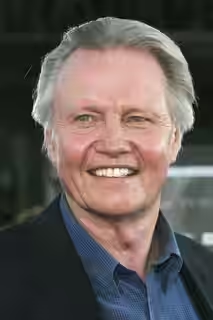
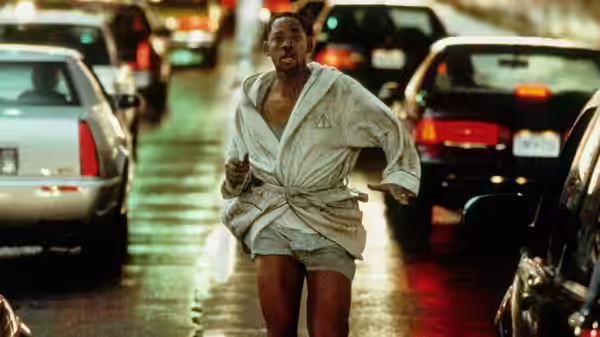
Jon Voight plays Reynolds, the man who orders a congressman’s death before the opening titles and then spends the rest of the film managing staff. It is a good, dry turn: a civil servant with a problem rather than a monster. His young men, Hicks (Loren Dean), Krug (Jake Busey) and Pratt (Barry Pepper), talk like a help desk and shoot like a militia, and the film is funny about the gap. Jason Lee’s Daniel Zavitz, the wildlife researcher whose camera records the killing, gets the first act’s best stretch, a run across traffic that Lebenzon cuts to the bone.
What the film does not have is a thought about surveillance beyond the plain one, that it is bad when it is aimed at you. The agency’s powers switch on and off as the plot needs them. The last half hour takes a turn we will not describe, except to say that a film about watching becomes a film about shooting. We enjoyed it too much to mind at the time, and minded a little on the way home.
Set against Scott’s own Crimson Tide (1995), which put Hackman in a smaller room with larger stakes, this is the lighter film by some distance, and it knows it. Watch it with someone who will say “that is not how satellites work” and then stop saying it twenty minutes in.