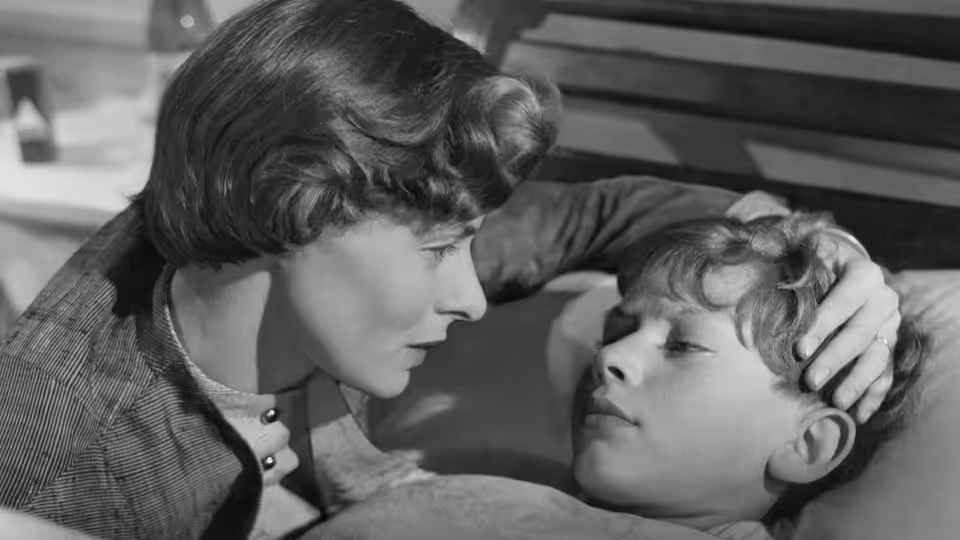
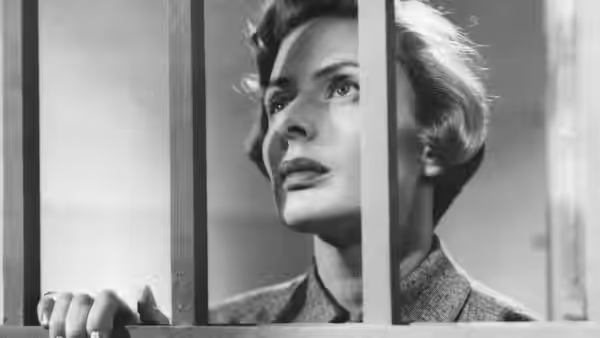
Ingrid Bergman gives Europa ‘51 the emotional weight its moral questions need. Roberto Rossellini sometimes makes goodness look too simple, but her performance makes this searching drama worth the discomfort.
Roberto Rossellini’s Europa ‘51 is a moving, sometimes over-insistent drama about a comfortable person taking poverty seriously. We recommend it for Ingrid Bergman, whose performance gives the film’s concern for others a force that its more emphatic passages cannot supply. Irene Girard’s movement away from luxury brings practical need into view. The film asks what she ought to do about it, and keeps asking after a polite expression of sympathy would normally end the conversation.
Ingrid Bergman makes that question feel personal. Her Irene Girard does not seem to have arrived with a prepared explanation for everything she is doing. She lets earnestness look awkward, with uncertainty still visible in the performance. We were moved by her effort to attend to other people’s needs without making the attention seem like a favour. The concentration she brings to the role keeps the character interesting even when the film seems ready to declare her goodness sufficient explanation.
Aldo Tonti’s cinematography is particularly effective in keeping Ingrid Bergman’s beauty from becoming the whole subject. We notice her face, then the effort of paying attention that the performance conveys. Virgilio Marchi’s production design helps make the movement from wealth towards poverty legible, giving the difference in circumstances a necessary physical presence. That contrast matters because Irene Girard begins with advantages that can easily pass for normality when nobody asks who lacks them.
Jolanda Benvenuti’s editing supports the concentration of the central performance and gives its uncertainties time to register. Across 118 minutes, the film asks for patience, and Ingrid Bergman’s responses usually repay it. Renzo Rossellini’s music is less persuasive when it seems to insist on the gravity already present in her acting. The emphasis belongs to the same earnestness that sometimes makes Roberto Rossellini’s direction feel too keen to secure our agreement.
The main reservation is that Roberto Rossellini sometimes makes the moral choice look simpler than the practical one. Once we have understood the value of Irene Girard’s concern, further insistence does little to deepen it. The writing can become too satisfied with her sincerity, leaving us to supply some of the doubts the drama might usefully confront. We believe in the feeling because Ingrid Bergman has made it credible. We occasionally want the film to examine its own assumptions more closely.
As a social drama, it asks us to consider how we live after we have finished feeling sorry for somebody. We welcome that demand, particularly when poverty remains a matter of ordinary needs that cannot be met by looking sympathetic. Roberto Rossellini’s interest in practical help gives the solemnity a useful purpose. There is enough difficulty in the attempt to make concern useful to hold our attention, even when the treatment becomes too instructive.
We would allow its earnestness some room, without accepting every judgement that comes with it. Anyone drawn to acting that makes moral seriousness feel difficult and personal will find enough here to justify the patience. Give it an evening when there is time for an awkward conversation afterwards.