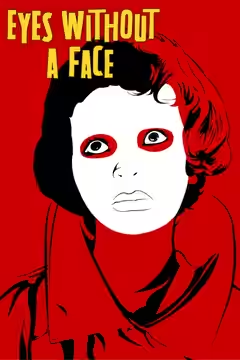
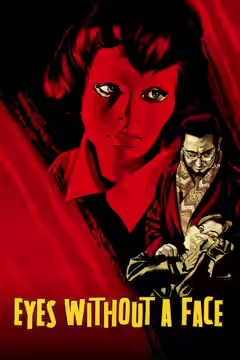
Georges Franju’s horror film is frightening and unexpectedly sad, with Édith Scob’s masked heroine holding our attention. The deliberate pace occasionally becomes sluggish, but we recommend staying with it.
Georges Franju’s Eyes Without a Face is an unusually compassionate horror film, and a disturbing one. It gives facial surgery enough attention to make us want to look away, then asks us to stay with the loneliness of the masked Christiane Génessier. The danger is that such patience will feel like solemnity for its own sake. For most of these 84 minutes, the attention is justified: we are given someone to worry about, and time to worry.
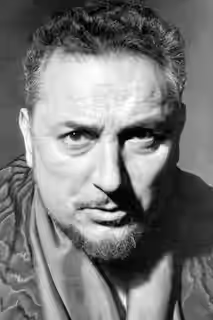
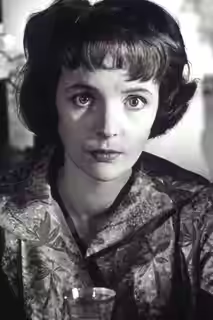
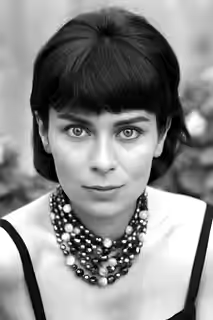
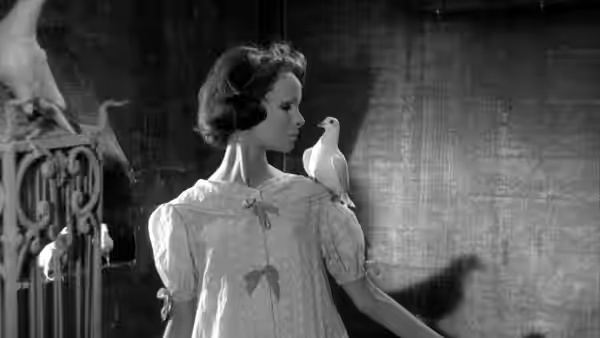
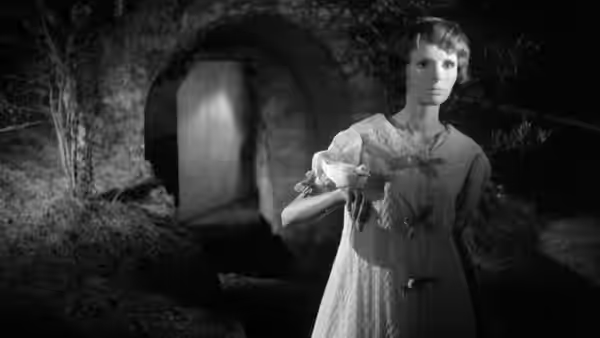
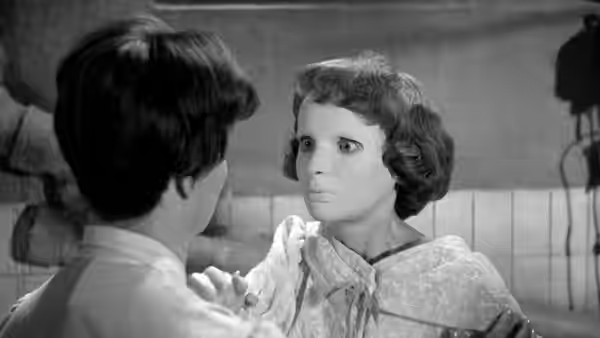
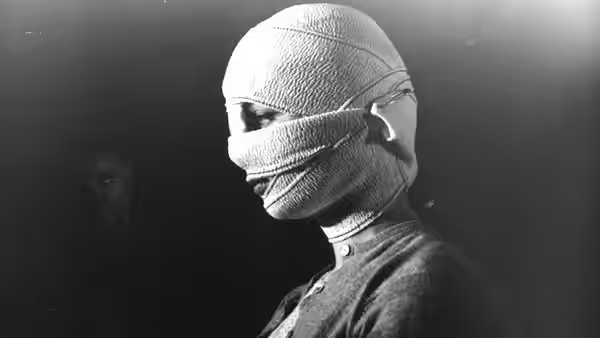
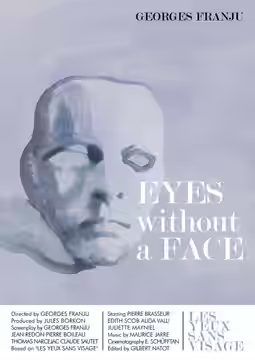
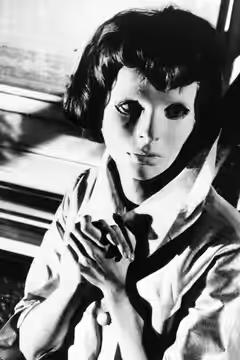
Pierre Brasseur gives Professor Génessier a formality that suits the film’s chilly manners, although it can make the performance feel rigid. Alida Valli, as Louise, works in a similarly controlled style, and there are passages where the people seem almost as fixed as their surroundings. Then Édith Scob makes the mask itself seem vulnerable. With so much of Christiane Génessier’s face unavailable to us, the smallest suggestion of feeling demands our attention.
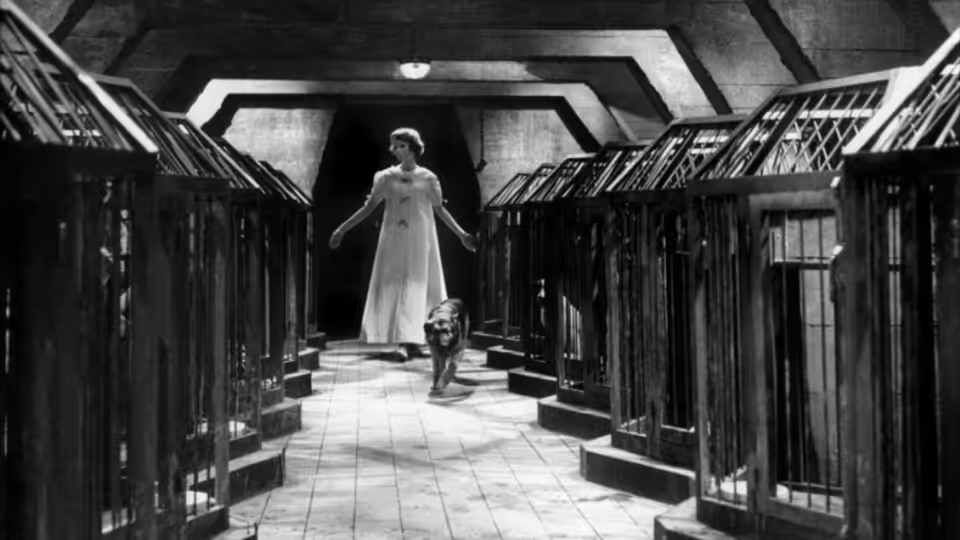
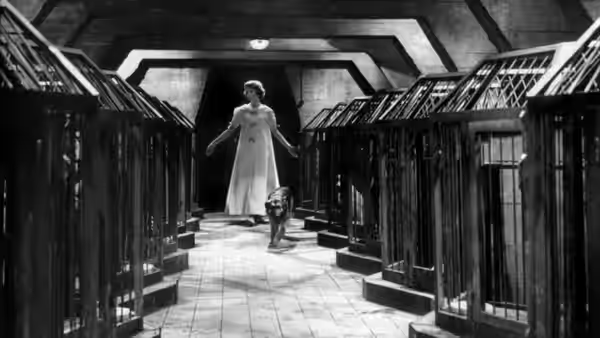
Eugen Schüfftan’s monochrome photography is central to that effect. The spare compositions direct our attention towards the masked figure, leaving little distraction from her isolation. Auguste Capelier’s production design works well within this restraint, allowing Christiane Génessier to dominate the image without competing attractions around her. There is a severity to the pictures that suits the subject, but they never make her seem merely an interesting object to photograph.
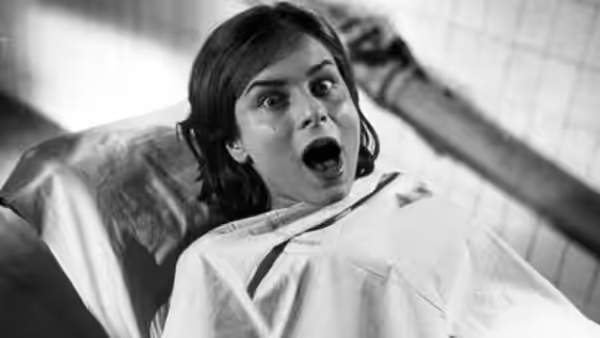
We were horrified by the facial surgery. The director’s patient observation makes the physical violation difficult to dismiss once the immediate shock has passed, because he gives us time to think about what we are seeing. A quicker, noisier treatment might have allowed us to recoil and recover before the next scene. Here, the distress carries over into the quieter attention paid to Christiane Génessier, whose solitude moved us more than we expected.
Maurice Jarre’s jaunty music is an effective irritant: its cheerfulness feels wrong beside these images, and that wrongness unsettles us. The score does not need to announce horror when its apparent indifference can be so uncomfortable. Gilbert Natot’s editing allows the compositions and performances to hold our attention without a constant supply of new incidents. That patience is mostly productive, though some repeated effects have made their point before the film is ready to move on.
The slower stretches are the real reservation. When the acting stiffens and the pace barely changes, dread can settle into waiting, and a little less insistence would have helped. Yet the film understands something that more hurried horror can miss: once we care about the person exposed to suffering, an injury need not be elaborate to upset us. The masked heroine remains present in our thoughts even when the surgical material threatens to monopolise them.
This is worth seeing even for those who usually find surgical horror merely unpleasant. Its tenderness does not make the unpleasantness easier, and anyone troubled by facial injury should take that warning seriously. Édith Scob gives us reason to keep looking at a face we cannot properly see. Choose it for an evening when being unsettled is part of the plan.