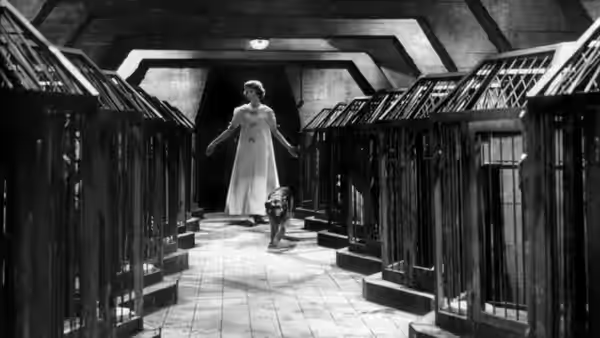
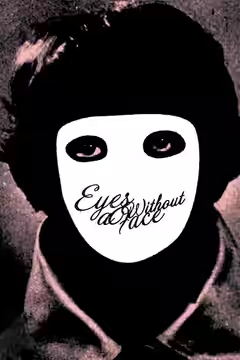
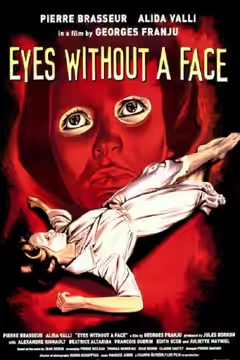
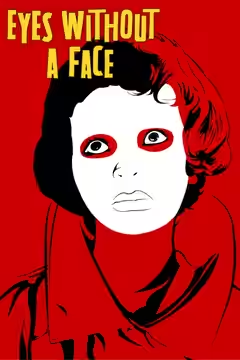
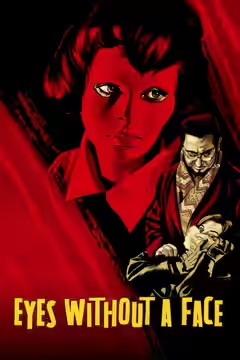
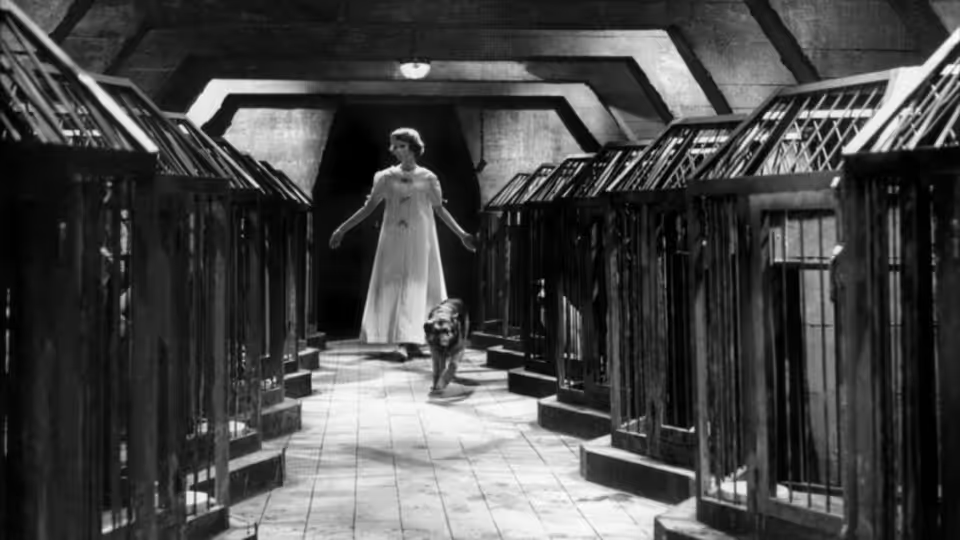
A woman in a white gown stands in a tiled corridor as a small dog waits nearby
Film review

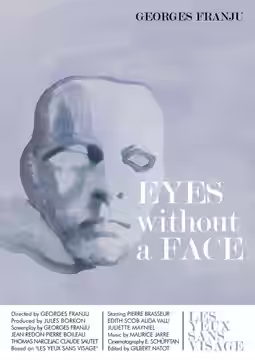
Eyes Without a Face

1960 · Directed by Georges Franju · 1h 24m

In a sentenceAn expressionless mask, and somehow we spent the evening worrying about the woman behind it

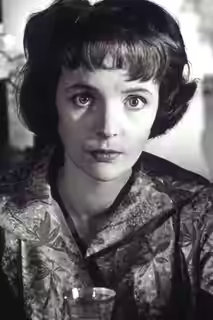
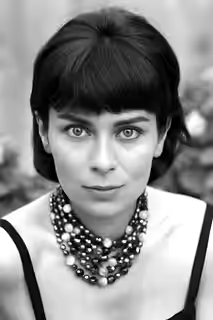
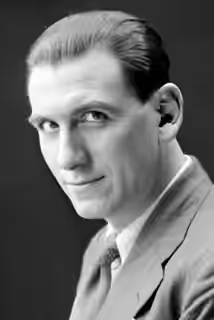
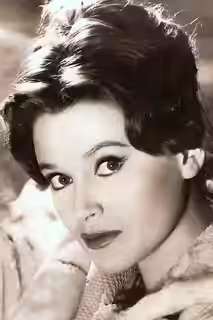
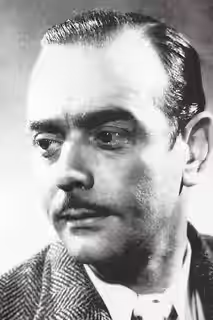
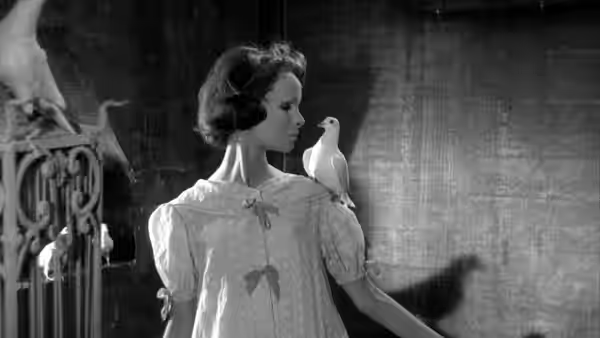
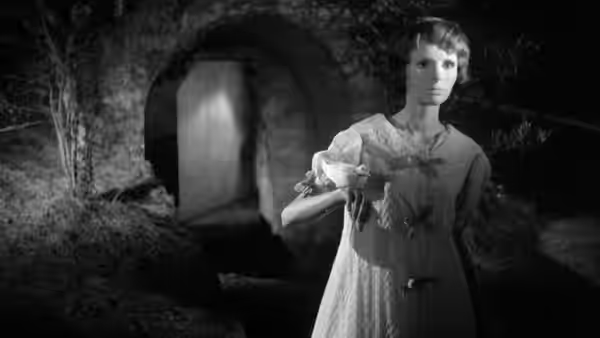
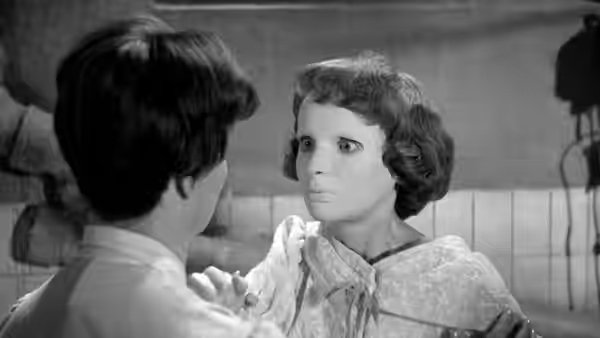
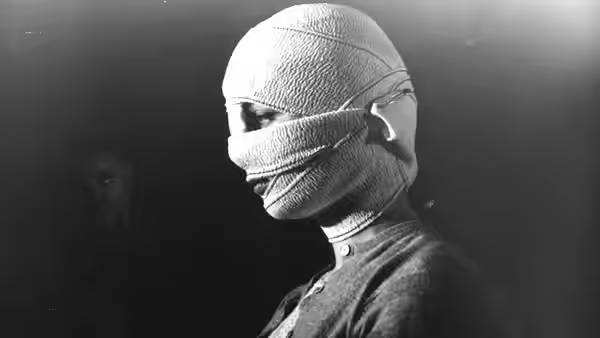
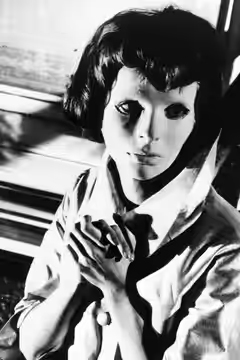
Christiane Génessier (Édith Scob) wears a mask that conceals her face, and lives in isolation. Professor Génessier (Pierre Brasseur) and Louise (Alida Valli) are the other central figures in a story concerned with facial surgery and the woman beneath the mask. Edna Gruber (Juliette Mayniel) and Inspector Parot (Alexandre Rignault) also figure in the events around her. The focus passes between Christiane’s solitude and surgical procedures, keeping the experience of living with a concealed face alongside the physical work being done to human flesh.

Fi1m review

Georges Franju’s horror film is frightening and unexpectedly sad, with Édith Scob’s masked heroine holding our attention. The deliberate pace occasionally becomes sluggish, but we recommend staying with it.

Georges Franju’s Eyes Without a Face is an unusually compassionate horror film, and a disturbing one. It gives facial surgery enough attention to make us want to look away, then asks us to stay with the loneliness of the masked Christiane Génessier. The danger is that such patience will feel like solemnity for its own sake. For most of these 84 minutes, the attention is justified: we are given someone to worry about, and time to worry.

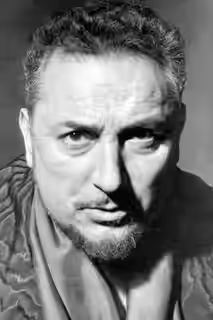
Pierre Brasseur gives Professor Génessier a formality that suits the film’s chilly manners, although it can make the performance feel rigid. Alida Valli, as Louise, works in a similarly controlled style, and there are passages where the people seem almost as fixed as their surroundings. Then Édith Scob makes the mask itself seem vulnerable. With so much of Christiane Génessier’s face unavailable to us, the smallest suggestion of feeling demands our attention.

Eugen Schüfftan’s monochrome photography is central to that effect. The spare compositions direct our attention towards the masked figure, leaving little distraction from her isolation. Auguste Capelier’s production design works well within this restraint, allowing Christiane Génessier to dominate the image without competing attractions around her. There is a severity to the pictures that suits the subject, but they never make her seem merely an interesting object to photograph.

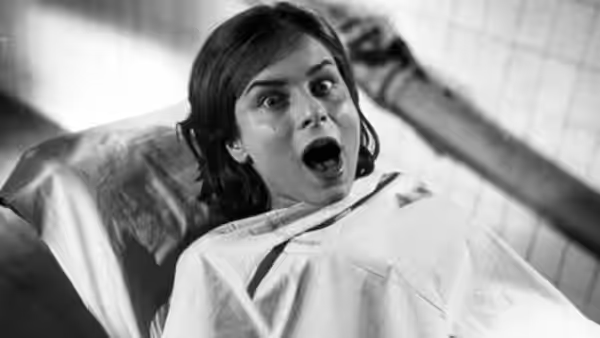
We were horrified by the facial surgery. The director’s patient observation makes the physical violation difficult to dismiss once the immediate shock has passed, because he gives us time to think about what we are seeing. A quicker, noisier treatment might have allowed us to recoil and recover before the next scene. Here, the distress carries over into the quieter attention paid to Christiane Génessier, whose solitude moved us more than we expected.

Maurice Jarre’s jaunty music is an effective irritant: its cheerfulness feels wrong beside these images, and that wrongness unsettles us. The score does not need to announce horror when its apparent indifference can be so uncomfortable. Gilbert Natot’s editing allows the compositions and performances to hold our attention without a constant supply of new incidents. That patience is mostly productive, though some repeated effects have made their point before the film is ready to move on.

The slower stretches are the real reservation. When the acting stiffens and the pace barely changes, dread can settle into waiting, and a little less insistence would have helped. Yet the film understands something that more hurried horror can miss: once we care about the person exposed to suffering, an injury need not be elaborate to upset us. The masked heroine remains present in our thoughts even when the surgical material threatens to monopolise them.

This is worth seeing even for those who usually find surgical horror merely unpleasant. Its tenderness does not make the unpleasantness easier, and anyone troubled by facial injury should take that warning seriously. Édith Scob gives us reason to keep looking at a face we cannot properly see. Choose it for an evening when being unsettled is part of the plan.
Critical consensus AI synthesised

73
Positive
8
Mixed
2
Negative
1
Empire
1 April 2014 · David Parkinson
90*

Parkinson calls the film a weird masterwork and praises its intelligence. He singles out its brooding lyricism, which transforms a familiar pulp plot into something poetic.

Read the full review →
Los Angeles Times
15 October 2013 · Sheri Linden
85*

Linden finds the film a disturbing, artful classic whose lyrical beauty and horror are seamlessly entwined. She singles out its austere imagery and restrained approach, which make its unsettling surgical scenes linger.

Read the full review →
The AV Club
1 November 2004 · Scott Tobias
85*

The critic finds the film an enduring, gorgeous fusion of opposing sensibilities. He singles out Franju’s ability to blend horror with tragedy as its special allure.

Read the full review →
Slant Magazine
12 October 2025 · ★★★★ · Jordan Cronk
80

Cronk regards Franju’s film as a singular, unsettling horror classic whose stature has only grown over time. He praises its gripping atmosphere and austere compositions, while also commending the Criterion restoration’s even grain and detail.

Read the full review →
The New Yorker
27 August 2009 · Richard Brody
80*

Brody presents the film as a striking, hallucinatory thriller. He praises Franju’s understated juxtapositions and patient observation, which make its horrifying events more disturbing.

Read the full review →
Time Out
· TM
75*

The review presents the film as an incredible blend of horror and fairytale. It singles out the contrast between visceral surgical horror and the heroine’s solitude.

Read the full review →

Straight answers AI written, from our review

Is Eyes Without a Face worth watching?
Eyes Without a Face is worth watching for its compassionate, disturbing horror, and we score it 86 out of 100. Édith Scob makes the masked Christiane someone we worry about, though the deliberate pace sometimes turns sluggish. We recommend it to viewers willing to sit with loneliness as well as distressing facial surgery.
How long is Eyes Without a Face, and what is it rated?
Eyes Without a Face runs 1h 24m. It is a drama and horror film.
Where can I watch Eyes Without a Face in Ecuador?
Eyes Without a Face is not on any streaming or rental service in Ecuador at the moment. It is available in 10 other countries; change your country at the top of the page to see where. Availability is checked daily.
How violent or frightening is Eyes Without a Face, and is it suitable for children?
Eyes Without a Face contains distressing facial surgery, and we would not recommend it for children or anyone sensitive to facial injury. No UK certificate is listed, and its US classification is NR, so neither provides a reassuring age guide. We find the patient attention to physical violation frightening, with the distress carrying into the quieter scenes.
How does Eyes Without a Face compare to The Elephant Man?
Eyes Without a Face is the harsher horror choice beside The Elephant Man, though both care about the person other people stare at. We recommend The Elephant Man as the gentler option for its moving performances; Eyes Without a Face suits those willing to endure surgical distress, with Scob’s masked performance giving the suffering a person to care about.
Is Eyes Without a Face based on a true story or a book?
Eyes Without a Face is adapted from a novel by Jean Redon, rather than presented as a true story. We find the film accessible without knowing the book: Christiane’s isolation and the attention to facial surgery give its horror a clear emotional focus.
What should I watch after Eyes Without a Face?
After Eyes Without a Face, try The Elephant Man (1980, Fi1m 84): A gentler companion, equally concerned with the person other people stare at. Then Under the Skin (2013, Fi1m 81): Patient images make familiar bodies seem strange, then unexpectedly deserving of care.

Cast

If you liked this, try…

  1. The Face of Another (1966) · not on Fi1m yetAnother altered face, with identity and estrangement given room to become frightening.

  2. Seconds (1966) · not on Fi1m yetA new body offers little comfort in this sour, disorientating thriller.

  3. The Elephant Man (1980, Fi1m 84)A gentler companion, equally concerned with the person other people stare at.

  4. The Skin I Live In (2011) · not on Fi1m yetMedical control and bodily vulnerability return in a colder, more tangled nightmare.

  5. Under the Skin (2013, Fi1m 81)Patient images make familiar bodies seem strange, then unexpectedly deserving of care.