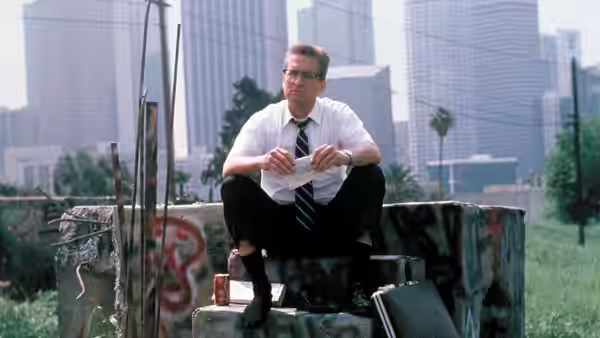
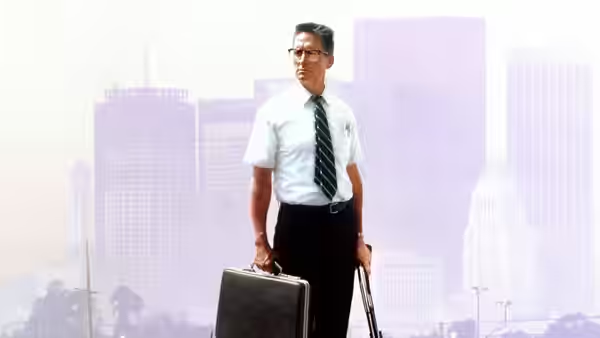
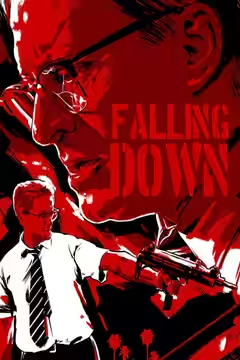
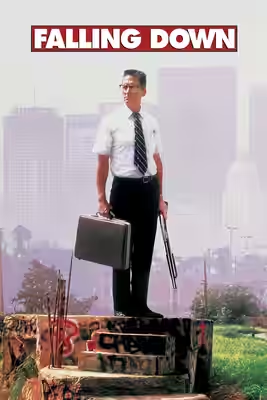
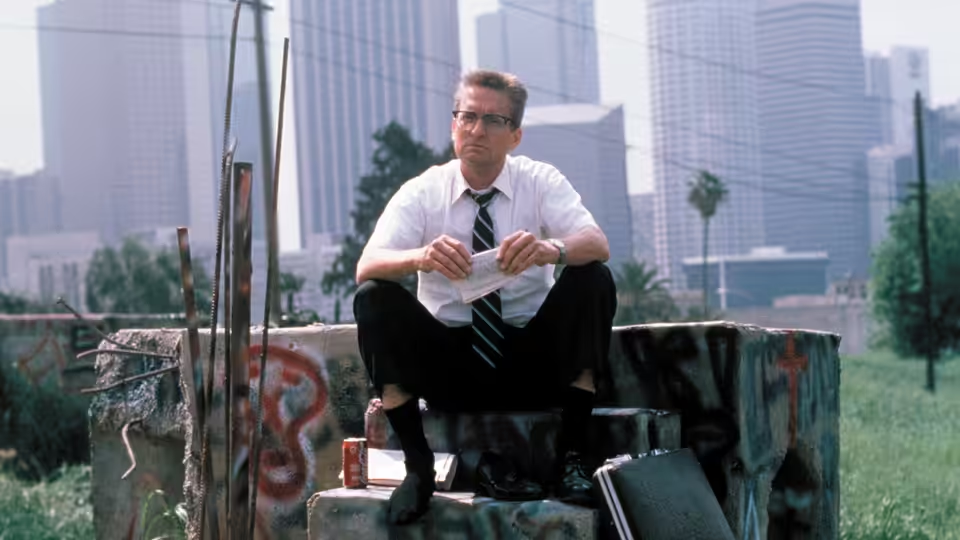
D-Fens (Michael Douglas) seated on concrete rubble holding papers before skyscrapers
Film review

Falling Down

1993 · Directed by Joel Schumacher · 1h 53m

In a sentenceMichael Douglas makes being hard done by look like a matter for the emergency services

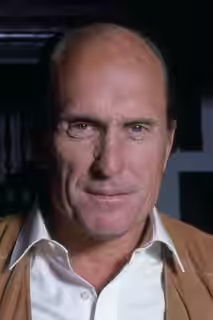
Michael Douglas plays D-Fens, a middle-aged white man whose frustrations turn into violence on the streets of Los Angeles. Feeling powerless and increasingly irrelevant, he treats the city around him as the source of his troubles and acts on his resentment. Robert Duvall plays Prendergast, a police officer approaching retirement, in a parallel story, with Barbara Hershey as Beth and Rachel Ticotin as Sandra. Their stories bring questions of race, class and masculinity into a crime thriller about a man who believes he has been pushed too far.

Plays from YouTube when you press play; nothing loads from them until then.

Fi1m review

Michael Douglas makes Joel Schumacher’s urban thriller worth the discomfort. Its account of resentment turning violent is gripping and darkly funny, though Ebbe Roe Smith’s script becomes less convincing when it tries to explain society.

Joel Schumacher’s Falling Down is a good, uneasy thriller, weakened by its muddled attempts to explain one man’s anger. Michael Douglas plays D-Fens, a middle-aged white man taking his sense of powerlessness out on Los Angeles, and Schumacher lets us recognise the complaint before confronting us with the response. The humour depends on that recognition, which is also where the film gets into trouble. It wants to make ordinary irritations funny and show what happens when one man treats them as permission for violence.

Douglas is the reason to stay with it. His low-key playing gives D-Fens the stubborn conviction of someone who thinks his own unhappiness ought to settle every dispute. We were unnerved by how little charm he offers while venting his rage. Douglas allows enough sadness into the performance for the man’s sense of having become useless to register, without making his company appealing. That sadness remains present even when the anger takes over.

Andrzej Bartkowiak photographs Los Angeles as somewhere hot and oppressive, making the surroundings feel difficult to endure before we are asked to consider D-Fens’s behaviour. Barbara Ling’s production design keeps that pressure rooted in the everyday surroundings, which makes the hostility feel inescapable. Their work gives the thriller a convincing physical discomfort, but it also makes the writing’s job rather easy. With the city presented as so thoroughly unpleasant, too many encounters arrive already weighted towards his complaint.

Paul Hirsch’s editing keeps the early encounters moving, giving the first half a momentum the later drama struggles to maintain. There is pleasure in the briskness, even when the writing gives us cause to question the next confrontation. James Newton Howard’s score helps sustain the threat; it does useful work keeping us uneasy about where this anger might lead, without settling our doubts about the script.

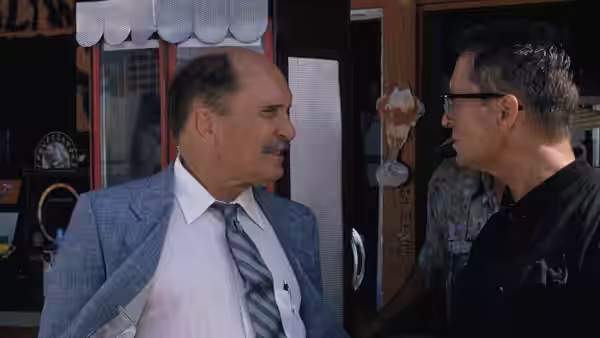
Robert Duvall’s Prendergast, a policeman approaching retirement, provides a welcome change of pace. The parallel story is more considered about how a person lives with disappointment, and Duvall gives it enough weight to keep it from feeling like a pause in Douglas’s film. Schumacher is good here at letting a second person complicate our response to the first. The police strand has a steadiness that the rampage, with its succession of grievances, cannot supply on its own.

Ebbe Roe Smith’s screenplay is less sure when it addresses race, class and masculinity. Some of the dark comedy catches the ugliness of feeling entitled to better treatment; some of it risks making other people look like obstacles put there to justify D-Fens’s anger. That uncertainty can be productive, but the film does not always seem to know which response it is encouraging. As the later passages lean further into melodrama, the earlier mixture of laughter and unease becomes less persuasive.

Vigilante thrillers often rely on our being pleased when somebody finally lashes out. Falling Down is worth watching because Douglas makes that pleasure difficult to sustain, even when the script seems willing to provide it. At 113 minutes, it has time to press the point, and the slower stretches could use some of the first half’s bite. See it for Douglas and Duvall, but be wary whenever the film suggests that everyone else is the problem.

Critical consensus AI synthesised

61
Positive
5
Mixed
1
Negative
3

The reviews lean positive, with praise clustering around Michael Douglas’s performance as a man consumed by frustration and rage. His restraint and intensity give the urban anger a disturbing human presence, even for critics uneasy with the film’s politics. Supporters also value Joel Schumacher’s mixture of dark humour, suspense and discomfort, finding more here than a straightforward vigilante story. Several see a pointed treatment of alienation and social anxiety.

The split is wide over how much that treatment explains. Admirers acknowledge familiar plotting, moral loose ends and a loss of momentum in the final act. Detractors question the film’s honesty more fundamentally: The New Yorker sees crude revenge dressed as satire, while the Los Angeles Times finds simplistic scapegoating rather than insight into urban problems. The Guardian credits the parallel police storyline with greater sophistication, but finds the whole undermined by melodrama and a lack of conviction.

Radio Times
★★★★ · David Parkinson
80

The film offers a bold and darkly funny portrait of urban alienation, with Michael Douglas excelling as a man driven by powerlessness and rage. It is undermined slightly by a loss of momentum in the final act but remains compelling thanks to strong performances.

Read the full review →
RogerEbert.com
26 February 1993 · Roger Ebert
75*

The critic views the film as depicting a man's sadness turning into madness after feeling obsolete and irrelevant, rather than a simple revenge story. Douglas's subtle performance and the realistic, non-triumphant ending are highlighted positively.

Read the full review →
Time Out
· SGr
70*

Schumacher's film expands beyond typical vigilante stories by critiquing broader social systems. It mixes humor, tension, and unease while noting some plot and moral loose ends in its portrait of urban rage.

Read the full review →
Sight and Sound
1 May 1993 · Carol Clover
60*

The piece examines the film's controversial reception and its portrayal of a middle-aged white man's violent rampage through Los Angeles as a response to perceived oppression. It highlights the story's resonance with contemporary American anxieties around race, class, and masculinity.

Read the full review →
The Guardian
3 June 1993
40*

The critic finds the film attempts a Taxi Driver for the nineties but ends up confusing and insufficient, with entertainment value undercut by melodrama that replaces ironic comedy. The parallel storyline with the retiring cop is more sophisticated but cannot save the whole from lacking conviction.

Read the full review →
The New Yorker
1 March 1993 · Terrence Rafferty
40*

The critic calls the film a crude vigilante picture disguised as social satire, criticizing its premise of an average guy exacting revenge on society. The oppressive atmosphere and direction are noted but the overall approach is seen as disingenuous.

Read the full review →

Straight answers AI written, from our review

Is Falling Down worth watching?
Falling Down is worth watching for Michael Douglas, whose low-key playing makes one man's rage uncomfortable rather than satisfying, and we scored it 71. It suits anyone who likes a thriller that unsettles them, though Ebbe Roe Smith's script becomes less convincing when it tries to explain society. Robert Duvall's parallel story steadies the later stretches.
How long is Falling Down, and what is it rated?
Falling Down runs 1h 53m. It is a crime and drama film.
Where can I watch Falling Down in the Philippines?
Falling Down is not on any streaming or rental service in the Philippines at the moment. It is available in 32 other countries; change your country at the top of the page to see where. Availability is checked daily.
How violent or frightening is Falling Down, and is it suitable for children?
Falling Down is an 18 certificate in the UK and rated R in the US, and it is not suitable for children. The film follows a man taking his resentment out on Los Angeles through escalating violence, and its dark comedy is aimed at adults who can sit with a character offering little charm while venting his anger. We found the first half brisk and the whole unnerving.
How does Falling Down compare to Taxi Driver?
Falling Down and Taxi Driver both follow isolated men who mistake their disgust with the city for moral authority, but Martin Scorsese's film is the stronger of the two. Taxi Driver makes Travis's company frightening through De Niro's restraint and Bernard Herrmann's music, while Falling Down is more darkly funny and less sure of itself when it turns to race, class and masculinity.
What should I watch after Falling Down?
After Falling Down, try Taxi Driver (1976, Fi1m 92): Another isolated man mistakes his disgust with the city for moral authority. Then La Haine (1995, Fi1m 90): Urban anger examined through friendship, policing and the narrowing options of youth; and Wild Tales (2014, Fi1m 83): Everyday humiliations become disproportionate reprisals, with a sharper appetite for black comedy.

Cast

If you liked this, try…

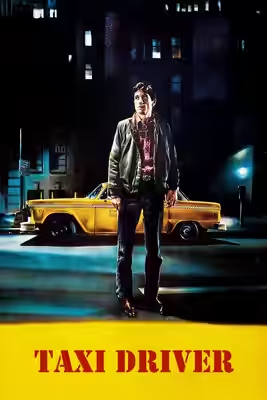
  1. Taxi Driver (1976, Fi1m 92)Another isolated man mistakes his disgust with the city for moral authority.

  2. La Haine (1995, Fi1m 90)Urban anger examined through friendship, policing and the narrowing options of youth.

  3. Wild Tales (2014, Fi1m 83)Everyday humiliations become disproportionate reprisals, with a sharper appetite for black comedy.

  4. The Swimmer (1968) · not reviewed yetA suburban journey exposes the damage behind one man’s account of himself.

  5. Dead Man's Shoes (2004, Fi1m 77)Another troubling encounter with male grievance, violence and the temptation to approve.

Free account

Know what to watch tonight

Two lists that know where things are streaming, collections you can share, your own score beside ours, and Discover that remembers what you have seen.

  • Want to see, sorted by what is streaming now
  • Seen, with your score out of ten
  • No adverts, ever