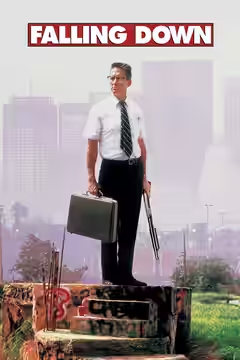
Michael Douglas makes Joel Schumacher’s urban thriller worth the discomfort. Its account of resentment turning violent is gripping and darkly funny, though Ebbe Roe Smith’s script becomes less convincing when it tries to explain society.
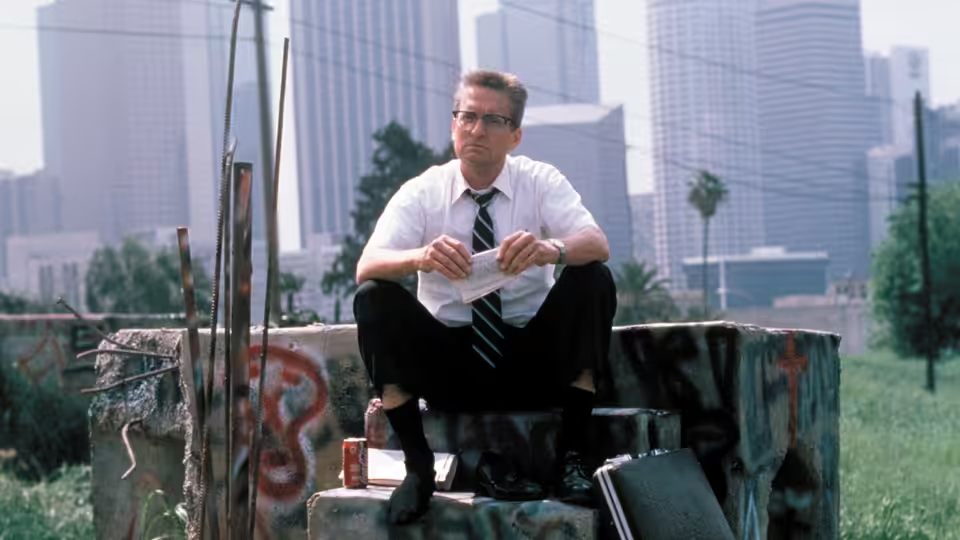
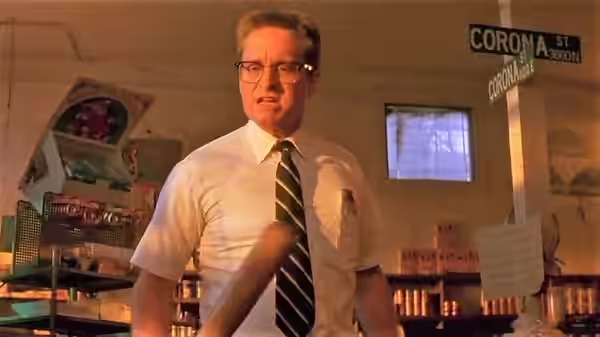
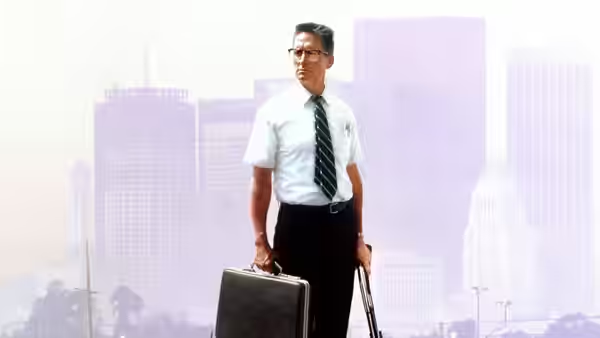
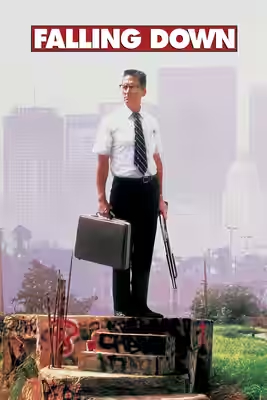
Joel Schumacher’s Falling Down is a good, uneasy thriller, weakened by its muddled attempts to explain one man’s anger. Michael Douglas plays D-Fens, a middle-aged white man taking his sense of powerlessness out on Los Angeles, and Schumacher lets us recognise the complaint before confronting us with the response. The humour depends on that recognition, which is also where the film gets into trouble. It wants to make ordinary irritations funny and show what happens when one man treats them as permission for violence.
Douglas is the reason to stay with it. His low-key playing gives D-Fens the stubborn conviction of someone who thinks his own unhappiness ought to settle every dispute. We were unnerved by how little charm he offers while venting his rage. Douglas allows enough sadness into the performance for the man’s sense of having become useless to register, without making his company appealing. That sadness remains present even when the anger takes over.
Andrzej Bartkowiak photographs Los Angeles as somewhere hot and oppressive, making the surroundings feel difficult to endure before we are asked to consider D-Fens’s behaviour. Barbara Ling’s production design keeps that pressure rooted in the everyday surroundings, which makes the hostility feel inescapable. Their work gives the thriller a convincing physical discomfort, but it also makes the writing’s job rather easy. With the city presented as so thoroughly unpleasant, too many encounters arrive already weighted towards his complaint.
Paul Hirsch’s editing keeps the early encounters moving, giving the first half a momentum the later drama struggles to maintain. There is pleasure in the briskness, even when the writing gives us cause to question the next confrontation. James Newton Howard’s score helps sustain the threat; it does useful work keeping us uneasy about where this anger might lead, without settling our doubts about the script.
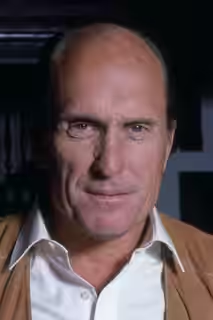
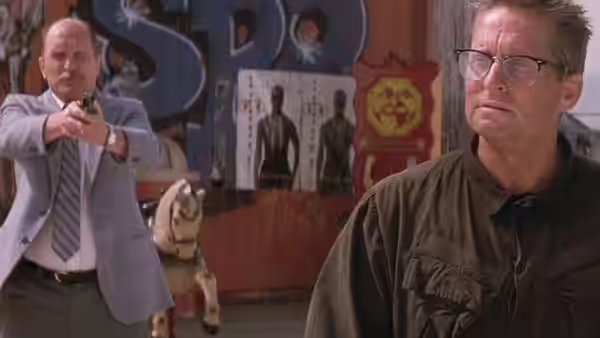
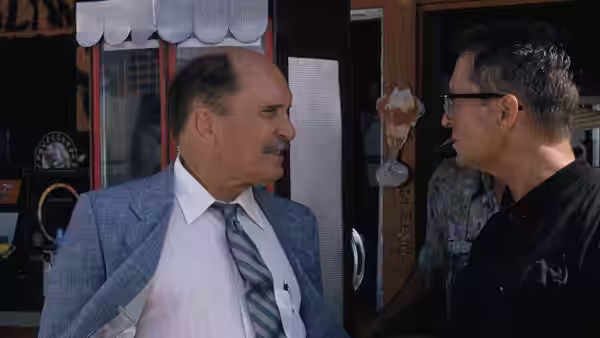
Robert Duvall’s Prendergast, a policeman approaching retirement, provides a welcome change of pace. The parallel story is more considered about how a person lives with disappointment, and Duvall gives it enough weight to keep it from feeling like a pause in Douglas’s film. Schumacher is good here at letting a second person complicate our response to the first. The police strand has a steadiness that the rampage, with its succession of grievances, cannot supply on its own.
Ebbe Roe Smith’s screenplay is less sure when it addresses race, class and masculinity. Some of the dark comedy catches the ugliness of feeling entitled to better treatment; some of it risks making other people look like obstacles put there to justify D-Fens’s anger. That uncertainty can be productive, but the film does not always seem to know which response it is encouraging. As the later passages lean further into melodrama, the earlier mixture of laughter and unease becomes less persuasive.
Vigilante thrillers often rely on our being pleased when somebody finally lashes out. Falling Down is worth watching because Douglas makes that pleasure difficult to sustain, even when the script seems willing to provide it. At 113 minutes, it has time to press the point, and the slower stretches could use some of the first half’s bite. See it for Douglas and Duvall, but be wary whenever the film suggests that everyone else is the problem.