De Palma opens with twenty minutes of near-silent heist as good as anything he has directed, then spends the rest of the film playing games with his own plot. The games are fun, up to a late turn that will annoy as many people as it delights.
Brian De Palma wrote this one himself, and he opens with Laure Ash (Rebecca Romijn) in a Cannes hotel bed watching Double Indemnity (1944), Barbara Stanwyck’s face laid over her own in the glass of the television. That is the film telling you what it is: a thriller about a bad woman, made by a man who has seen every such thriller and wants credit for it. This is the most fun De Palma had been in years, and the fun goes on longer than some people will stand.
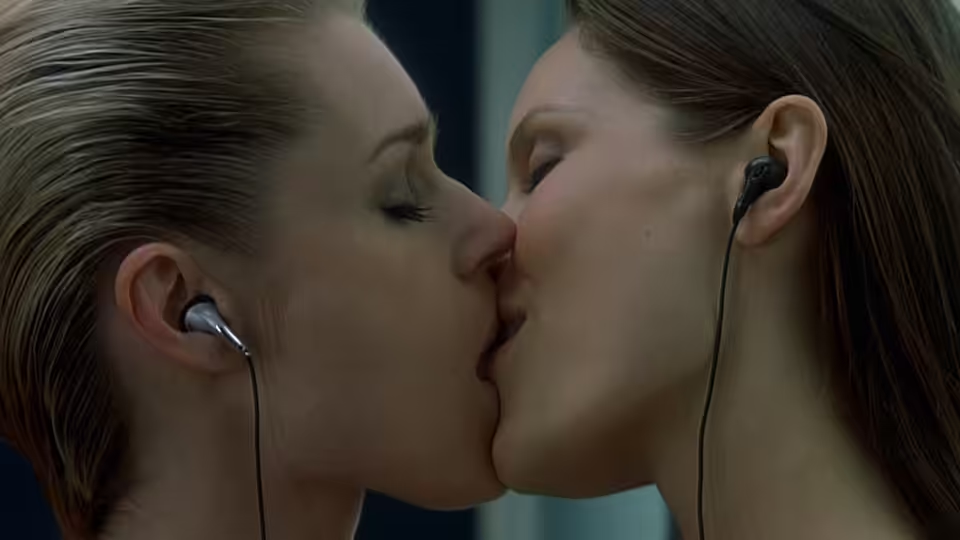
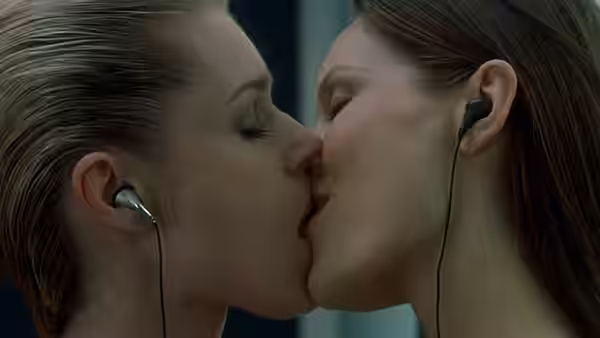
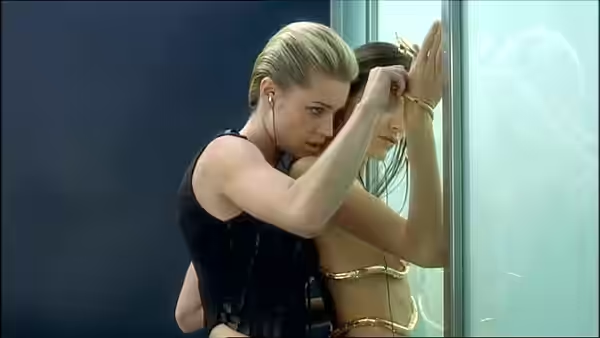
The heist is the reason to see it. A model, Veronica (Rie Rasmussen), arrives at a premiere in a gold serpent set with diamonds, coiled round her torso; Laure, press badge round her neck, follows her into the ladies’ lavatory and starts undressing her while Black Tie (Eriq Ebouaney) and Racine (Édouard Montoute) cut the power in the basement and swap the stones. Almost nobody speaks for twenty minutes. Thierry Arbogast’s camera drifts through the crowd on the steps and down into the tunnels as if it had a pass to everywhere; Bill Pankow cuts between screening room, cubicle and fuse box so every strand has its own clock; Ryuichi Sakamoto’s score is one slow march that climbs and refuses to arrive. When Laure’s hand reached the last clasp we realised we had stopped breathing a while earlier. It is the best pure staging De Palma had managed since the museum in Dressed to Kill (1980).
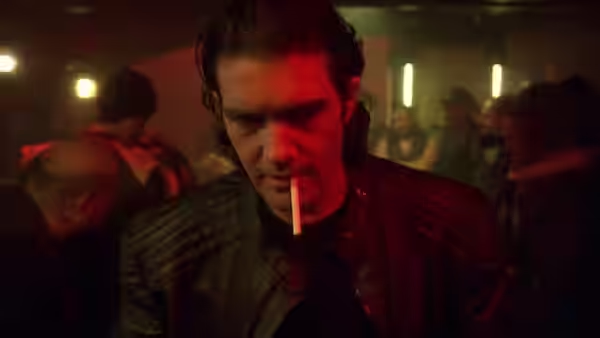
Then the film jumps seven years and slows down. Nicolas Bardo (Antonio Banderas) is a paparazzo assembling a wall-sized photograph of the square outside his window one print at a time. He is hired to photograph the wife of the incoming American ambassador, Watts (Peter Coyote), who never permits it, and he gets her. De Palma stages the stalking in split screen, Bardo and his long lens on one side, Laure on the other doing what she does when she thinks nobody is looking. Banderas plays Bardo as hangdog, easily led and a little stupid, and it is a pleasure to see him play a sap.
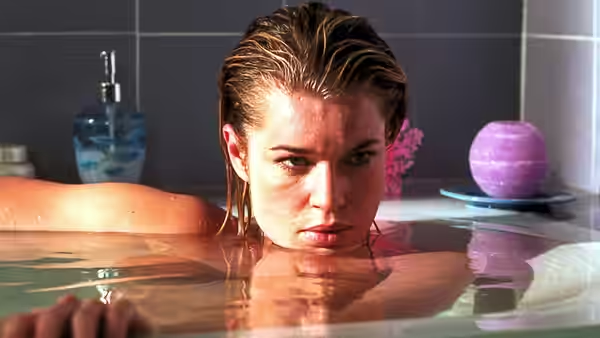
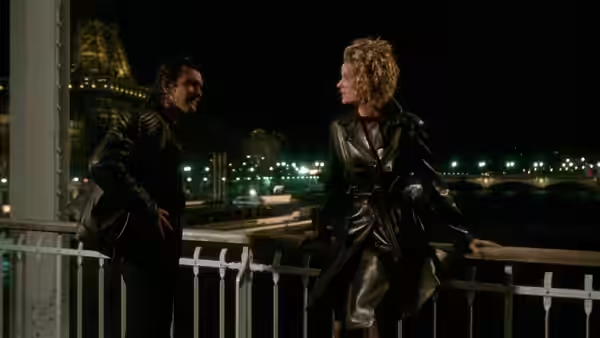
De Palma casts Romijn to be looked at, and when the script asks her for a paragraph of plot instead she goes flat. She is good at stillness, and better at the switch, the small change in the eyes when she has decided what the man in front of her is for. In a bar she undresses for a stranger while Bardo watches, a woman doing the femme fatale as a job of work, competently, with an eye on the time. Olivier Bériot puts her in black leather and a trench coat, the wardrobe of the films Laure watches, and Anne Pritchard covers Bardo’s flat in photographs until there is hardly an inch of bare wall.
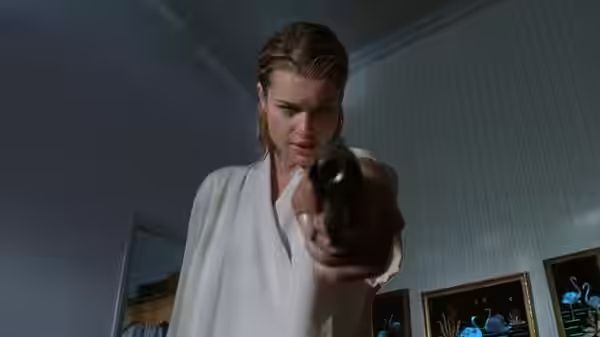
The middle is where it wobbles. The plot Laure drags Bardo into is a kidnapping, and it is meant to be silly, with Gregg Henry as Shiff, the embassy’s security man, shouting into phones, and Thierry Frémont’s Serra doing the police work. De Palma does not believe a word of it, and for forty minutes his disbelief is catching; we felt kept busy. The dialogue, in English from mostly French mouths, sounds dubbed even when it is not. There is a late turn we will not describe. We felt cheated for ten minutes, then less so, and by the next morning we had decided it was fair. The most hostile review calls the ending a cheat, and it is, in the way a card trick is.
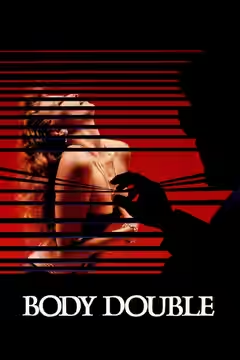
Set beside Blow Out (1981) and Body Double (1984) it has the same obsessions, watching, doubles, a camera in on the crime, and far less at stake. There is nobody here to care about and the film does not pretend otherwise. What it has instead is lightness; De Palma is working from his own script again, and you can hear it.
Certificate 15, 114 minutes; it reached British cinemas on 19 February 2004. Watch it with someone who will argue about the last twenty minutes on the way home. You will want the argument.