Andrew Stanton hands the sequel to the fish who stole Finding Nemo and gives her something sad to carry, which she does. The plot around her swims from tank to tank, and Ed O’Neill’s octopus is the reason to stay.
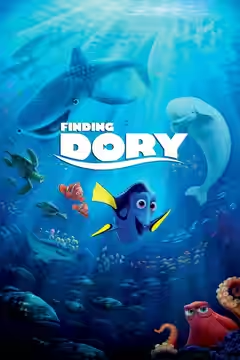
Thirteen years after Finding Nemo, Andrew Stanton hands the sequel to the fish who stole the first film. Dory, the blue tang with no short-term memory, was a running gag in 2003; here she is the lead, and the gag becomes a condition. Stanton and his co-writer Victoria Strouse ask what it is like to lose the thread every few seconds and to have lost your parents the same way, and the answer is kinder and sadder than expected. It is also fastened to the last film’s plot with the tanks rearranged. It runs 97 minutes and carries a U.
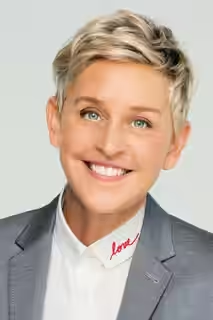
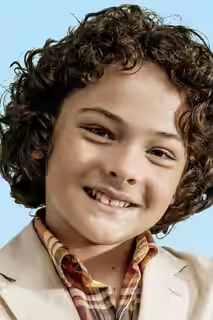
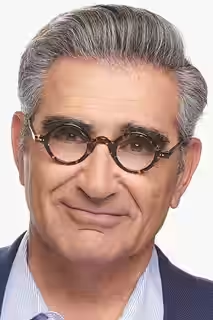
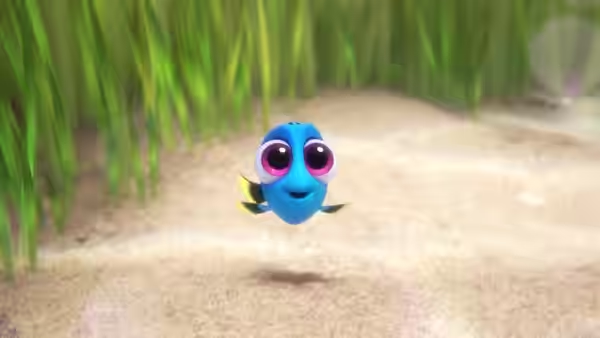
The best of it is the smallest. In flashback, baby Dory is a thumbnail of a fish with enormous eyes, and Jenny (Diane Keaton) and Charlie (Eugene Levy) coach her through the sentence she will need when she wanders off: hello, she is Dory, she forgets things. She gets it wrong, and they behave as if it is the first time, every time. We were not braced for this and it undid us a little, because Keaton and Levy play worried parents rather than sweet ones, and the film lets us see them frightened when she is not looking. Ellen DeGeneres, who chattered so easily last time, has to find the panic under the chatter here, and does.
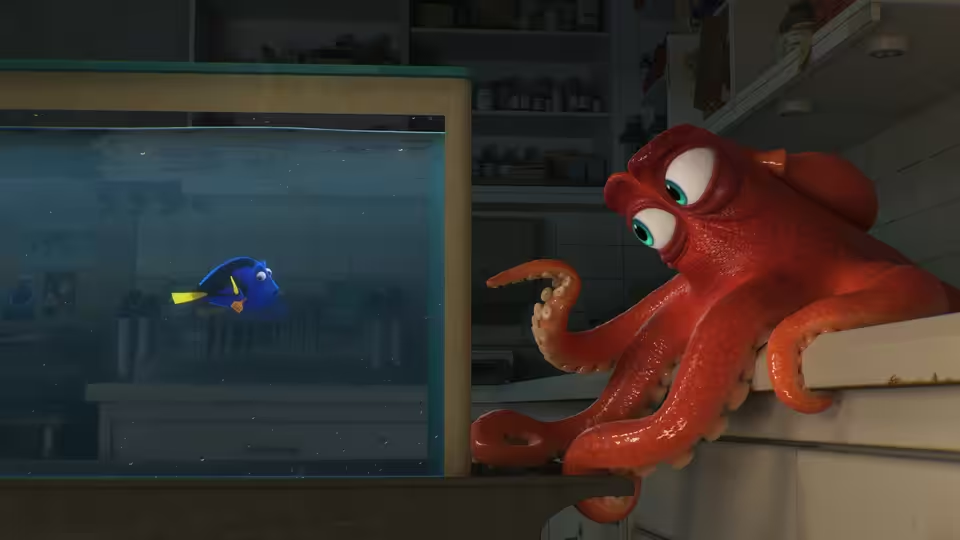
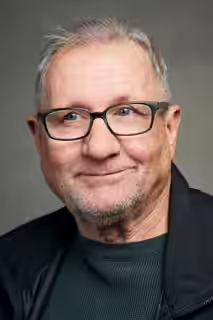
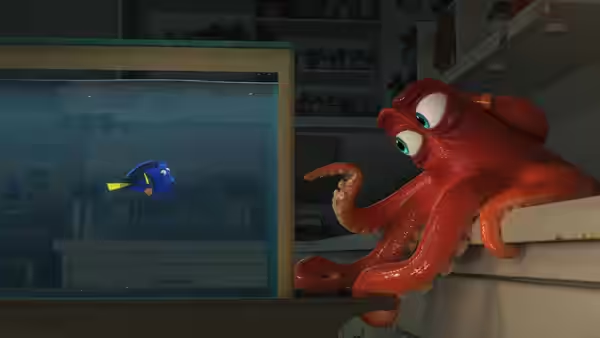
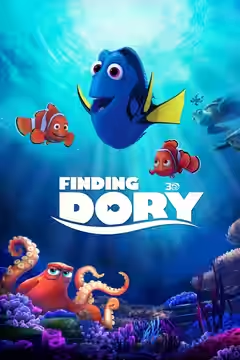
Then there is Hank. Ed O’Neill voices a seven-armed octopus who has had enough of the Marine Life Institute and would rather be shipped to a quiet tank in Cleveland than sent back to the sea. He can change colour, squeeze through a pipe, hide in a coffee pot and push a pram, and the animators give every arm its own opinion. O’Neill plays him as a man who has done his time and wants no more conversation. We laughed hardest at the touch pool, where children’s hands come down from above like weather and Hank flattens himself against the bottom and mutters.
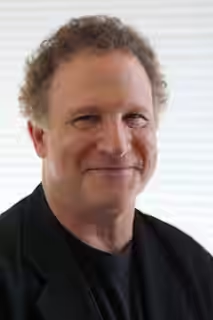
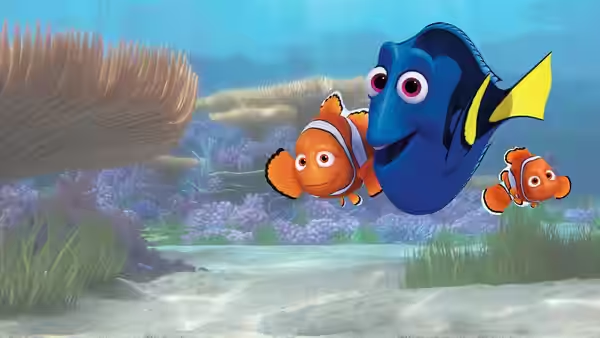
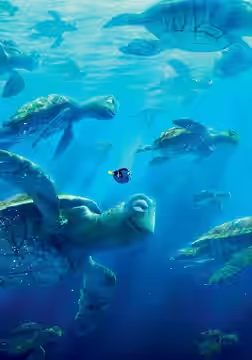
The look is expensive and mostly earns it. Jeremy Lasky shoots the open ocean in a blue-green haze, then changes it for the Institute: hard tank light from above, glass with children pressed against it, the yellow murk of the quarantine room. Steve Pilcher’s Institute has pipes and drains and a lorry park, and much of the comedy comes from fish learning how a building works. Thomas Newman brings back his piano from Finding Nemo and adds a slow, hopeful line for the parents, used sparingly. Axel Geddes cuts the ocean crossing short, so that Dory, Marlin (Albert Brooks) and Nemo (Hayden Rolence) reach California within a quarter of an hour.
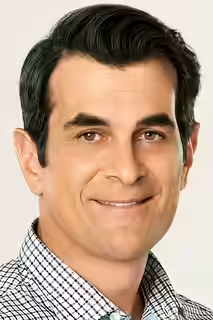
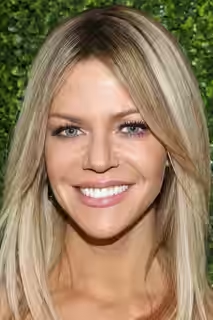
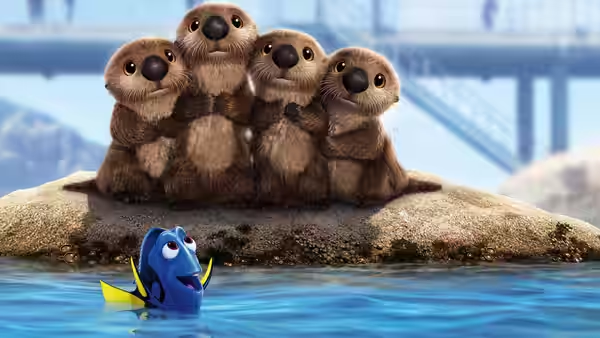
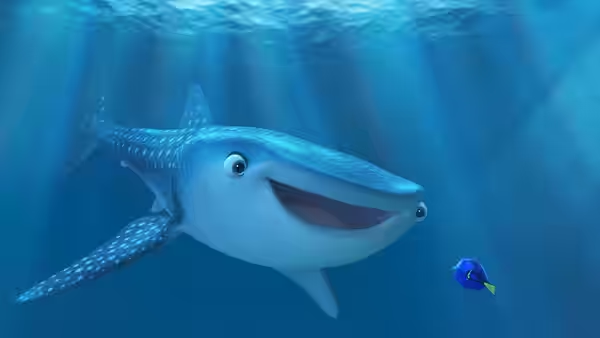
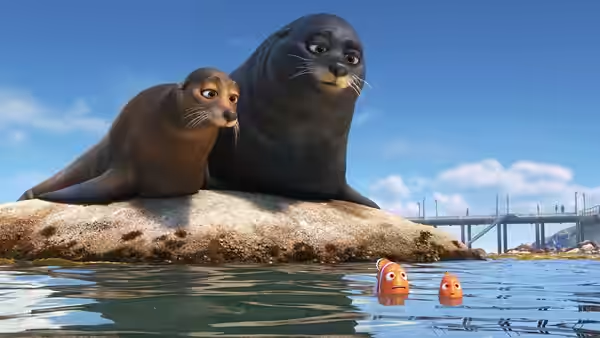
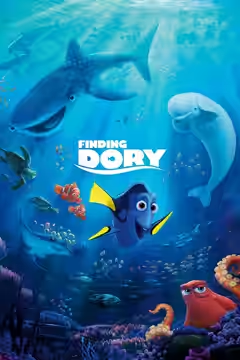
Once there, the film has one move: get from this tank to that tank, and each leg needs a new helper. Destiny (Kaitlin Olson), a whale shark who cannot see, and Bailey (Ty Burrell), a beluga who has decided his echolocation is broken, are amiable, and their troubles rhyme with Dory’s rather too neatly; the film says its lesson out loud more than once. Idris Elba and Dominic West are two sea lions who guard a rock and bark at a third, funny for as long as they are on screen. Marlin has nothing to do but fret, and Brooks is left repeating his old lines.
The last twenty minutes take the whole thing out of the water, and we will not say how. A film that had been tender and small for an hour decides it needs to be big and loud to finish, and we sat through the ending not displeased, exactly, but wondering who had asked for it. Stanton wrote the story with Bob Peterson, and it is the story, not the individual scenes, that lets the film down.
Finding Nemo had an ocean and a father’s fear of losing a child in it, and everything moved because of that fear. Finding Dory has a good idea about a fish who forgets, and spends its middle in an aquarium because tanks are useful for set pieces. Watch it for the octopus and the flashbacks, ideally with someone under eight, who will not mind that the plot swims in circles and will tell you afterwards what happened, which is more than Dory could.