Ridley Scott has made his own film again, louder and with sharks. It is handsome and rarely dull, but Paul Mescal is given a grudge where a character should be, and only Denzel Washington seems to know what kind of film he is in.
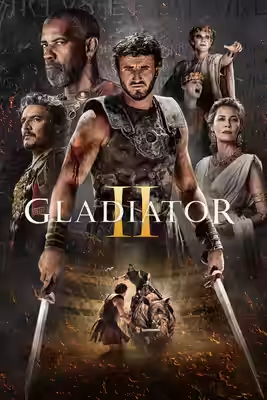
Twenty-four years after Gladiator, Ridley Scott goes back to the arena. A soldier in Numidia (Paul Mescal) watches Roman ships come over the horizon, loses everything to them, and is sold to a dealer in gladiators called Macrinus (Denzel Washington), who takes him to Rome and puts him in front of two mad emperors. If that sounds familiar, it should. Gladiator II is the first film with the names changed and the volume up, and it is decent, well built and finally rather empty. See it for Washington, who is having a better time than anyone else, on screen or off.
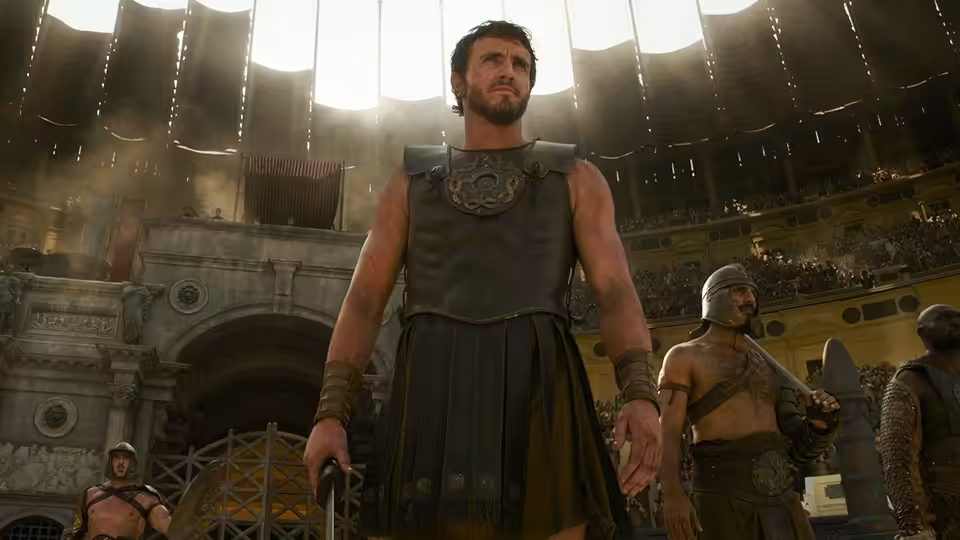
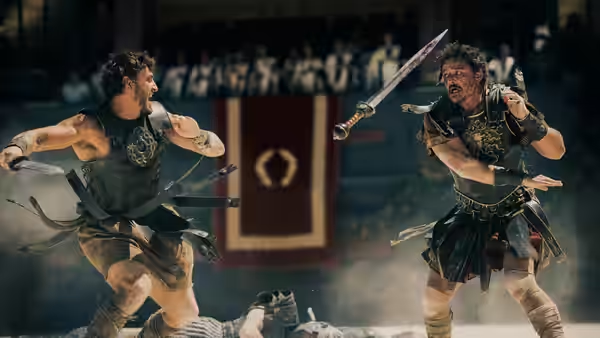
The opening is the best of it. Acacius (Pedro Pascal) brings his fleet against the walls of a coastal city, and Scott shoots the assault the way he shot Normandy for other people: ships grinding onto rocks, ladders going up, burning oil coming down. John Mathieson lights it in a flat morning grey so the fire reads as the only colour in the frame. Claire Simpson and Sam Restivo cut it clean, so that we always know which wall is falling and who is on it. Then the film moves to Rome, where the Colosseum has been rebuilt as a machine for cruelty, with trapdoors and a floor that floods, and the picture gets bigger and less interesting at the same rate.
Washington is the reason to stay. Macrinus wears rings on every finger and a smile that arrives a beat before the sentence, and Washington plays him as a man who finds the whole Roman establishment funny and intends to own it anyway. He stresses the wrong word in a line, on purpose, and gets a laugh the script did not write. He touches senators on the arm as if measuring them for something. Every time he walks into a room the film sits up, and every time he leaves it slumps.
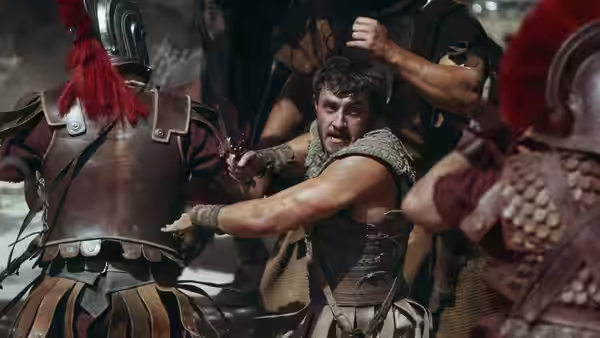
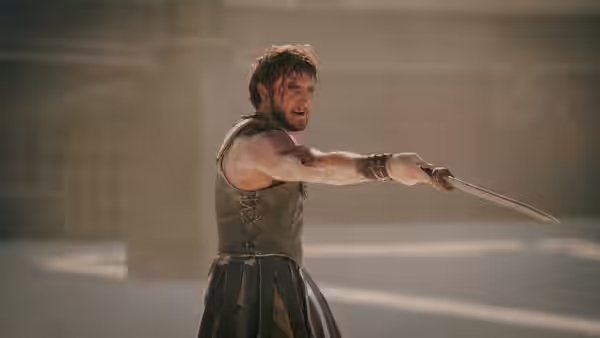
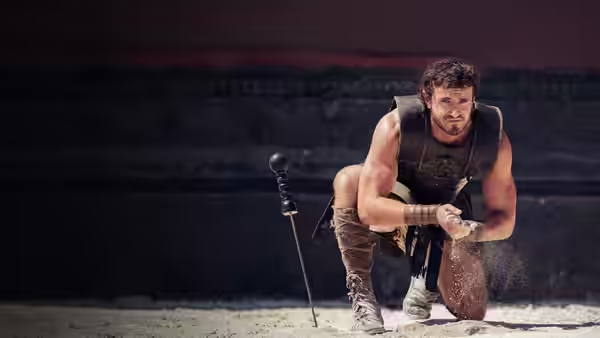
Mescal has the harder job and nothing to do it with. David Scarpa’s screenplay, from a story by Scarpa and Peter Craig, gives Lucius a dead wife, a grudge and a secret, and mistakes those for a person. Mescal scowls, fights well and delivers the speeches with conviction, but he is never allowed to want anything except the next man’s death. Pascal is solid and underused as the general who has stopped believing in Rome. Connie Nielsen returns as Lucilla and does a great deal with looks across the arena, because that is mostly what she is given.
The emperors are the film’s idea of fun. Joseph Quinn and Fred Hechinger play Geta and Caracalla as two spoilt children who have been handed the world. It is broad, and it is meant to be, but it belongs to a different film from the one Mescal is in, and Scott does not choose.
Here is what we felt. When the arena filled with water and the sharks appeared, we laughed, loud and not unkindly, and so did the rest of the cinema, and the film seemed pleased. A rhinoceros, ridden, had done the same job twenty minutes earlier. Harry Gregson-Williams’s score swells whenever the film wants grief from us instead, and we found we had none to give. That is the trade the film has made. It has bought our laughter with animals and has nothing left over to buy our grief.
Gladiator had one man, one loss and one enemy, and it trusted them for two and a half hours. This has three plots, two emperors, a senate and a coup, and it runs 148 minutes because the plots need the time rather than because the people do. Scott can still stage a siege better than almost anyone working, and the craft here is not in question. What is in question is why anyone thought the story needed telling twice.
See it on the largest screen you can find, with people who will laugh at the sharks with you. At home the animals look like what they are and the emperors look like what they are, and Washington is the only thing that survives the shrinking. It carries a 15 certificate.