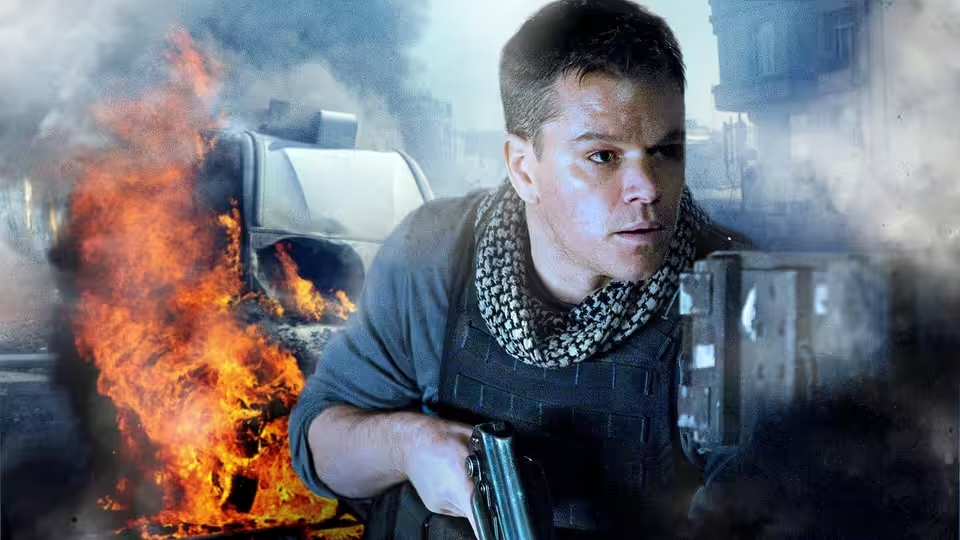
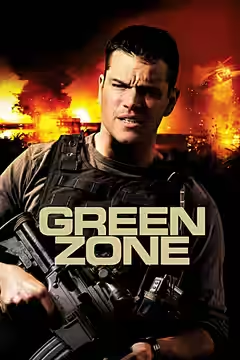
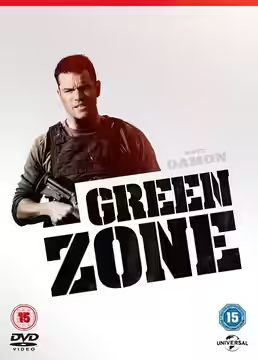
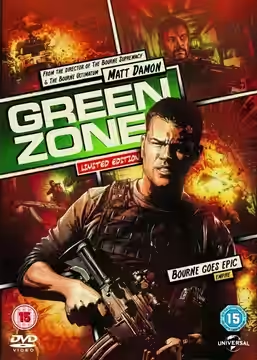
Paul Greengrass drops Matt Damon into Baghdad in the spring of 2003 and shakes the camera until the city feels real. As a war film it is vivid and well made; as an argument it tells us what we already knew, and loudly.
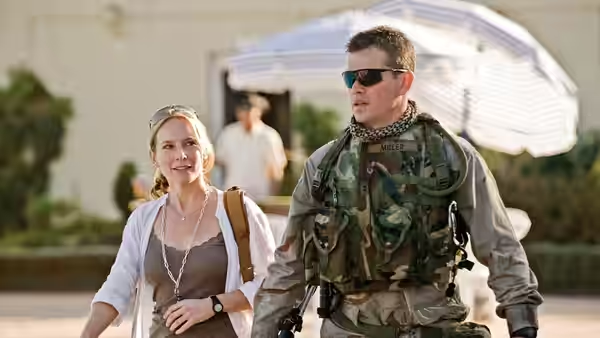
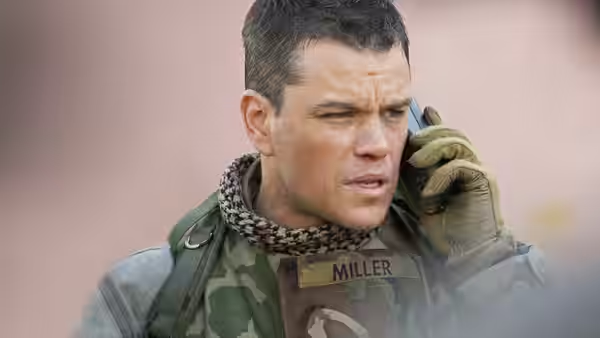
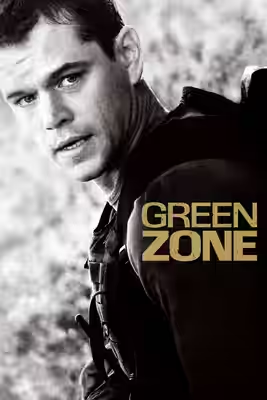
Paul Greengrass goes to Baghdad in the spring of 2003, a few weeks after the invasion, and takes his camera with him into the back of the truck. Chief Warrant Officer Roy Miller (Matt Damon) leads a team sent to find Saddam’s weapons of mass destruction from a list of sites, and the sites are empty. One is a toilet factory. He raises the matter at a briefing and is told the intelligence is solid and his job is to keep digging. Green Zone is a thriller about a man working out what everyone watching already knows, and the surprise is how much tension Greengrass gets from that before it runs out.
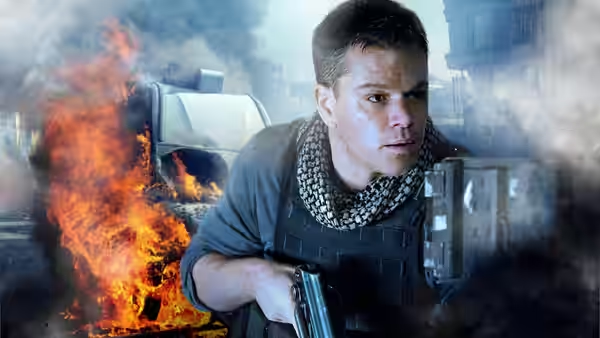
The first half hour is the film at its best. Barry Ackroyd shoots the opening raid handheld on long lenses, so the crane towers over the street, soldiers crouch behind a looted car, a sniper fires from a roof, and the whole thing ends at a locked door with nothing behind it. Christopher Rouse cuts it in short, overlapping pieces, each shot lasting about as long as it takes to notice something, which is how it felt to us: hard to follow and impossible to look away from. When Miller gets inside and finds dust, the let-down is physical. We felt the anger in it, and it is the strongest feeling the film gives us.
Dominic Watkins builds two cities. One is the palace inside the Green Zone, with a swimming pool full of contractors, pizza boxes, a bar and a big screen playing the President saying the fighting is over. The other is outside the wire: shuttered shops, burnt cars, checkpoints where crowds shout at soldiers who cannot understand them. Sammy Sheldon dresses Poundstone (Greg Kinnear) in pressed chinos and a polo shirt and the CIA’s Martin Brown (Brendan Gleeson) in a jacket that has been slept in, and you know which man the film trusts before either speaks.
Damon plays Miller as a decent, blunt man who has never had to think about where orders come from and does not enjoy starting. It is a good, plain performance, and it carries the film. Kinnear is smooth and plausible, the kind of official who asks to be trusted and means it. Gleeson is worn and funny. Amy Ryan is given the reporter Lawrie Dayne, who printed the weapons stories on a single unnamed source, and then given almost nothing to do with her. Jason Isaacs grows a goatee and a drawl as the special forces major Briggs and enjoys himself more than anyone. The best performance is Khalid Abdalla’s. His Freddy, an Iraqi with a prosthetic leg who walks up to Miller’s unit with information and asks for nothing, is the one character whose wants the film does not already know, and the scene where he tells Miller what the Americans do not understand about his country is the only one we would watch again.
Then the plot takes over. Brian Helgeland and Rajiv Chandrasekaran share the writing credit, and the script they have made is a chase: Miller wants to find an Iraqi general, Poundstone wants him found first, Brown wants him alive, and the film runs between them for an hour. The second half takes a turn we will not describe, except to say that the turn was a headline years before the film opened and the film treats it as a bombshell. Somewhere in the last forty minutes we noticed we were being told something, in capital letters, that we had come in believing, and we stopped feeling anything and started nodding. Being lectured in agreement is a strange experience; it is not a thrilling one.
Against Greengrass’s own standard it falls short. United 93 (2006) put the camera in a cabin and let the event happen; The Bourne Ultimatum (2007) did the running and never pretended it meant anything. Green Zone wants both at once, and the running keeps interrupting the politics. The long night chase through the streets at the end is cut so fast we lost Miller twice, and John Powell’s score, all pulse and low brass, drives it on past the point where we knew where it was going.
Watch it at home, where Ackroyd’s camera settles and the lectures can be talked over. It is 115 minutes, a 15, and it is a good war thriller for an hour and a sound editorial for the rest.