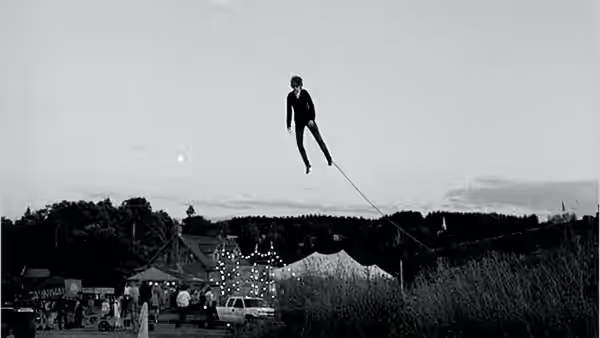
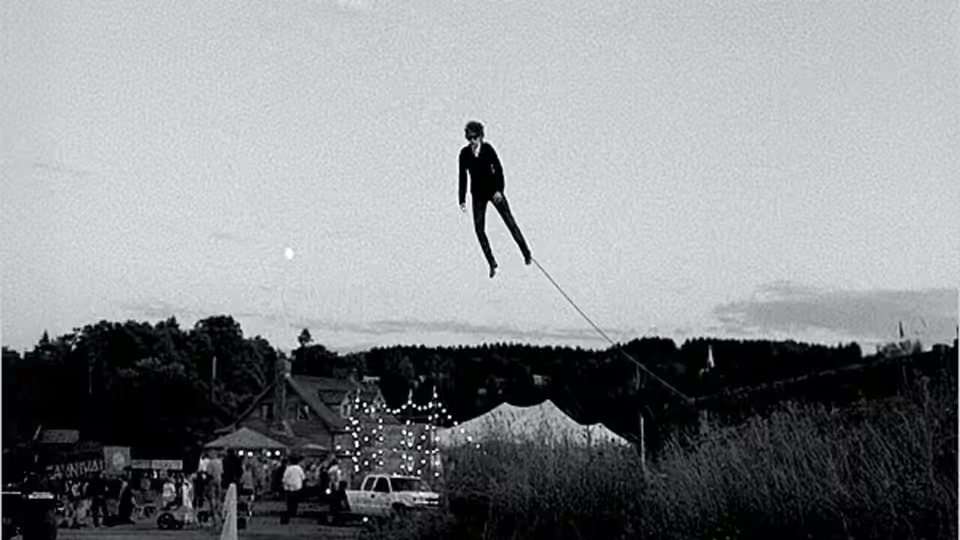
A lone figure hangs above a fairground, suspended from a taut line
Film review

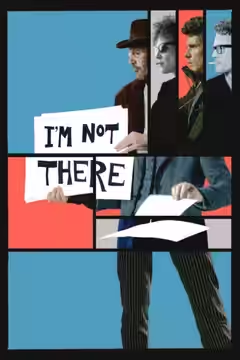
I'm Not There

2007 · Directed by Todd Haynes · 2h 15m · MPA R

In a sentenceSix actors share one Bob Dylan and the one you believe is Cate Blanchett

Bob Dylan is never named on screen. Todd Haynes splits him into six people and six stories. Woody (Marcus Carl Franklin), a boy with a guitar case stencilled ‘This Machine Kills Fascists’, rides a boxcar across America telling tall tales about where he has been. Jack (Christian Bale) sings protest songs in Greenwich Village and tires of the people who want more of them. Jude (Cate Blanchett) arrives in London with an electric band and is treated by the press as a traitor to folk music. Robbie (Heath Ledger), an actor who has played Jack in a film, begins a marriage with Claire (Charlotte Gainsbourg). Arthur (Ben Whishaw) answers an interrogator in riddles. Billy (Richard Gere) wakes in a town called Riddle. The stories cut between one another, and none finishes before the next begins.

Plays from YouTube when you press play; nothing loads from them until then.

Fi1m review

Todd Haynes refuses to make a biopic and makes six short films instead, one for each man Bob Dylan pretended to be. Two are good enough to carry the evening on their own; the Western is not one of them.

Todd Haynes has made a film about Bob Dylan in which nobody on screen is called Bob Dylan. Six actors, one of them a woman and one a boy, take turns at being him, each under a different name and in a different kind of film. For about two-thirds of its 135 minutes it is better than a stunt: a picture that treats a famous life the way its subject treated his own, as something to rearrange the moment the audience got comfortable. The other third is a Western set in a town called Riddle, and we would have cut most of it.

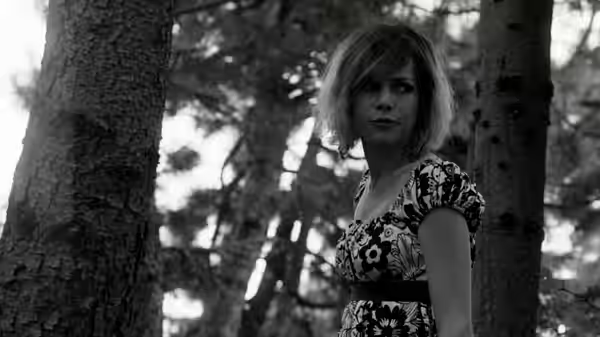
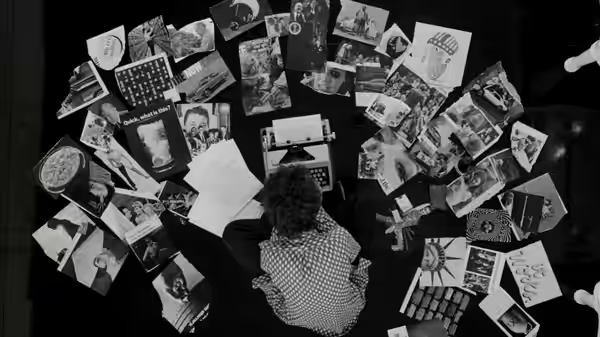
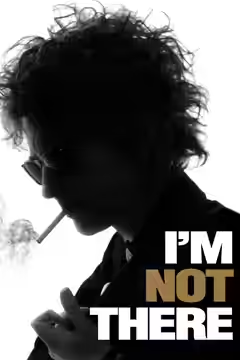
Cate Blanchett’s Jude is the reason to see it. This is the Dylan of the electric tour, nest of black hair, dark glasses, cigarette, and Blanchett gets the walk and the mumble and the pleasure he took in refusing to be understood. Her best scenes are with Bruce Greenwood as Keenan Jones, a television journalist who keeps asking what the songs mean and keeps being told he is the wrong man to ask. Edward Lachman shoots this strand in grainy black and white, with Allen Ginsberg (David Cross) arriving in a golf cart and Michelle Williams’s Coco Rivington drifting through parties in large white rooms. About an hour in, watching Blanchett slumped in the back of a car, bored by people who had crossed a city to adore her, we realised we had stopped seeing an actress and were watching the man. It unsettled us more than we expected, since the film’s title insists he is not there.

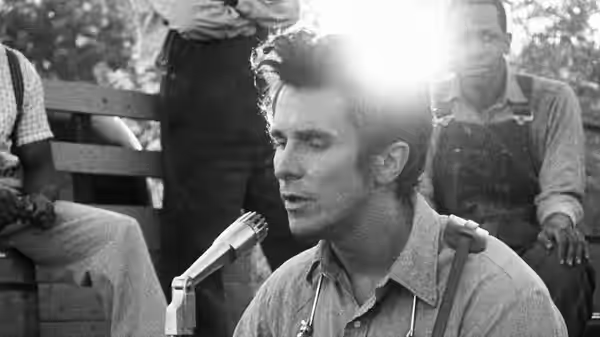
Marcus Carl Franklin plays Woody, a boy riding a boxcar with a guitar case stencilled ‘This Machine Kills Fascists’, trading verses on a porch with Richie Havens’s Old Man Arvin; the joke that he has invented his whole history is made once and let go. Christian Bale’s Jack is a Greenwich Village folk singer shot like a television documentary, with Julianne Moore’s Alice Fabian remembering him years later with a fondness gone slightly stale. Ben Whishaw’s Arthur, interrogated at a table, is the film’s footnotes. Heath Ledger’s Robbie is an actor who played Jack in a biopic, and his marriage to Claire (Charlotte Gainsbourg) is the one place where somebody wants something you could put a name to. Gainsbourg is the second best thing in the film.

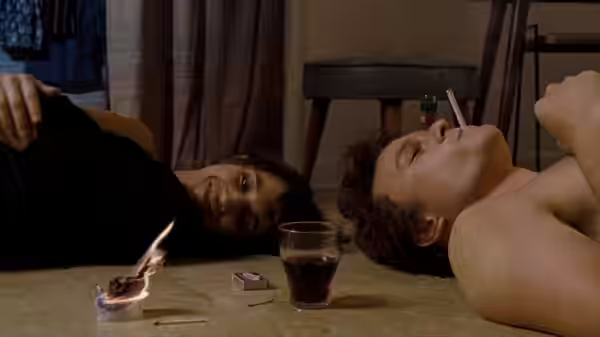
Each strand has its own look and Lachman does the work: faded hand-held colour for Jack, the soft light of a 1970s French picture for Robbie and Claire, autumn browns and long lenses for Billy. Judy Becker builds Riddle as a town at a permanent Halloween, townsfolk in masks and a giraffe in the street. John Dunn’s costumes do much of the characterisation, Jude’s narrow suit, Woody’s jacket two sizes too big. Jay Rabinowitz cuts across the strands in mid-sentence, so a question asked in one is answered in another. It is exhilarating for an hour and a habit after that.

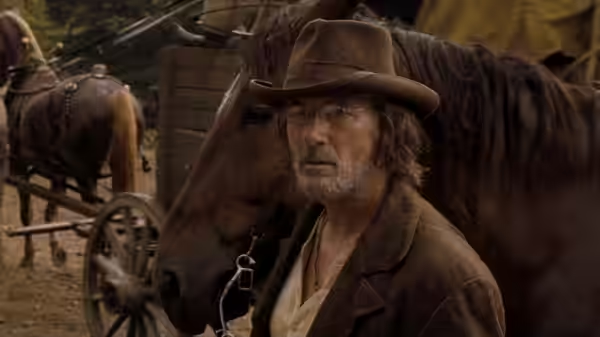
Richard Gere plays Billy, an outlaw grown old under another name in a town that a lawman called Garrett (Bruce Greenwood again) means to put a highway through. Gere plays him slow and grave, but the strand has the dust and horses of a Western and none of the pressure. Every time the film cut to Riddle it sagged, and by the fourth or fifth visit we were bored, and then irritated at being bored by something so carefully made. The other weakness is the dialogue, much of it lifted from Dylan’s songs and interviews and spoken as conversation. In Arthur’s mouth it is funny. Elsewhere people talk in epigrams and wait for us to recognise them.

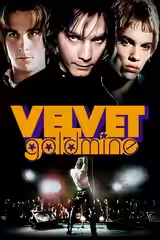
Velvet Goldmine (1998) was a glam rock film with Bowie’s name taken off; Far from Heaven (2002) remade a 1950s melodrama with the subtext brought to the front. This is the one where Haynes’s method and his subject fit, because Dylan spent his career telling interviewers stories about himself that were not true. The film does not explain him, and it takes its title from one of his own unreleased recordings to say so.

So the question is how much of the records you carry with you. If you know them, this is 135 minutes of pleasure with a slow patch in the saddle. If you do not, it will be a parade of handsome strangers quoting someone you have never met, and the film has no intention of making the introduction.
Critical consensus AI synthesised

69
Positive
8
Mixed
2
Negative
3

Most critics come down in favour, though few without reservation. The praise gathers almost entirely around Cate Blanchett, whose turn as the electric-era Dylan is singled out in nearly every review, by admirers and dissenters alike, as the part that holds the film together. Beyond her, the reviews credit Todd Haynes’s nerve in breaking the biopic into pieces, Ed Lachman’s cinematography across the shifting styles, and the music itself as what makes the demanding approach worth sitting through. Heath Ledger and Charlotte Gainsbourg also draw mentions.

The spread is wide, running from full marks at Time Out to a near-dismissal at Eye for Film. The reservations cluster in two places: that the fragmentation tips into incoherence, and that the film leaves the viewer no closer to Dylan than before. Slant Magazine calls it elaborate but hollow; Variety and Total Film both find the Richard Gere western stretch the weakest. The dissenters are broadly those who wanted a portrait; the admirers accept that this was never the plan.

Time Out
7 October 2007 · ★★★★★ · Dave Calhoun
100

Calhoun gives the film a strong endorsement despite its unconventional approach. He singles out its rule-breaking, fragmented take on Bob Dylan’s life.

Read the full review →
IndieWire
19 November 2007 · Chris Wisniewski
90*

Wisniewski calls the film an invigorating, thrilling achievement, despite finding parts too tidy or diffuse. He praises its craftsmanship, especially the performances by Cate Blanchett, Charlotte Gainsbourg, and Heath Ledger.

Read the full review →
RogerEbert.com
20 November 2007 · ★★★½/4 · Roger Ebert
88

Ebert gives the film a positive verdict. He singles out Cate Blanchett’s performance as a standout.

Read the full review →
The AV Club
21 November 2007 · B+ · Keith Phipps
83

Phipps finds the film thrillingly brilliant despite maddening choices and uneven sequences. He particularly praises Haynes’s daring filmmaking and Ed Lachman’s cinematography, while noting that some references and lyric-based dialogue fall flat.

Read the full review →
The Guardian
23 December 2007 · Philip French
80*

French finds the film mystifying but ultimately challenging and rewarding. He singles out its varied cinematic styles and the music as making its demanding approach worthwhile.

Read the full review →
Total Film
21 December 2007 · ★★★★ · Total Film
80

The review calls the film ambitious, successful, and reverential, though it loses momentum in its final stretch. It praises the ensemble’s varied portrayals, especially Cate Blanchett’s performance, while finding Richard Gere’s segment the least convincing.

Read the full review →

Straight answers AI written, from our review

Is I'm Not There worth watching?
I'm Not There is worth watching if you know Bob Dylan's records, and we scored it 74. Cate Blanchett's strand as the electric-era Dylan would carry the evening on its own, and Charlotte Gainsbourg is the second best thing in it. The Richard Gere Western in a town called Riddle sags every time the film cuts to it, and a viewer who has never heard the songs will find 135 minutes of strangers quoting a man they have not met.
How long is I'm Not There, and what is it rated?
I'm Not There runs 2h 15m and is rated R by the MPA in the US. It is a drama and music film.
Where can I watch I'm Not There in the US?
I'm Not There is streaming on Tubi, The Roku Channel and Amazon Prime Video in the US, and it is also available to rent from Amazon Prime Video from $3.99. It leaves Tubi on 1 October. Availability is checked daily; the links above go straight to each service.
How violent or frightening is I'm Not There, and is it suitable for children?
I'm Not There has no UK certificate on record and carries an R in the United States, so expect adult material rather than a family film. Nothing in it is frightening; the nearest thing to menace is a lawman planning a highway through an old outlaw's town. Children would be baffled long before they were upset, since the whole film assumes you already know who Bob Dylan is.
How does I'm Not There compare to 8½?
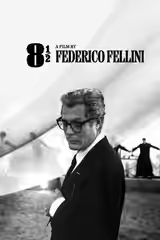
I'm Not There borrows its look from 8½, and Fellini's is the better film. Both are about an artist who has nothing to say to the people asking what his work means, and Haynes shoots Cate Blanchett's London strand in the same grainy black and white, with the same parties in large white rooms. Fellini's is tighter and funnier and we would send a stranger to it; Haynes's is for people who arrive already carrying the records.
What should I watch after I'm Not There?
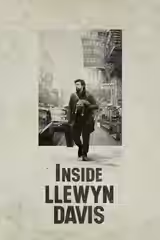
After I'm Not There, try 8½ (1963, Fi1m 91): Fellini’s artist with nothing to say to the press; Haynes borrowed the whole look. Then Velvet Goldmine (1998, Fi1m 81): Haynes does the same trick with glam rock and a Bowie figure under another name; and Inside Llewyn Davis (2013, Fi1m 87): The Coens on the Greenwich Village folk scene Jack walks into, a week before Dylan arrives.

Cast

Awards

Academy Awards, 2008

Nominated
Best Supporting Actress

Grand Jury Prize of the Venice Film Festival, 2007

Won
Grand Jury Prize of the Venice Film Festival

If you liked this, try…

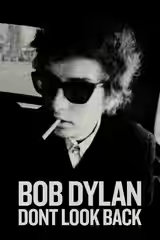
  1. Dont Look Back (1967) · not on Fi1m yetPennebaker follows the real article round England in 1965, and he is exactly this evasive.

  2. 8½ (1963, Fi1m 91)Fellini’s artist with nothing to say to the press; Haynes borrowed the whole look.

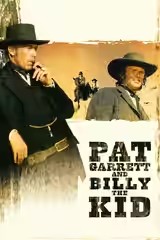
  3. Pat Garrett and Billy the Kid (1973) · not on Fi1m yetPeckinpah’s Western with Dylan himself in a small part and all over the soundtrack.

  4. Velvet Goldmine (1998, Fi1m 81)Haynes does the same trick with glam rock and a Bowie figure under another name.

  5. Inside Llewyn Davis (2013, Fi1m 87)The Coens on the Greenwich Village folk scene Jack walks into, a week before Dylan arrives.