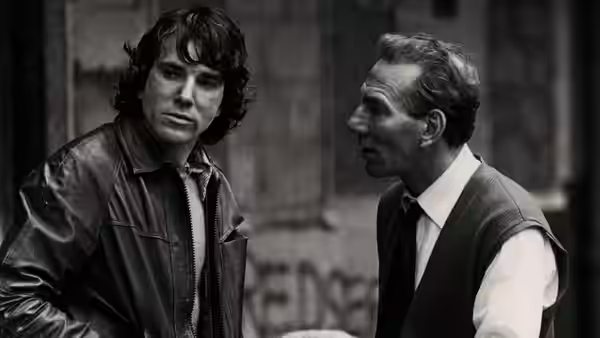
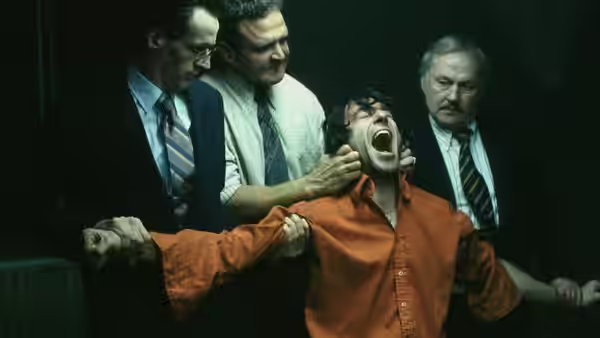
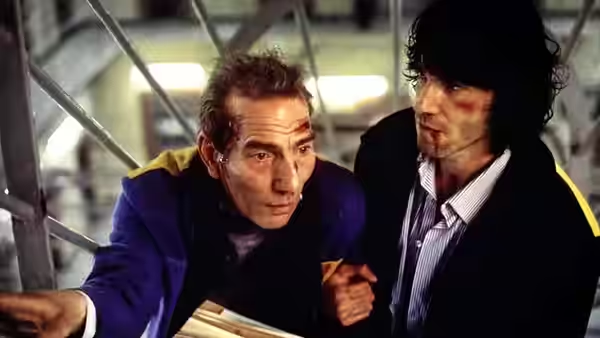
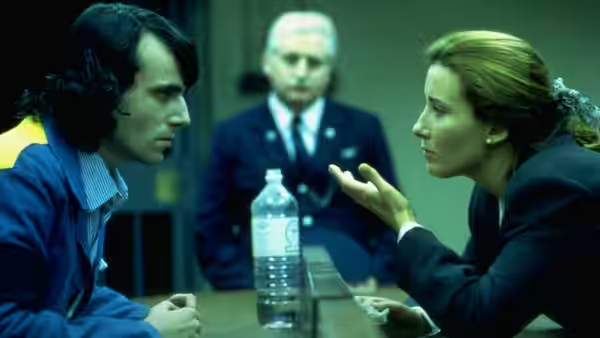
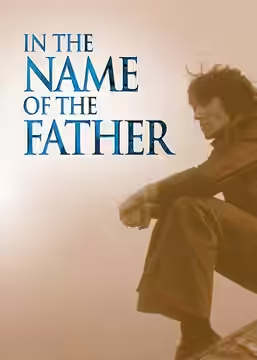
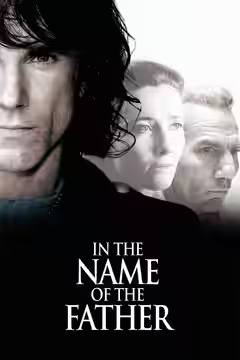
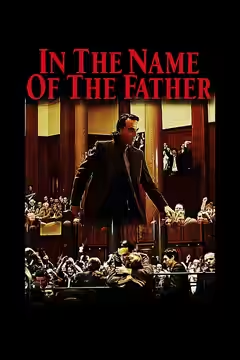
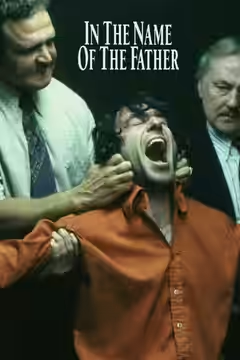
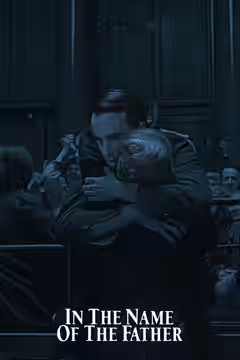
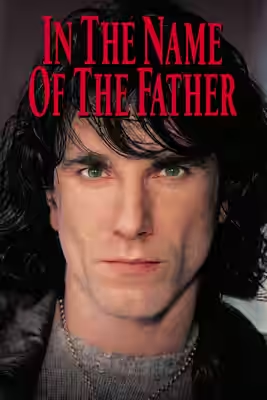
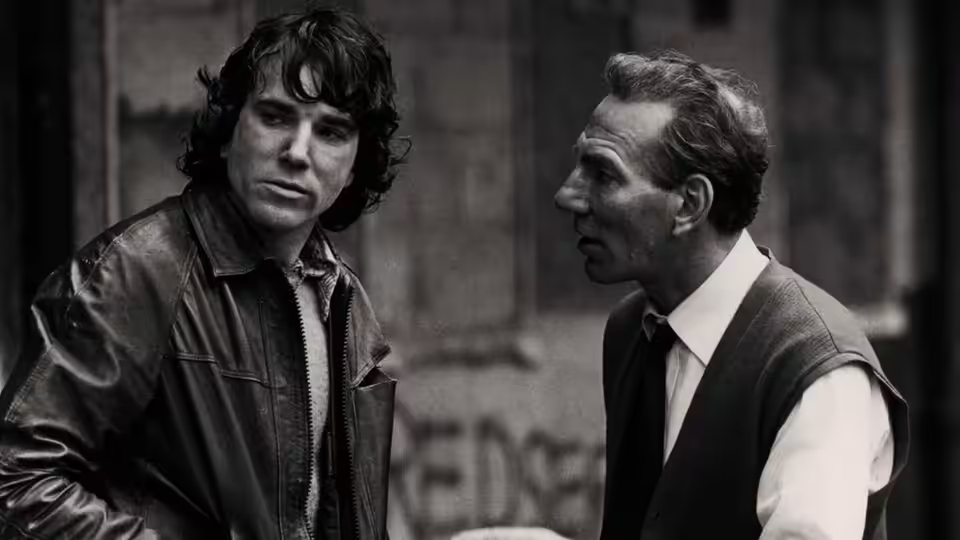
Gerry Conlon (Daniel Day-Lewis) facing Giuseppe Conlon (Pete Postlethwaite) outdoors
Film review

In the Name of the Father

1993 · Directed by Jim Sheridan · 2h 13m

In a sentenceWe came prepared for Daniel Day-Lewis to be angry, not for Pete Postlethwaite to hurt this much

Gerry Conlon (Daniel Day-Lewis) is one of the Guildford Four, whose wrongful conviction begins a long fight for justice. His father, Giuseppe (Pete Postlethwaite), becomes central to Gerry’s reckoning with what has happened and with his own behaviour. Their relationship changes as the consequences of the miscarriage of justice reach into family life. Emma Thompson plays Gareth Peirce, alongside John Lynch as Paul Hill and Beatie Edney as Carole Richardson. Directed by Jim Sheridan, the film follows the Conlons through a struggle that brings their differences into focus.

Fi1m review

Jim Sheridan’s miscarriage-of-justice drama is angry, humane and carried by Daniel Day-Lewis and Pete Postlethwaite. Its emotional prompting can be heavy, but the difficult relationship between father and son makes it well worth the discomfort.

In the Name of the Father is a forceful, moving drama that earns our recommendation, chiefly through Daniel Day-Lewis and Pete Postlethwaite. Jim Sheridan takes the wrongful conviction of the Guildford Four and makes the relationship between Gerry Conlon and his father Giuseppe central to it. That is a sound decision: the injustice matters more because these men have other things to reckon with between them. The film’s determination to move us does occasionally become a little too apparent.

Day-Lewis allows Gerry to be difficult company, which is essential to the film’s honesty. We do not have to approve of him before taking his side, and Sheridan resists tidying him into someone whose innocence makes every other question about his behaviour disappear. The performance gives his personal growth weight because there is something for him to grow out of. Gerry remains a son with failings, even inside a story that has ample reason to defend him.

Postlethwaite’s Giuseppe moved us more than we expected. It is the strain in the father-son relationship that does it, especially against Day-Lewis’s unwillingness to make Gerry easy to like. We found ourselves worrying about how these two men understood each other even while the miscarriage of justice demanded our anger. The actors give that family difficulty enough importance to survive alongside the larger story.

Peter Biziou’s cinematography keeps our attention on the people, which is the right priority for a story with so much public history attached. Caroline Amies’s production design gives their surroundings a persuasive sense of use and habitation. We believe in the places these people occupy, and that helps keep the injustice from feeling remote. Neither contribution needs to announce itself, and the film benefits from that restraint.

Gerry Hambling’s editing gives the 133 minutes a purposeful forward movement without treating the family scenes as interruptions. The fight for justice stays gripping because the film keeps our concern for the Conlons close at hand. Trevor Jones’s music is less restrained, adding emotional insistence where the actors have already given us enough. It works, but we sometimes wanted the film to leave us alone with a performance.

The screenplay makes factual adjustments for emotional effect, and that is a consequential choice in a story about justice. Sheridan and co-writer Terry George are entitled to shape a drama, but we wanted more of the unease that comes from acknowledging how untidy real lives can be. Sometimes the push towards a strong emotional response makes the writing feel too settled. Gerry’s flaws help, and the performances keep the film from becoming a recital of grievances.

We ask a wrongful-conviction drama to make us care about the people as well as the case, and Sheridan succeeds at that. His film has enough anger to sustain the fight for justice without reducing everything to a demand that we choose a side. The family relationship is where its strongest work lies, particularly when liking Gerry is difficult. Watch it for the two leads, and allow a little quiet afterwards.

Critical consensus AI synthesised

79
Positive
8
Mixed
0
Negative
0

The reviews are unanimous in their approval, and the spread is narrow: every critic lands in the same broad band of good to strong. Most agree that the film’s anger about the Guildford Four’s wrongful conviction is its engine, and that Jim Sheridan handles the material fairly without preaching. The praise clusters on the two central performances. Daniel Day-Lewis and Pete Postlethwaite are singled out again and again, and most critics say the father-son relationship, rather than the courtroom, is where the film does its best work.

The reservations are mild and mostly about shape. RogerEbert.com finds the middle prison stretch loses urgency and could be tighter. The New Yorker thinks the film is weaker as straight docudrama, blurring details in the trial scenes, and Time Out also notes that facts have been adjusted for emotional effect. The Independent finds it solid rather than uncomfortable. Nobody dissents on the whole; the most reserved review still calls the prison scenes precise and purposeful.

Empire
· Kim Newman
85*

This is a considerable achievement that tackles controversial material in a fair-minded but righteously wrathful manner while making the story gripping. Letter-perfect performances from Daniel Day-Lewis and Pete Postlethwaite drive home the point about miscarriage of justice, with the father-son relationship at its heart.

Read the full review →
Los Angeles Times
29 December 1993 · Kenneth Turan
85*

The critic calls the film a model of enraged, polemical cinema that powerfully dramatizes a real miscarriage of justice while adding emotional depth through the father-son story. Day-Lewis delivers an extraordinarily convincing performance that makes viewers feel they are living the years of imprisonment alongside the character.

Read the full review →
The New York Times
29 December 1993 · Janet Maslin
85*

The critic calls the film tough and riveting, praising director Jim Sheridan's plain yet resonant storytelling that indicts the bitterness between English and IRA partisans. It succeeds as both a personal tragedy and a plea for reason.

Read the full review →
Variety
31 December 1992 · Variety Staff
80*

The review highlights the film's strong sense of time and place, outstanding characterizations, and cinematic energy that advances on Sheridan's prior work. It singles out the intense performances of Daniel Day-Lewis and Pete Postlethwaite for particular praise.

Read the full review →
RogerEbert.com
14 January 1994 · Roger Ebert
75*

The critic finds the film an angry, detailed account of the Guildford Four miscarriage of justice that excels in showing how prison changes the protagonist and deepens his bond with his father. Day-Lewis’s transformative performance anchors the story, though the middle prison sections lose some urgency and could be tighter.

Read the full review →
The Independent
11 February 1994 · Adam Mars-Jones
75*

The film is solid and well-crafted with moments of great power, though not as urgent or uncomfortable as it might have been earlier. It excels in depicting the father-son relationship and the personal growth of Gerry Conlon without idealising him, highlighted by strong performances from Daniel Day-Lewis and Pete Postlethwaite.

Read the full review →

Straight answers AI written, from our review

Is In the Name of the Father worth watching?
In the Name of the Father is worth watching for anyone who wants a wrongful-conviction drama that cares about the people as much as the case, and we scored it 83. Daniel Day-Lewis and Pete Postlethwaite carry it as a difficult son and his father. The music and some of the writing push for tears a little too hard, but the two leads earn the discomfort.
How long is In the Name of the Father, and what is it rated?
In the Name of the Father runs 2h 13m. It is a drama film.
Where can I watch In the Name of the Father in Panama?
In the Name of the Father is not on any streaming or rental service in Panama at the moment. It is available in 26 other countries; change your country at the top of the page to see where. Availability is checked daily.
How violent or frightening is In the Name of the Father, and is it suitable for children?
In the Name of the Father is a UK 15 and a US R, and it is a drama about a miscarriage of justice rather than a violent thriller. The distress comes from anger, prison life and a strained family relationship, not from frightening set pieces. It is not for children, and younger teenagers may find its 133 minutes heavy going.
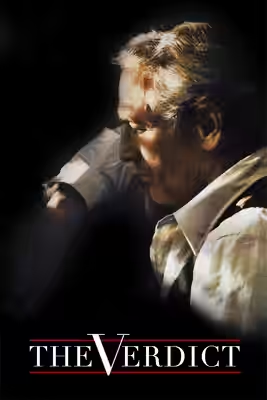
How does In the Name of the Father compare to The Verdict?
In the Name of the Father is the angrier and more emotionally direct of the two, built around a father and son caught in a real injustice, while The Verdict is a quieter, more solemn courtroom story about one worn-down lawyer. Both gain force from a flawed central man, but Sheridan's film moves faster and presses harder. Choose The Verdict for an unhurried evening, and this for something that grips.
What should I watch after In the Name of the Father?
After In the Name of the Father, try The Verdict (1982, Fi1m 84): Another legal drama whose anger gains force from a flawed central character. Then A Separation (2011, Fi1m 93): Family obligations and legal judgement become painfully tangled, without convenient villains; and The Hunt (2012, Fi1m 82): An accusation takes hold, and ordinary social life becomes frightening.

Cast

Awards

Academy Awards, 1994

Nominated
Best Actor
Nominated
Best Director
Nominated
Best Film Editing
Nominated
Best Supporting Actor
Nominated
Best Supporting Actress
Nominated
Best Writing, Adapted Screenplay

Berlin International Film Festival, 1994

Won
Golden Bear

European Film Award for Best Film, 1994

Nominated
European Film Award for Best Film

If you liked this, try…

  1. The Verdict (1982, Fi1m 84)Another legal drama whose anger gains force from a flawed central character.

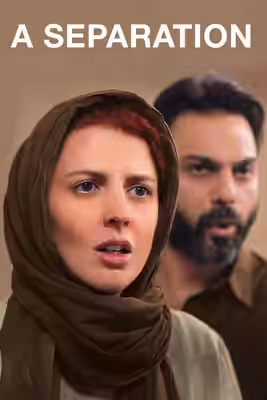
  2. A Separation (2011, Fi1m 93)Family obligations and legal judgement become painfully tangled, without convenient villains.

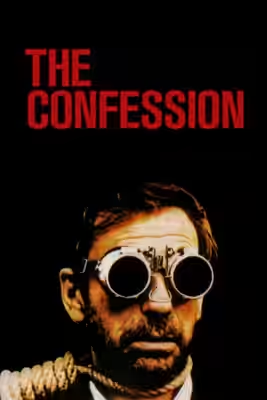
  3. The Confession (1970) · not reviewed yetA harsher account of coercion, with little comfort in knowing the truth.

  4. The Hunt (2012, Fi1m 82)An accusation takes hold, and ordinary social life becomes frightening.

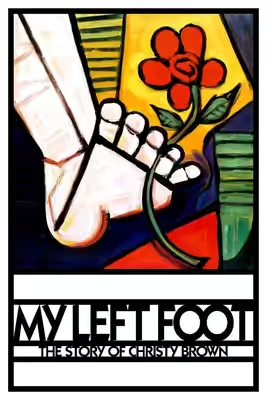
  5. My Left Foot (1989, Fi1m 85)Day-Lewis gives another difficult man the full benefit of his contradictions.

Free account

Know what to watch tonight

Two lists that know where things are streaming, collections you can share, your own score beside ours, and Discover that remembers what you have seen.

  • Want to see, sorted by what is streaming now
  • Seen, with your score out of ten
  • No adverts, ever