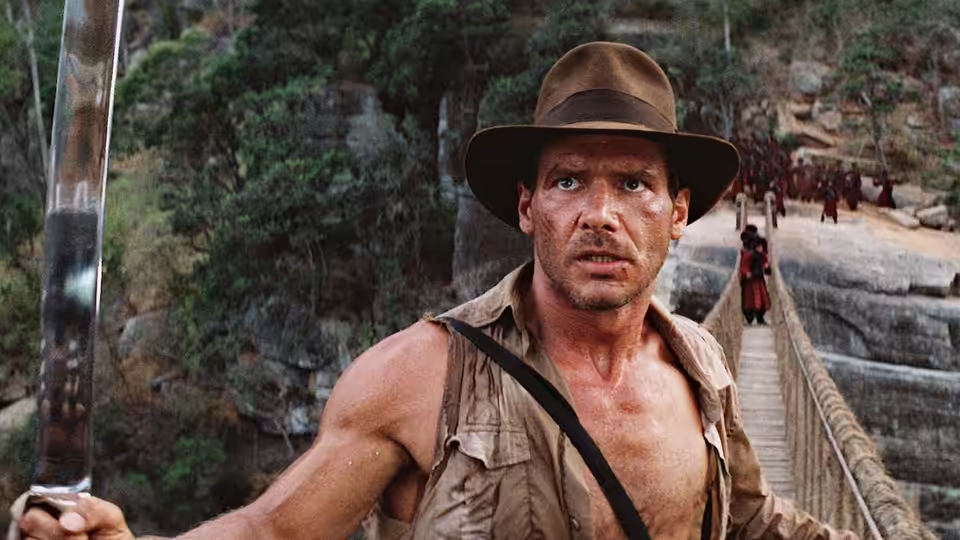
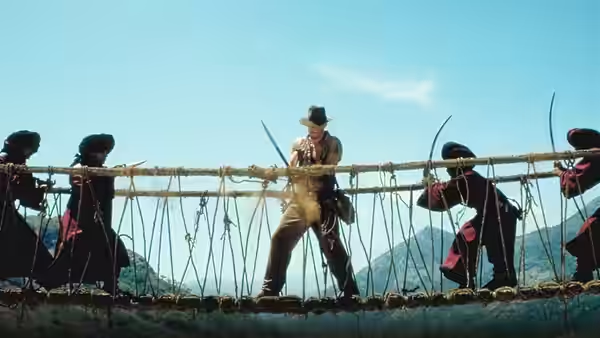
The raft, the mine cart and the bridge are as well built as anything Spielberg has made, and the film around them has a heroine who only screams and a view of India that should have embarrassed everyone at the time.
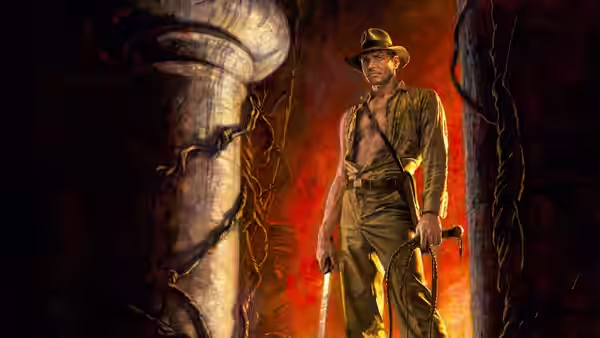
Three years after Raiders of the Lost Ark, Steven Spielberg and George Lucas send Indiana Jones back a year, to 1935, and somewhere a good deal darker. Lucas supplies the story, Willard Huyck and Gloria Katz the screenplay, and the plan is plainly to outdo the first film: more stunts, more speed, fewer pauses for breath. For long stretches it works. The trouble is what has been put into the pauses.
Spielberg has rarely staged action this cleanly. The Shanghai opening is a musical number that turns into a poisoning that turns into a shoot-out that turns into a car chase, and Michael Kahn cuts it so that every object that matters, the diamond, the antidote, the ice bucket, the gong, is exactly where we need to see it when we need to see it. The escape from a pilotless aeroplane in an inflatable raft is the sort of nonsense that only works if nobody on screen blinks, and nobody does. The mine-cart chase near the end is a fairground ride built by people who knew exactly where the drops should go. We watched it grinning, which is not our usual expression.
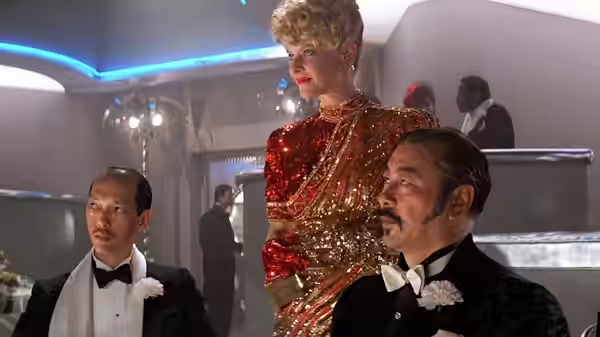
Douglas Slocombe lights the palace in torchlit oranges and deep reds and the temple beneath it with hard shafts of light through smoke, so that figures move as silhouettes and the fire glows from below. Elliot Scott’s sets, the nightclub with its enormous staircase, the dining hall, the temple with its pit and its chains, are built solidly enough for people to be thrown across them, and people are thrown across them constantly. Anthony Powell puts Kate Capshaw in a gold sequinned gown that is ruined by degrees over two hours, which is as close as the script gets to giving her a story. John Williams writes bigger and louder than he did for Raiders, and more than once the music is announcing excitement the picture has already delivered.
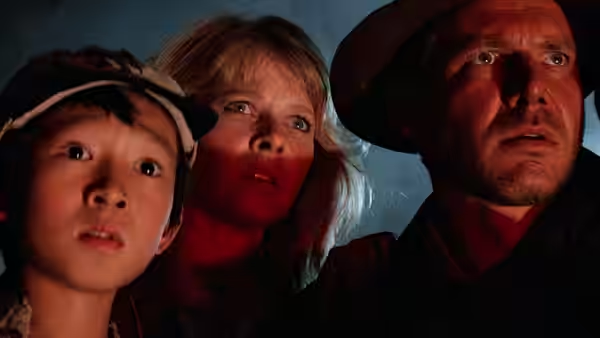
Willie Scott is the film’s largest mistake. Capshaw is asked to scream, complain and fall over, and she does all three with commitment, but the script gives her nothing else to do, and by the halfway mark each scream costs the film a little more of our goodwill. The romance with Ford is written as bickering, and it is bickering between a man with a job and a woman who is in his way. Ke Huy Quan’s Short Round does far better. He is quick and funny, he treats Ford as an equal, and their card games and squabbles are the warmest thing in the film.
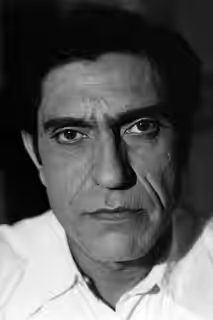
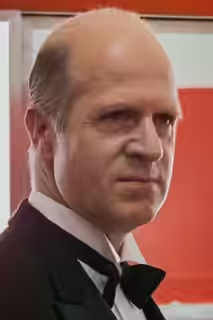
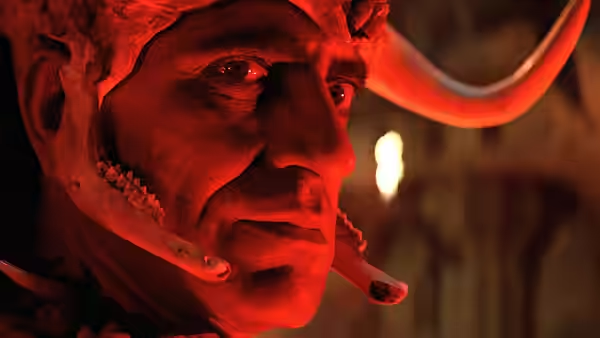
Then there is India. The village is a place of starving, weeping people waiting for a white man to arrive, and the banquet at Pankot Palace serves live snakes, beetles and chilled monkey brains so that Willie can retch and we can laugh at what foreigners eat. We did not laugh. The film is unkind to a real country, which is bad enough; worse, the jokes are lazy, and laziness is the one thing the rest of the film refuses to allow itself. Amrish Puri’s Mola Ram, all eyes and teeth, is a proper villain because Puri makes him one, and Roshan Seth’s Chattar Lal, the palace’s smooth prime minister, is the best-written adult in it. Both are playing figures from a 1930s serial, and the film knows this and does not much care.
Under the palace, the second half turns into something the certificate did not prepare anyone for. There is a ceremony we will not describe. It frightened us, and we were not children, and Spielberg stages it with complete conviction, drums and torches and Puri chanting over a stone altar. It is the one stretch where the darkness feels chosen rather than stumbled into. Parents who took the PG at its word had a right to feel misled.
Raiders had a plot you could explain in a sentence and set pieces that grew out of it. Temple of Doom has set pieces, and a plot that exists to join them. Even the series seemed to notice: Indiana Jones and the Last Crusade (1989) went back to Nazis and daylight.
Watch it for the machinery, which has not aged a day, and brace for everything around it, which has aged badly. Released in Britain on 15 June 1984, it runs 118 minutes and still carries a PG. Do not take that as a promise about what your children will see.