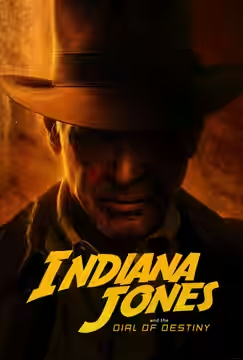
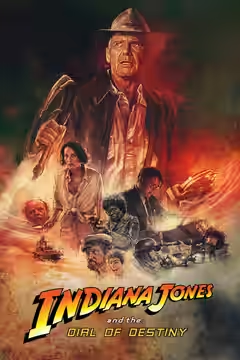
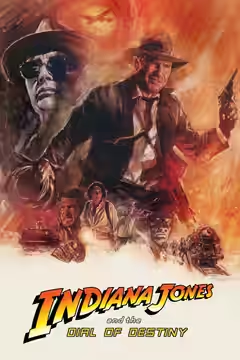
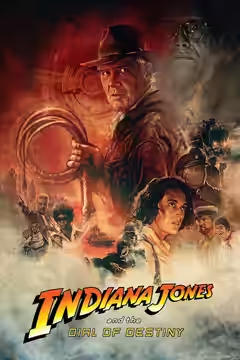
James Mangold’s send-off for Indiana Jones gives Harrison Ford a fine, weary last go at the part and buries him under 155 minutes of chases nobody needed. Worth it for the man; the film around him is mostly noise.
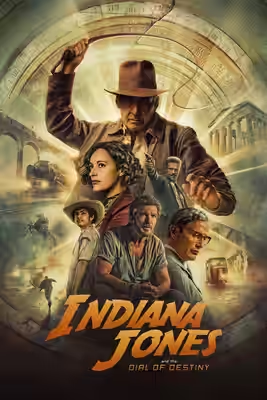
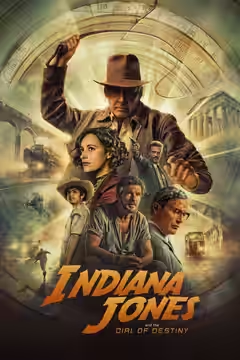
James Mangold has made the first Indiana Jones film without Steven Spielberg directing, and the one meant to be the last. It opens in 1944, on a Nazi train, with a digitally younger Harrison Ford fighting over half of a dial built by Archimedes, and then jumps to New York in 1969, where Jones is living alone in a small flat, retiring from a lecture hall nobody sits in, and being woken by his neighbours’ music. The script, by Jez Butterworth, John-Henry Butterworth, David Koepp and Mangold, wants two things: to send the man off with some feeling, and to put him through three more chases than his knees can stand. It does the first well and then will not stop doing the second.
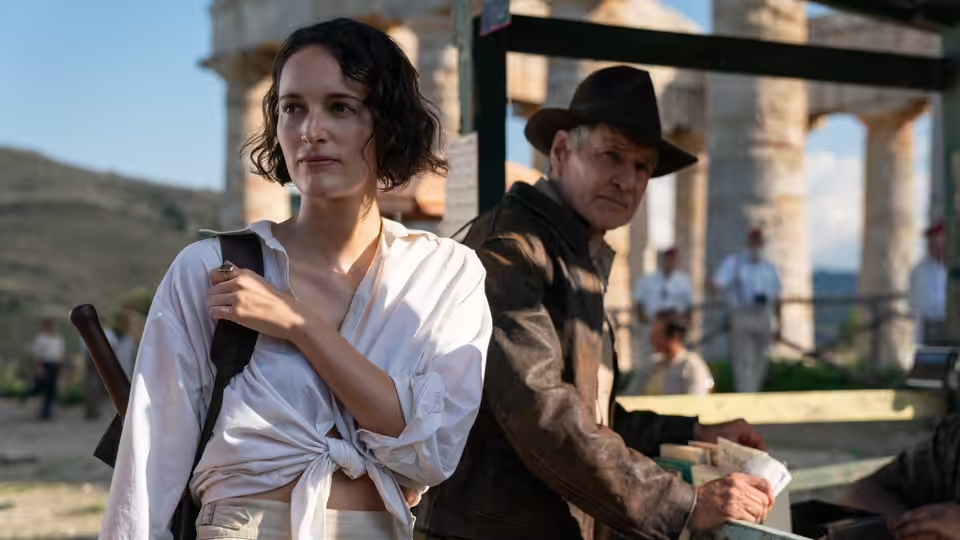
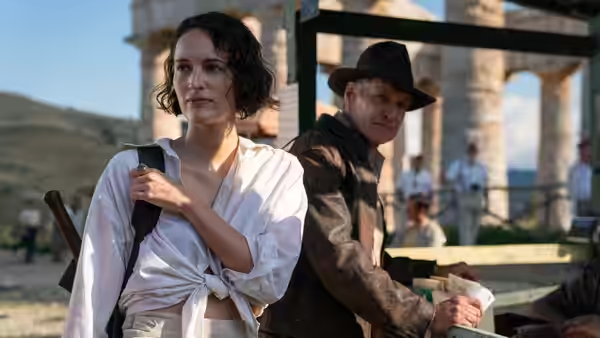
Ford is the reason to go. He plays Jones as tired, sour and slightly ashamed of having been left behind, and he makes the character’s age the subject rather than the joke. Watch the retirement party he does not want, the way he drinks alone in the flat, the flicker when Phoebe Waller-Bridge’s Helena says the name Basil Shaw. He is not doing an impression of the man from 1981. He is playing what happened to him, and it is the best acting in the film by a distance.
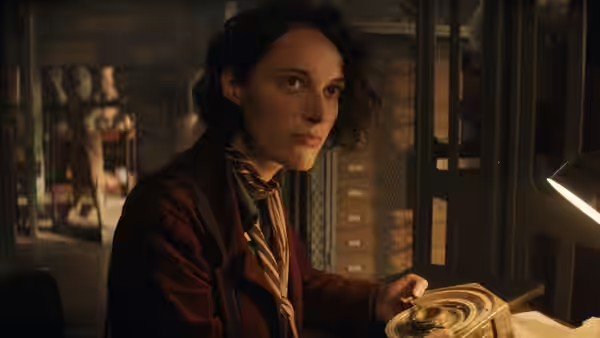
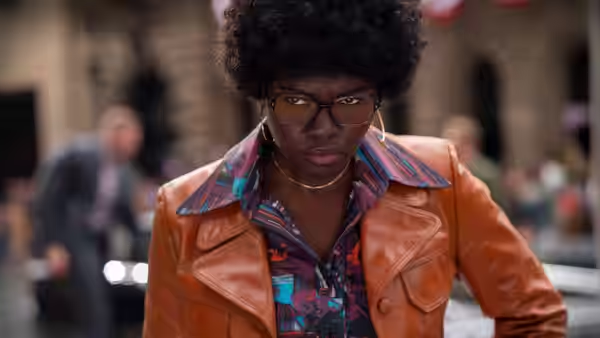
Waller-Bridge is Jones’s goddaughter, a thief in an academic’s clothes, and she is quick and funny and never once sentimental about him, which is the right choice. Ethann Isidore, as her young accomplice Teddy, gets the film’s best deadpan. Mads Mikkelsen plays Voller, a former Nazi physicist now working for the American space programme, with the stillness he brings to everything; he is frightening for about two scenes and then the plot mostly has him arrive late and glower. Boyd Holbrook’s Klaber does the hitting. Indiana Jones has the prologue, Antonio Banderas has a boat, and Karen Allen and John Rhys-Davies are in it for about as long as it takes to notice they are.
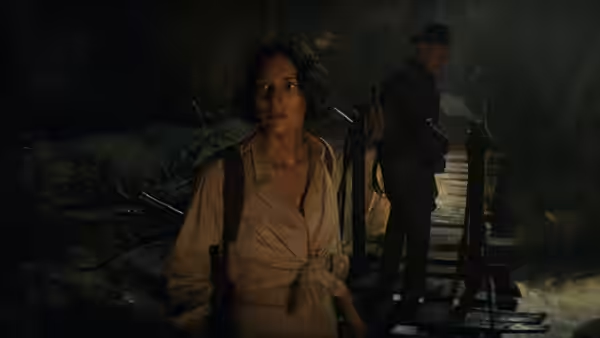
Phedon Papamichael shoots that prologue in rain and near-darkness, partly, we suspect, to hide the seams in the young Ford, and it half works. In long shot and in motion he is the man from Raiders; in close-up the eyes sit wrong and the mouth does not quite belong to the voice. We spent twenty minutes checking the face instead of watching the scene, which is a pity, because the scene underneath is a good one. Adam Stockhausen’s 1969 is better: ticker tape on a Manhattan avenue, a subway platform, a flat full of things nobody has dusted. Joanna Johnston puts Ford back in the hat and jacket and gives Waller-Bridge a wardrobe of borrowed suits, which tells you what her character is before she says a word.
Then there are the chases, and there are a great many. Three editors are credited, Andrew Buckland, Michael McCusker and Dirk Westervelt, and the parade sequence, Jones on horseback through a moon-landing celebration and down into the subway, is cut cleanly enough that we always knew where he was. The one in Tangier is not. Cars flip, a tuk-tuk goes down steps, bodies bounce, and none of it appears to be in the same place as the people, and it goes on for what felt like a quarter of an hour. We were bored, and then we were cross about being bored, because this is plainly where the money went. John Williams supplies the old march and a new, wistful tune for Helena, and the music knows what the ending is about long before the script gets there.
The last half hour takes a turn we will not describe. We will say that it moved us more than we expected, and that it did so with Ford sitting still while Williams did the talking. A film that can manage that at the end could have managed it at ninety minutes.
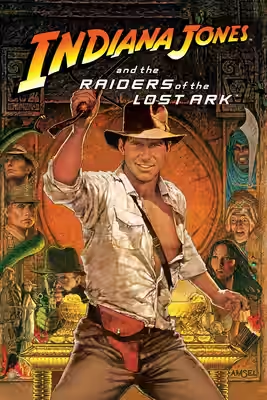
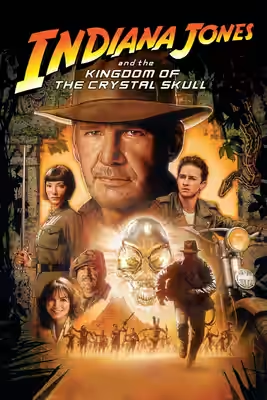
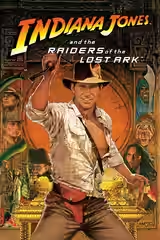
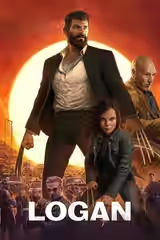
Raiders of the Lost Ark (1981) ran under two hours and let its hero lose most of his fights. Kingdom of the Crystal Skull (2008) pretended he had not aged; this at least admits it, which makes it the more honest of the two late entries and the sadder. Mangold’s own Logan (2017) did the same job, a tired hero, a young companion and a last stand, with fewer moving parts and more nerve.
Go for Ford, if you go, and for the parade and the last twenty minutes. At home you will be tempted to skip Tangier. We would not blame you. It runs 155 minutes and carries a 12A.