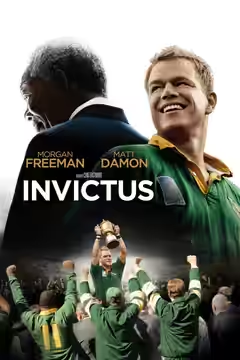
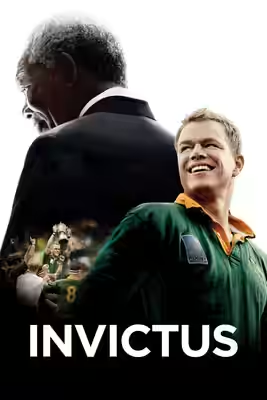
Clint Eastwood tells the story of Mandela and the Rugby World Cup plainly, without fuss and without much curiosity. Morgan Freeman is the reason to watch; the film around him repeats its one idea until it is worn smooth.
Clint Eastwood’s film takes a fine true story and tells it as though it were afraid of breaking it. Nelson Mandela, a year into the presidency, decides that the Springboks, the rugby team black South Africa has spent decades cheering against, can be made into something the whole country owns, and that the World Cup the nation is about to host is the place to do it. Anthony Peckham’s screenplay lays this out clearly. Then it keeps laying it out, for 134 minutes.
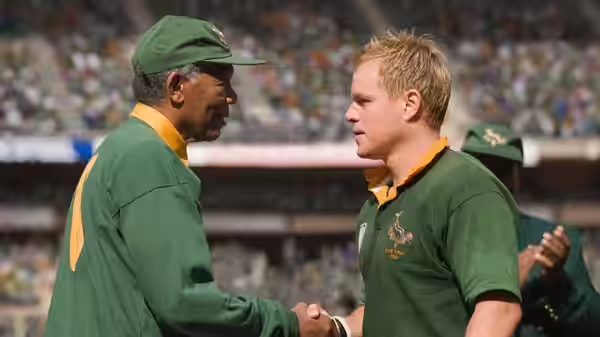
Morgan Freeman is why you watch. He has the walk, the hands clasped behind the back, the pause in which you can see a sentence being chosen, and a smile that arrives a beat before its joke. On his first morning in office he gathers the white civil servants packing their desks and tells them, without raising his voice, that he would rather they stayed. We were moved by that scene more than we expected to be: Freeman plays it as a man asking a favour, not a saint granting one, and the camera stays on the faces of the people deciding whether to believe him.
The bodyguards are the film’s best idea. Jason Tshabalala (Tony Kgoroge) runs the president’s security and is handed white officers from the old regime, Etienne Feyder (Julian Lewis Jones) and Hendrick Booyens (Matt Stern), with Patrick Mofokeng’s Linga Moonsamy alongside him. Four men sharing a corridor and a job, each sure the others will get the boss killed: it is the whole country in one office, and the film is wise enough not to say so out loud. These scenes are short, funny and tense, and there are too few of them.
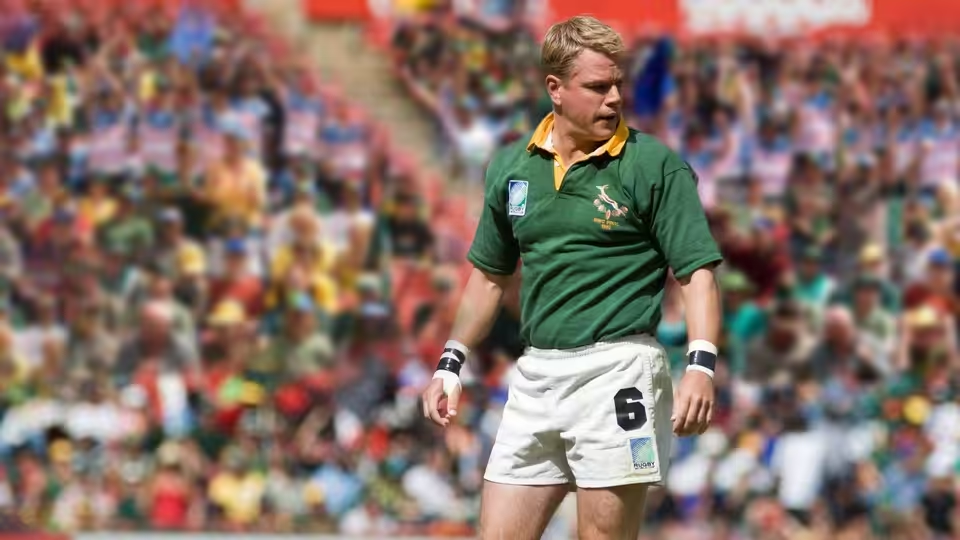
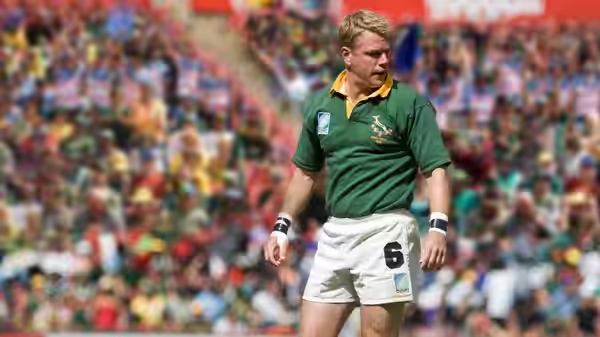
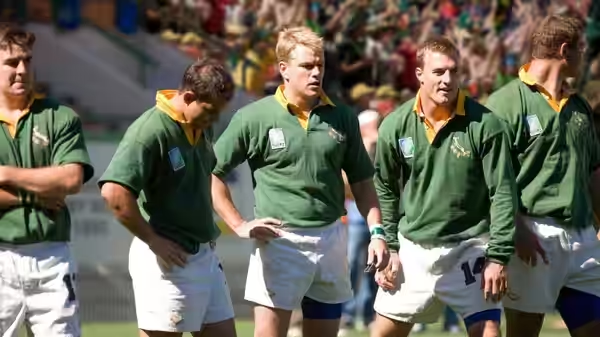
Matt Damon plays Francois Pienaar, the Springbok captain, with his shoulders set and an accent he holds onto carefully, and he makes a decent, quiet man interesting to look at. His tea with Freeman is the one proper conversation in the film, two people working out what the other wants. Patrick Lyster and Penny Downie, as his parents, give the Afrikaner household a sourness the script needs; Marguerite Wheatley has little to do as his girlfriend Nerine. Adjoa Andoh, as Mandela’s chief of staff Brenda Mazibuko, is the only person allowed to think the rugby is a distraction from running a country, and she is right more often than the film admits.
Tom Stern shoots it in hard sun and deep shadow, the government offices brown and dim, the pitch bleached nearly white, and James J. Murakami gives the presidential office a borrowed grandeur of dark wood and heavy curtains. Deborah Hopper’s loud patterned shirts and the green jersey do a fair share of the storytelling. Joel Cox and Gary D. Roach cut the office scenes cleanly and the rugby badly. On the field it is all slow-motion collisions and grunting faces in close-up, and if you did not know how a match is shaped going in, you will not know coming out.
Then there is the music. Kyle Eastwood and Michael Stevens supply a score that is mostly tasteful, until it swells over a montage, and we sat there irritated, because the pictures had already said it and the strings said it worse. It is the film’s habit in miniature. Mandela explains the plan to Brenda. Mandela explains the plan to Pienaar. Pienaar explains it to the team.
Against Eastwood’s own recent work this is the cautious one. Million Dollar Baby (2004) and Letters from Iwo Jima (2006) were made by a man willing not to be sure how he felt; Gran Torino (2008) was at least rough enough to be alive. Here he admires his subject so much that he refuses to let anything go wrong near him, so the film has little to do.
The second half is the tournament, and we will not say how it goes. It is a fair Sunday afternoon at home, where its calm reads as comfort rather than caution. It runs 134 minutes, carries a 12A, and will not surprise anyone over twelve, which may well be what it set out to do.