Federico Fellini makes celebrity life tempting enough to explain its hold, and Marcello Mastroianni gives the satire a quietly disheartening human centre. The length tests our patience, but the wit, images and performances earn a strong recommendation.
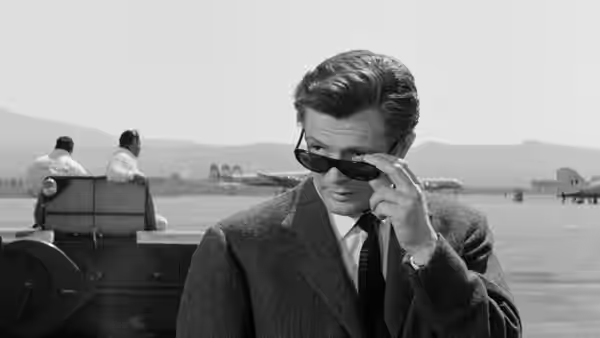
Federico Fellini makes the people in La Dolce Vita attractive enough that we cannot congratulate ourselves simply for noticing their faults. There is pleasure in this account of celebrity life in postwar Rome, and the film lets us enjoy it without pretending that enjoyment makes us innocent. We recommend it warmly, though 174 minutes give some of its observations longer than they need. Marcello Mastroianni holds it together by making Marcello Rubini agreeable company even when the people around him begin to wear.
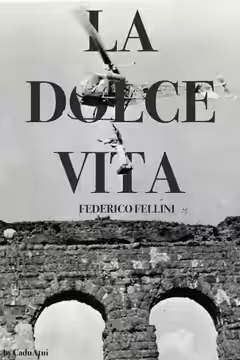
We were unexpectedly unsettled by the flying statue of Jesus. It is funny to see a sacred figure turned into a public spectacle, but the ease of that transformation is also unpleasant. The image gives the film’s criticism of Catholic hypocrisy a visible, ridiculous form without needing anybody to explain it. Celebrity and religion can both command a crowd, and the director is interested in what people stop asking once they have something remarkable to stare at.
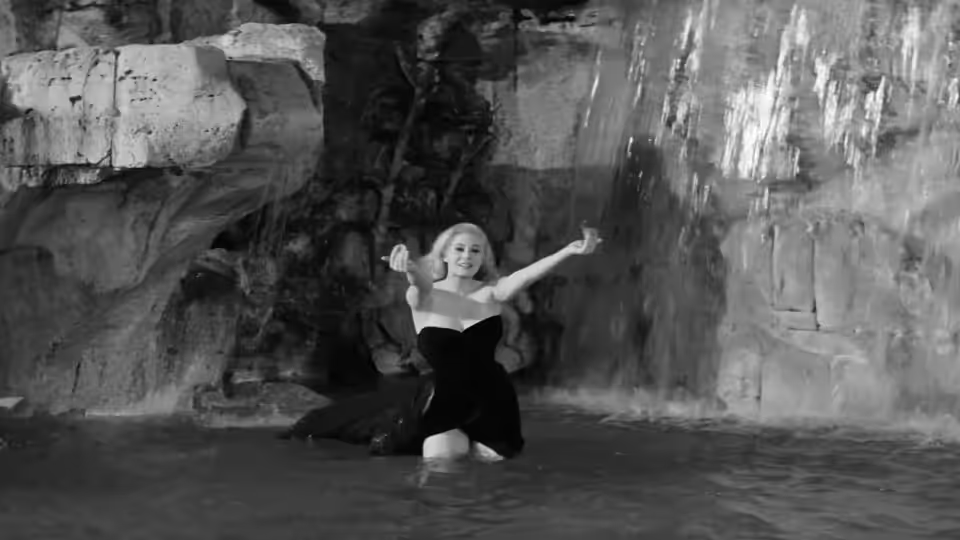
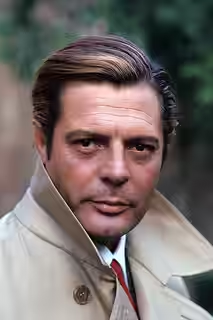
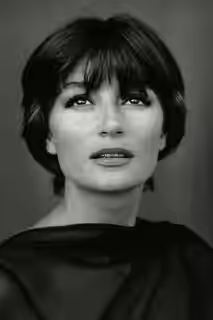
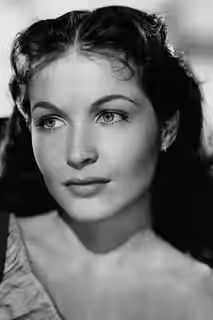
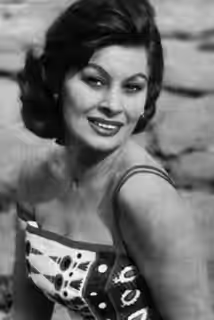
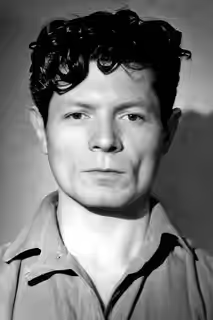
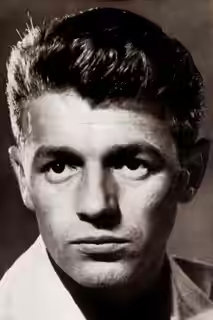
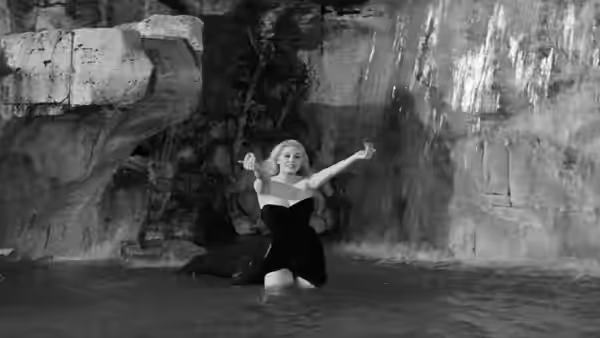
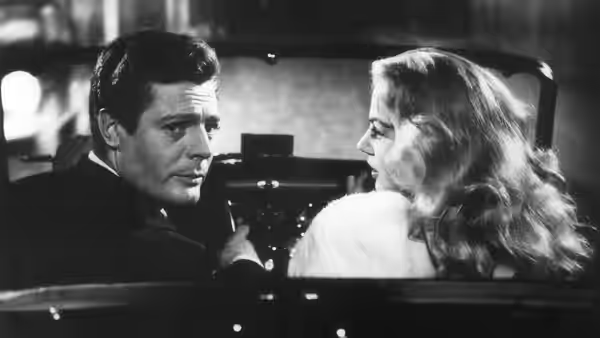
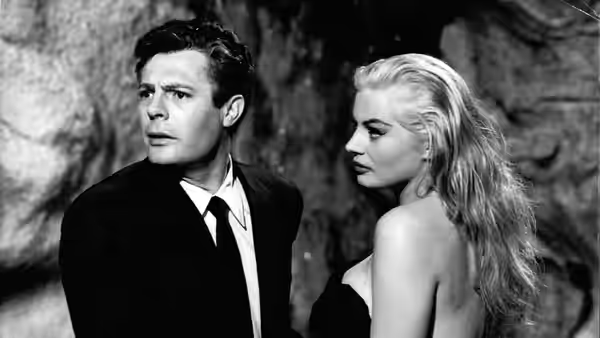
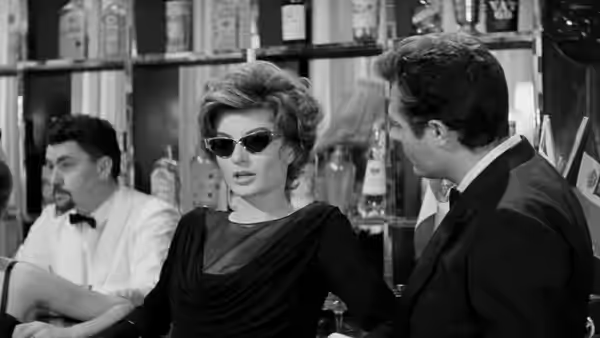
Marcello Mastroianni is crucial because he does not play Marcello Rubini as a ready-made warning about bad company. His ease is persuasive, and so is the disappointment that seems to remain after the interest of each new encounter has passed. Anita Ekberg’s Sylvia can dominate an image without making it feel overacted; the Trevi Fountain encounter needs that confidence. Anouk Aimée as Maddalena and Yvonne Furneaux as Emma give the human exchanges weight. Their work keeps the film from becoming a catalogue of people we are meant to disapprove of.
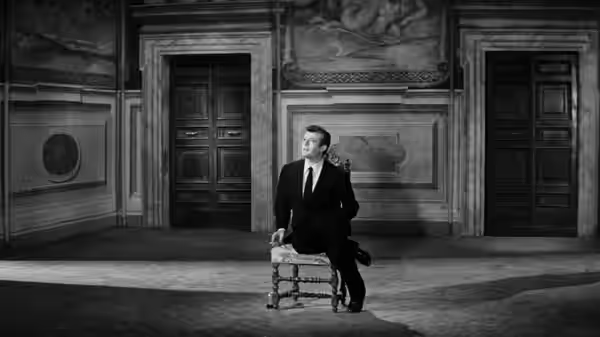
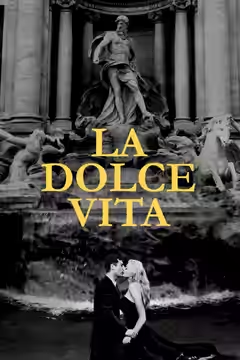
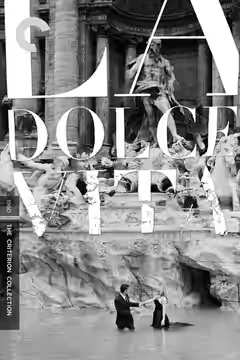
Otello Martelli’s black-and-white cinematography gives the Trevi Fountain encounter a beauty that makes any easy dismissal of this life seem dishonest. The water and stone matter as much as the famous face: we are allowed to look for long enough to understand the attraction. Piero Gherardi’s production design supports that sense of a Rome arranged for display, where the surroundings can hold our attention as firmly as the people. This is a place we can enjoy looking at even when its inhabitants become tiring.
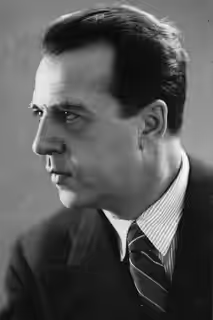
Leo Catozzo’s editing respects the separate episodes instead of forcing them to behave like steps towards one tidy destination. That freedom suits a film about people forever finding something else to look at, but it also permits repetitions that would have been easier to excuse in a shorter film. Nino Rota’s score helps considerably: its lingering sadness gives these encounters a consequence that their participants do not always seem to feel. We hear the weariness even when the spectacle continues to entertain.
The length becomes a problem when another encounter merely confirms what several earlier ones have already made clear. A few episodes feel sufficiently alike in purpose that their individual pleasures cannot quite excuse the accumulated delay. As a satire of celebrity, the film is sharpest when it remembers why attention is desirable and how easily any of us might want some. Its enjoyment of these people usually prevents its disapproval from becoming smug.
Give it an evening when there is nothing else to fit in, and allow for the occasional impatience. The episodic shape makes interruptions tempting, but stepping away whenever the company becomes tiresome would remove something the film wants us to experience. It rewards a large image and sustained attention, particularly when the temptation is to treat its famous sights as things we already know. Keep the telephone out of reach.