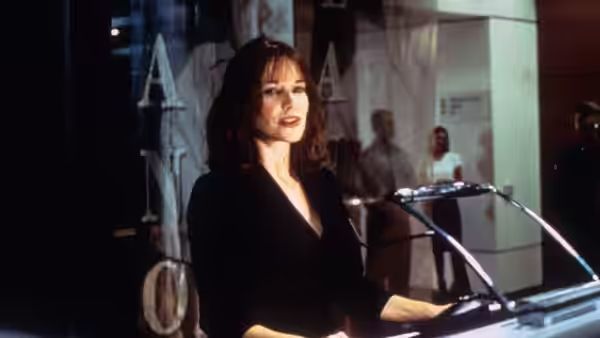
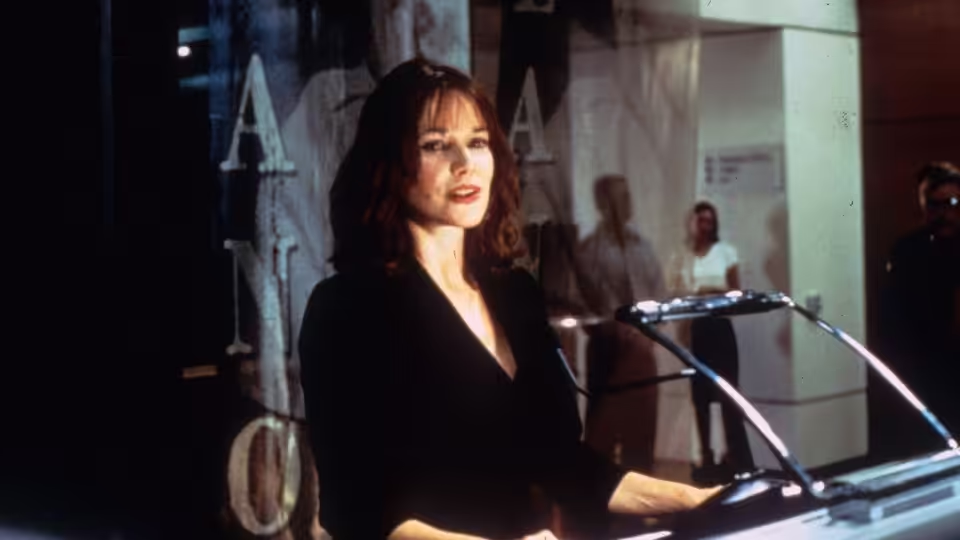
A woman stands at a lectern inside a public building
Film review

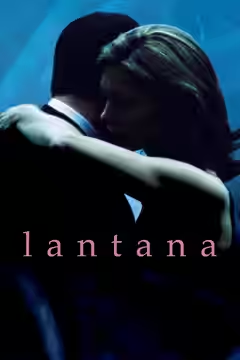
Lantana

2001 · Directed by Ray Lawrence · 2h 01m · BBFC 15

In a sentenceA detective story in which fidelity looks harder than police work

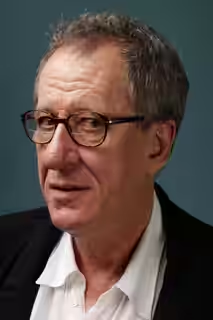
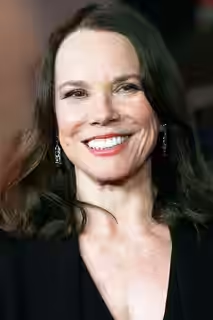
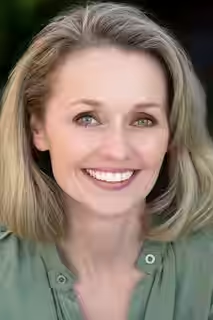
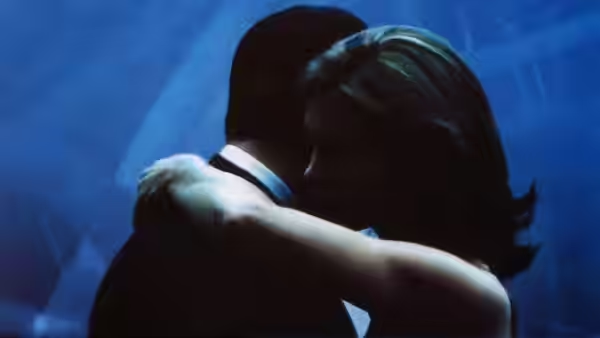
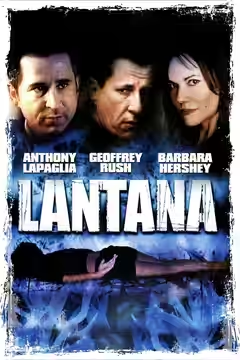
Detective Leon Zat (Anthony LaPaglia) faces a mystery complicated by the private lives of the people around him. Sonja Zat (Kerry Armstrong), Valerie Somers (Barbara Hershey), John Knox (Geoffrey Rush) and Jane O’May (Rachael Blake) belong to a circle of relationships troubled by adultery and resentment. Leon needs to establish what has happened, but the connections between these people make their motives difficult to separate from their suspicions. Questions about a crime become entangled with questions about fidelity, and private grievances influence what each person is prepared to believe about the others.

Plays from YouTube when you press play; nothing loads from them until then.

Fi1m review

Ray Lawrence’s patient crime drama is worth the evening for its cast, especially Anthony LaPaglia and Kerry Armstrong. The plotting can be contrived and the pace heavy, but the unhappiness feels uncomfortably close to life.

Ray Lawrence’s Lantana is a good crime drama for anyone willing to spend more time considering the people than solving the case. Its mystery gives a group of unhappy adults a reason to examine one another, and Andrew Bovell’s screenplay takes their private grievances seriously enough to make that examination uncomfortable. Adultery matters here because people carry the hurt into their other dealings. The plotting occasionally forces those connections, but the cast makes the emotional consequences worth staying for.

Anthony LaPaglia plays Leon Zat, the detective, with a rawness that stops the investigation becoming a tidy exercise. Kerry Armstrong’s Sonja Zat is just as important to the film’s emotional force; there is nothing decorative about her place in this ensemble. We were moved by their unhappiness. The resentment in their performances feels settled in, with no easy way of getting rid of it. Ray Lawrence lets their private troubles occupy scenes that a brisker thriller might hurry through.

Mandy Walker’s cinematography makes the unease persist even when the plot offers little immediate cause for alarm. There is a risk that this foreboding will make everybody seem suspect before they have done anything. Mostly, it works: the atmosphere sustains our attention through the slower passages. Kim Buddee’s production design helps us believe these people had lives before the investigation began. That sense of ordinary surroundings matters because the script already has enough contrivances without needing to make its characters’ homes look suspicious.

Karl Sodersten’s editing has to keep several lives in view, and we rarely lose track of the people involved. The flashbacks, though, can feel like a second explanation when the first was sufficient. They interrupt the pleasure of watching the actors give away only what they choose. The music, credited to Shane O’Mara, Bruce Haymes, Paul Kelly, Steve Hadley and Peter Luscombe, suits the film’s sober treatment of these relationships. Taken together, however, the music and the measured pace can make the seriousness feel insistent.

Andrew Bovell is less convincing when he arranges another coincidence or steers suspicion through somebody’s sexual life. There are moments when we can feel the screenplay moving a person into position, and some of the dialogue explains emotions the performances have already made clear. That is a particular waste in a film with this much acting ability. Its stronger passages allow ordinary resentment and spite to do the work, without making every hurt sound as if it has been prepared for examination.

As a thriller, Lantana asks for patience, and its slow, sober manner will test anyone hoping for regular shocks. The relationships supply enough interest to repay that patience, although the crime plot does not always deserve the weight placed on it. We would have welcomed a little more room for people to be careless or funny without becoming less credible. At 121 minutes, the film has time to let some air in. Choose it for the actors, and allow the detective story to take its time.
Critical consensus AI synthesised

67
Positive
5
Mixed
5
Negative
1

The reviews lean towards qualified approval of Lantana, with praise clustering around its ensemble performances and carefully connected relationships. Anthony LaPaglia receives particular attention for his emotional force, while the stronger notices find believable private lives beneath the mystery and give the script credit for allowing them to emerge. Even less enthusiastic critics admire the acting, and several find the film’s tension rooted persuasively in ordinary resentment, mistrust and spite.

The divide concerns whether those connections feel convincing or contrived, with responses ranging from absorbed admiration to frustration at the plotting. Reservations include slow pacing, awkward dialogue, misleading clues and flashbacks; Total Film remains strongly positive despite finding the final revelation disappointing. IndieWire offers the clearest dissent, praising the cast and foreboding atmosphere but finding thin motivations, implausible coincidences and little insight in the adultery plot. Three available review extracts disclose no substantive verdict, limiting how fully the apparent middle ground can be described.

Empire
1 January 2000 · Jo Berry
85*

The review is strongly positive, calling the film a must-see Australian drama. It particularly praises Anthony LaPaglia’s raw, uncompromising performance, alongside the carefully observed script and well-developed characters.

Read the full review →
The Guardian
14 February 2003 · Guardian staff reporter
85*

The critic finds the film absorbing and memorable, with a subtly disturbing mystery. They praise its ensemble cast and the way it gives each character’s private life room to emerge.

Read the full review →
Total Film
23 August 2002 · ★★★★ · Total Film
80

The review calls Lantana one of the year’s best movies, despite finding its final revelation dramatically disappointing. It praises the believable characters and gripping, beautifully plotted web of relationships.

Read the full review →
Slant Magazine
4 December 2001 · ★★★/4 · Ed Gonzalez
75

Gonzalez finds the film an effective, carefully modulated thriller, though its dialogue and sexual red herrings weaken it. He praises the tranquil final shot as a striking counterpoint to the film’s tension.

Read the full review →
Variety
11 June 2001 · festival review · David Stratton
70*

Stratton finds the film a demanding but ultimately successful psychological drama, praising its realism and layered connections between characters. He singles out the performances, especially Anthony LaPaglia’s and Kerry Armstrong’s, for their emotional force.

Read the full review →
Screen Daily
13 June 2001 · Frank Hatherley
64*

The accessible page identifies this as Frank Hatherley’s review, but its verdict is hidden behind a registration wall. No specific praise or criticism is visible in the available text.

Read the full review →

Straight answers AI written, from our review

Is Lantana worth watching?
Lantana is worth watching for its cast and its uncomfortable account of adult relationships; we score it 78 out of 100. Anthony LaPaglia and Kerry Armstrong make the unhappiness persuasive, though the contrived connections and heavy pace mean we recommend it more for character drama than for a brisk mystery.
How long is Lantana, and what is it rated?
Lantana runs 2h 01m and is rated 15 by the BBFC in the UK. It is a crime and drama film.
Where can I watch Lantana in the UK?
Lantana is streaming on Apple TV and Amazon Prime Video in the UK, and it is also available to rent from Amazon Prime Video and Apple TV from £2.49. Availability is checked daily; the links above go straight to each service.
How violent or frightening is Lantana, and is it suitable for children?
Lantana has a UK 15 certificate and is not suitable for children under 15. Its adultery, resentment and sustained unease make it an adult relationship drama as much as a crime story; we find it emotionally uncomfortable rather than driven by regular shocks, but cannot offer a specific warning about violence from the details available.
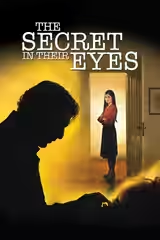
How does Lantana compare to The Secret in Their Eyes?
Lantana is the better choice for a patient study of marital resentment, while we recommend The Secret in Their Eyes for a crime drama whose frustrated romance holds our attention. Both use an investigation to explore troubled relationships, and both have pacing problems; Lantana puts particular weight on adultery and the suspicions people bring from their private lives.
What should I watch after Lantana?
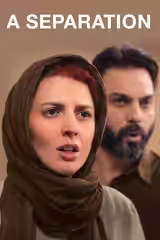
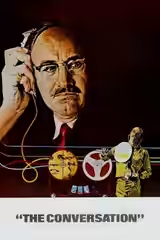
After Lantana, try The Secret in Their Eyes (2009, Fi1m 78): A criminal investigation complicated by desire, memory and years of unfinished business. Then A Separation (2011, Fi1m 93): Domestic grievances become a legal dispute in which everyone has reasons; and The Conversation (1974, Fi1m 92): Patient observation, moral anxiety and the dangers of trusting an investigator’s assumptions.

Cast

Awards

AACTA Award for Best Actor in a Leading Role, 2001

Won
AACTA Award for Best Actor in a Leading Role

AACTA Award for Best Actor in a Supporting Role, 2001

Won
AACTA Award for Best Actor in a Supporting Role

AACTA Award for Best Actress in a Leading Role, 2001

Won
AACTA Award for Best Actress in a Leading Role

AACTA Award for Best Actress in a Supporting Role, 2001

Won
AACTA Award for Best Actress in a Supporting Role

AACTA Award for Best Adapted Screenplay, 2001

Won
AACTA Award for Best Adapted Screenplay

AACTA Award for Best Costume Design, 2001

Nominated
AACTA Award for Best Costume Design

AACTA Award for Best Direction, 2001

Won
AACTA Award for Best Direction

AACTA Award for Best Editing, 2001

Nominated
AACTA Award for Best Editing

AACTA Award for Best Film, 2001

Won
AACTA Award for Best Film

AACTA Award for Best Original Music Score, 2001

Nominated
AACTA Award for Best Original Music Score

AACTA Award for Best Production Design, 2001

Nominated
AACTA Award for Best Production Design

AACTA Award for Best Sound, 2001

Nominated
AACTA Award for Best Sound

If you liked this, try…

  1. Jindabyne (2006) · not on Fi1m yetAnother troubled community, with private loyalties making a public crisis harder.

  2. The Secret in Their Eyes (2009, Fi1m 78)A criminal investigation complicated by desire, memory and years of unfinished business.

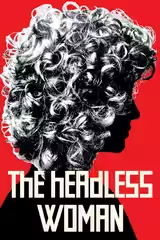
  3. The Headless Woman (2008) · not on Fi1m yetFor the same unease around ordinary lives, with far fewer explanations.

  4. A Separation (2011, Fi1m 93)Domestic grievances become a legal dispute in which everyone has reasons.

  5. The Conversation (1974, Fi1m 92)Patient observation, moral anxiety and the dangers of trusting an investigator’s assumptions.

Lantana (2001) review: fine acting sustains a tangled crime drama (the UK) | Fi1m