Antonioni’s third film with Monica Vitti is slow, exact and finally overwhelming. A woman leaves one man and half-falls for another in a Rome that looks finished but not yet lived in. Give it the patience it asks for; it repays it.
Michelangelo Antonioni made three films in a row about people who have money, time and handsome rooms and cannot think what to do with any of them. L’Avventura and La Notte came first. L’Eclisse, written with Tonino Guerra, is the last and, we think, the best. It opens at the end of one affair and spends 126 minutes watching a woman decide whether to begin another. It is as good as its reputation, and we would send a stranger to see it, with the warning that the stranger should not expect to be told what it is about.
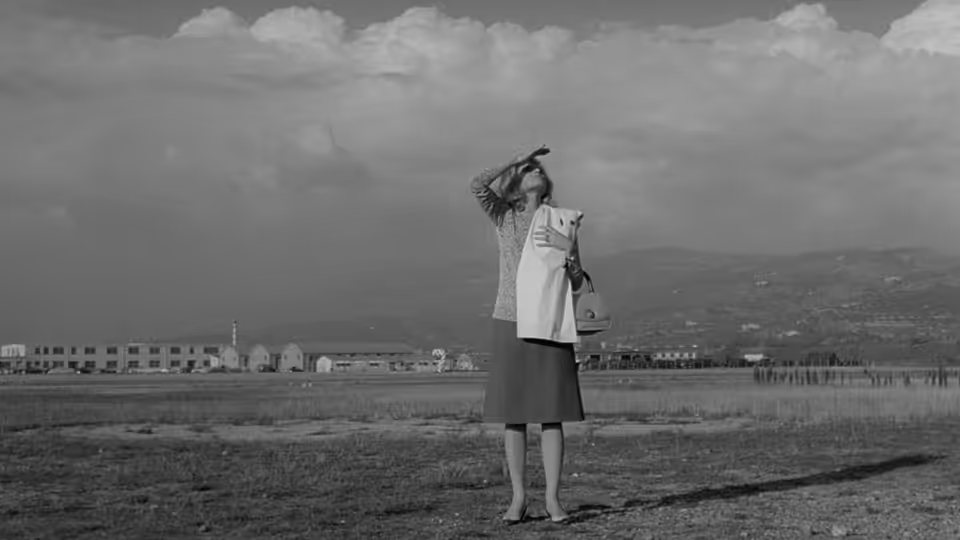
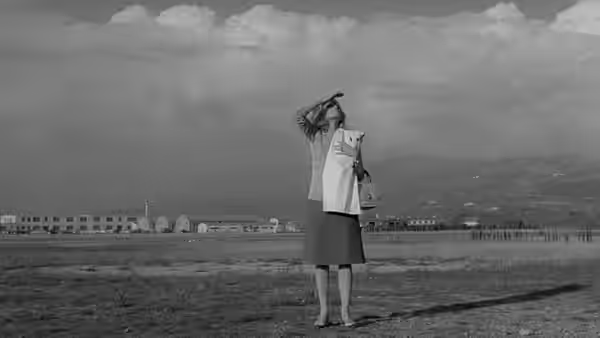
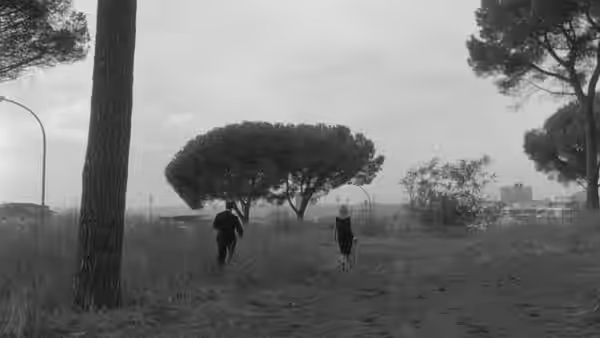
Vittoria leaves Riccardo in the first scene, which has no beginning; the arguing is already over when we arrive. Antonioni then does something few directors would risk. He lets her walk. Gianni Di Venanzo shoots the EUR district, a new suburb on the edge of Rome, in flat hard daylight, white walls and long shadows, so that Vitti in a black dress is often the only dark thing in the frame. Piero Poletto’s interiors match: Vittoria’s flat has a lamp, a window and a great deal of floor. Bice Brichetto keeps her in black and white almost throughout, and Delon in narrow dark suits, so that both read as shapes before they read as people.
We will be honest. The first twenty minutes bored us, and we began to resent the fan. Then Vittoria goes to the Stock Exchange and the film wakes up. Antonioni shoots the trading floor as a bear pit, men in suits screaming across a marble hall, and Eraldo Da Roma cuts it fast, for once, so that we are as lost as she is. A colleague has died and the whole room stops for a minute’s silence while the telephones keep ringing. Delon’s Piero is the man who answers one. When the crash comes, Lilla Brignone’s mother loses her money and blames the man beside her, and Louis Seigner’s Ercoli, the senior broker, watches like someone who has seen it all before. It is a satire, and it is also the only place in the film where anybody wants anything with their whole body.
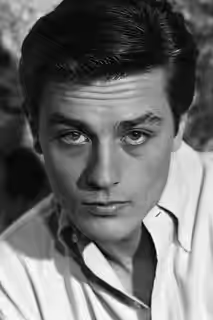
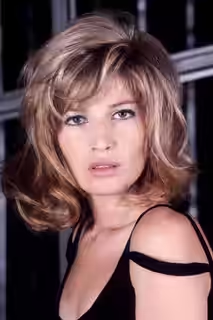
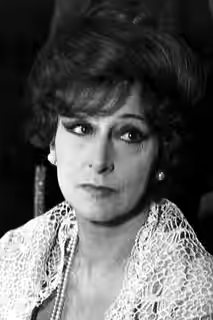
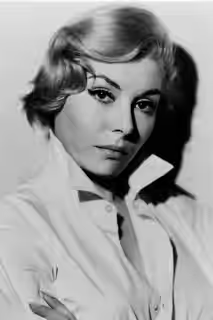
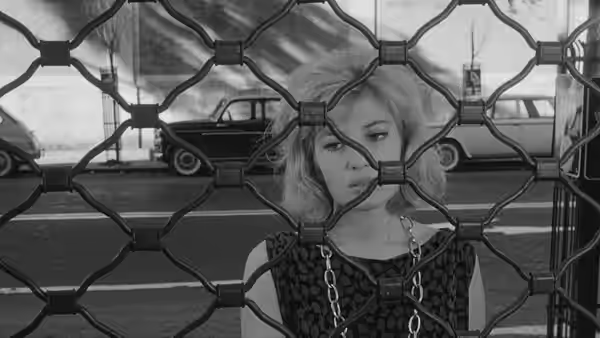
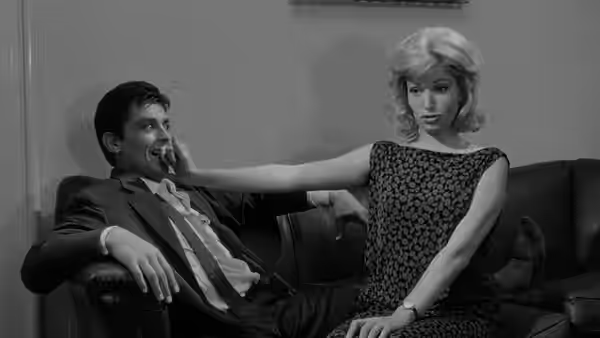
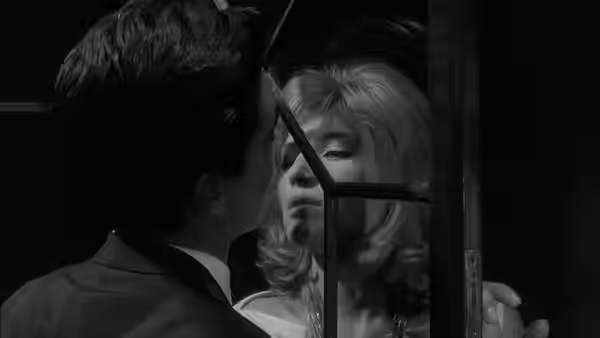
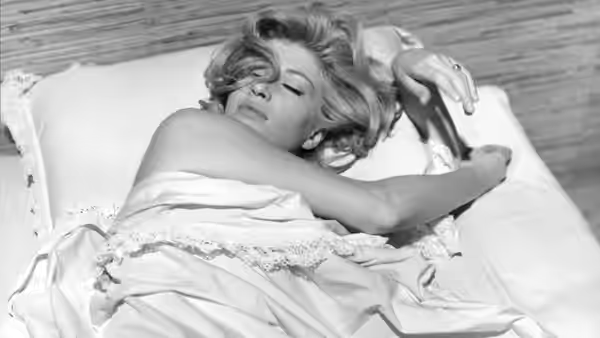
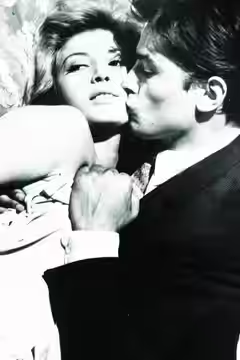
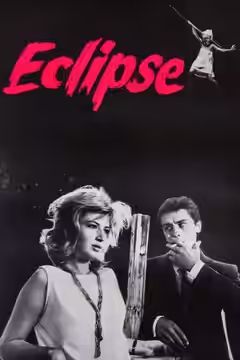
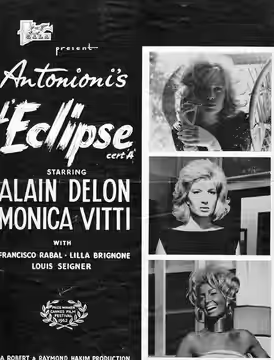
Vitti was Antonioni’s lead in all three films, and here she plays a woman who keeps testing her feelings to see if they are still there, the way you press a bruise. It could be maddening and it is not, because she is funny: watch her following a dog home at night, or failing to keep a straight face at her mother’s superstitions. Delon, already a star, plays Piero as a boy who has learned to move like a man and has not yet learned to stop. The two are good-looking enough that the film could have coasted on it. Instead their scenes together are all approach and retreat, a kiss through a pane of glass, a hand that stops short, and Giovanni Fusco’s music, spare and mostly withheld, stays out of them. What moved us was a small thing: the two of them agreeing to meet again and both looking, for a second, as though they already knew they would not.
Not all of it holds up. The scene in Marta’s flat, where Marta talks about Kenya as a place where the natives need managing and Vittoria blacks up and dances, is the film’s worst ten minutes. Antonioni plainly means Marta’s remarks to expose her, and the dance to show boredom looking for a costume, but the joke lands on the wrong people and it did in 1962 too. Elsewhere the pace, which is the point, is sometimes only slow. Two or three of the walks through EUR could lose a minute each.
The image most critics reach for is a car winched out of a lake, and it deserves them. Di Venanzo holds on the water draining from the wound-down window while a small crowd watches with the interest they would give a road being resurfaced. From there the film narrows to the question of whether two people will keep an appointment. The ending is famous and we will not describe it. We sat through the credits without moving. It is the best passage in any of the three films, and only Antonioni would have had the nerve to shoot it.
It reached British cinemas on 17 January 1963. Watch it alone, or with someone you do not need to talk to, and do not check your phone in the first half hour. The last few minutes pay for all of it.