Kate Winslet is fierce, funny and worn down to the bone as Lee Miller, and Andy Samberg is a quiet surprise beside her. The film around them is handsome, careful and dutiful, and it explains its subject far more than it shows her.
Lee Miller was a model, then a Surrealist photographer, then a war correspondent for Vogue, and Ellen Kuras, the cinematographer who shot Eternal Sunshine of the Spotless Mind, has picked the war years for her first feature as director. The film covers roughly a decade: sunlit France before the fighting, London under the bombs, a field hospital in Normandy, Paris, Germany. Kate Winslet is the reason to see it. What surrounds her is a careful, good-looking biopic that goes where the history went and rarely stops long enough to look around.
The story is told from a kitchen table. An older Miller sits opposite a young man (Josh O’Connor) who asks her the questions a biopic needs asked, and each answer cues the next stretch of the past. It is a device with a long history and it does here what it usually does: whenever a scene threatens to speak for itself, Mikkel E.G. Nielsen cuts back to the table so that it can be said out loud. The screenplay, by Liz Hannah, Marion Hume and John Collee, has a great deal of ground to cover and covers it in order.
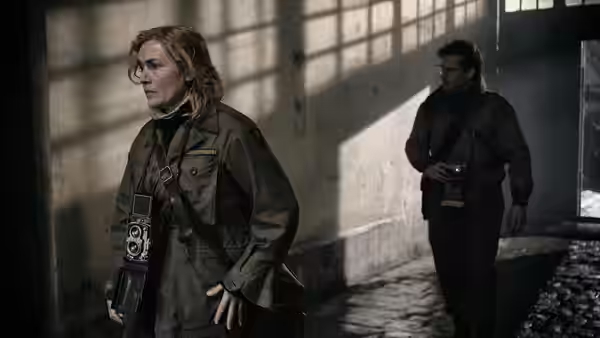
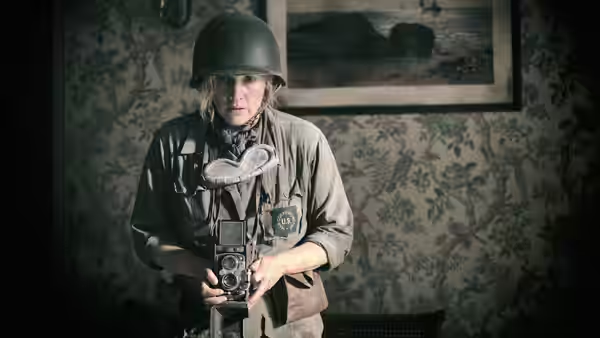
Winslet, who also produces, has chosen the part with a clear eye for what she does best. Her Miller drinks, smokes, tells Colonel Spencer (James Murray) exactly what she thinks of his rules for women correspondents, and does not soften a line for anyone’s benefit. What makes it more than a display of nerve is what Winslet does when the camera is lowered. Her face, in close-up, goes still and slightly grey, and the toughness looks like something she is holding up rather than something she is. It is a fine performance and a generous one, because the film keeps asking her to carry scenes that were written as summaries.
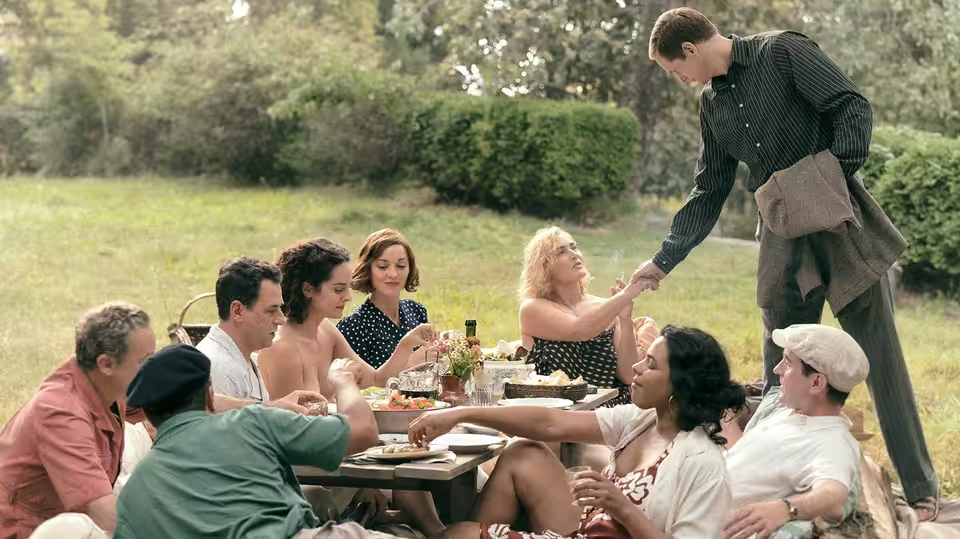
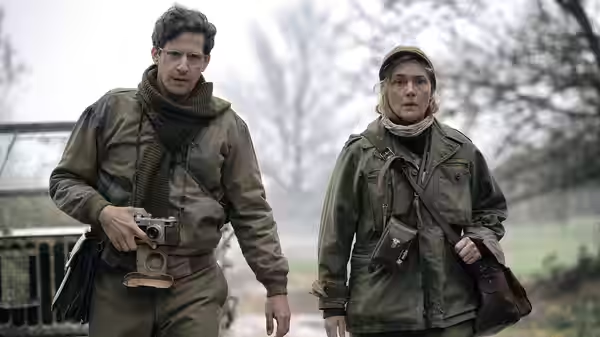
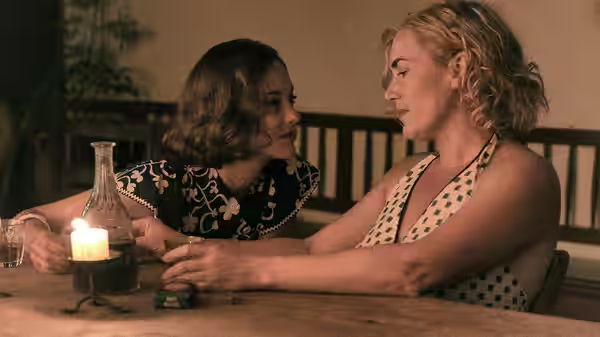
Andy Samberg is the surprise. His Scherman is watchful and dry, tells no jokes, and simply keeps her company, and the two of them arguing in a ruined hotel room about whether to go on is the best written stretch in the film. Andrea Riseborough gives Audrey Withers a brisk, unsentimental warmth that suits a woman fighting a print ration. The French friends fare worse. Marion Cotillard, Noémie Merlant and Alexander Skarsgård are given a picnic, a few reunions and very little to play, and Skarsgård’s Penrose exists mainly to be away.
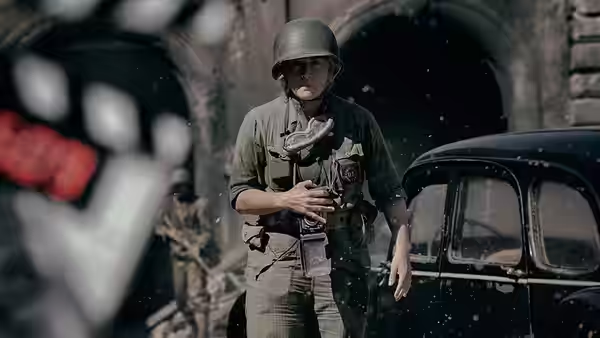
Paweł Edelman shoots the pre-war scenes in warm late-afternoon light and the war in flat greens and greys, which is sensible and never once surprising. Gemma Jackson’s field hospital, with its rows of canvas and its mud, and the bombed Paris flats with the pictures still on the walls, are more specific than anything the dialogue manages. Michael O’Connor puts Winslet in army kit that never quite fits her, which is the right idea. Alexandre Desplat’s score is piano and strings under nearly everything, telling us a scene is sad in case the picture had not, and the film would have been better with half of it.
Then there is the sequence in the camps, and here Kuras finally trusts the images. The music stops, the talking nearly stops, and Winslet and Samberg walk through what they find with their cameras up. We sat very still and did not want it to end quickly, because ending quickly would have felt like looking away, and the film for once declines to look away. It is the only time Lee does what Miller did, which was to point the lens and hold it. The photographs the film recreates from that trip, including the one everybody has seen, are all the stronger for the silence around them.
There is a late scene that sets out to explain Miller, and we will not describe it. We will say that Miller’s own photographs never explained anything, and that the film would have done better to follow her example. As biopics of difficult women go, this is a decent one with a strong centre, more honest about its subject’s manners than most and less curious about her mind than it should be.
See it for Winslet, for Samberg, and for twenty minutes in Germany that we have not shaken. Go in expecting a portrait rather than a film, and you will get roughly what you paid for. It runs 117 minutes and carries a 15.