Eleven years on, Riggs and Murtaugh are promoted, expectant and plainly ready to go home, and the film feels the same way. Jet Li and one superb freeway chase keep it watchable; a plot nobody cared about keeps it from being more.
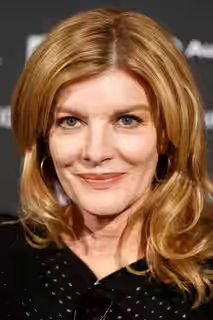
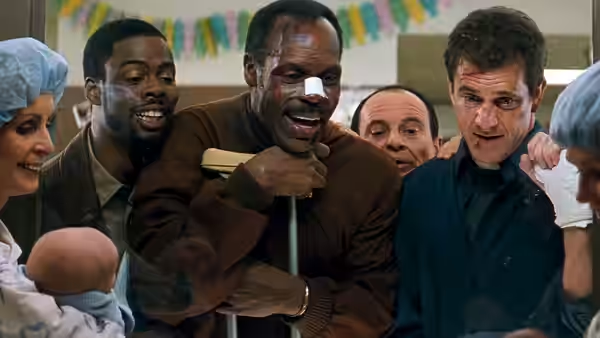
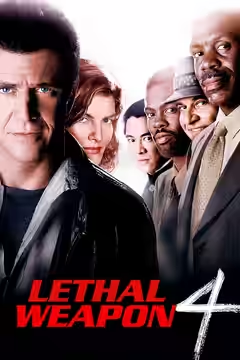
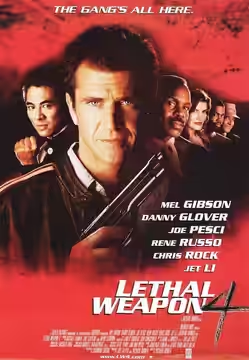
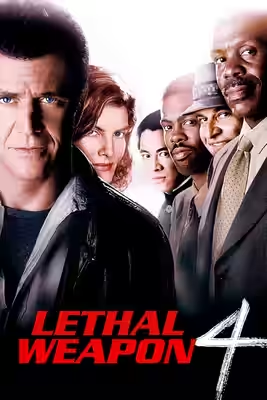
Eleven years after Lethal Weapon, Richard Donner brings back Martin Riggs (Mel Gibson) and Roger Murtaugh (Danny Glover) for a fourth time, and the tagline, “The gang’s all here”, is both the sales pitch and the diagnosis. Everyone has turned up: Rene Russo, Joe Pesci, Steve Kahan’s Captain Murphy, Darlene Love and Traci Wolfe as the Murtaugh women, with Chris Rock and Jet Li added to the table. Channing Gibson’s script, from a story by Jonathan Lemkin, Alfred Gough and Miles Millar, is about two men being told they are too old for this, and then being too old for it for 127 minutes.
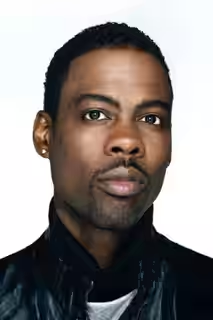
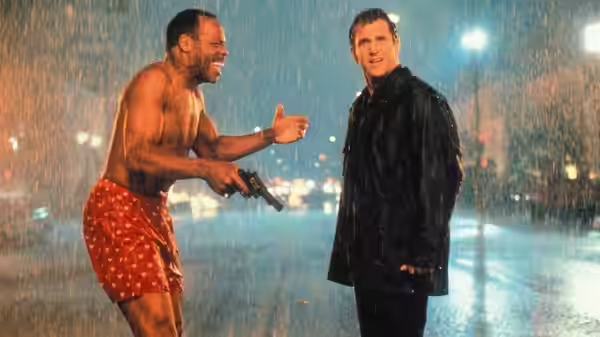
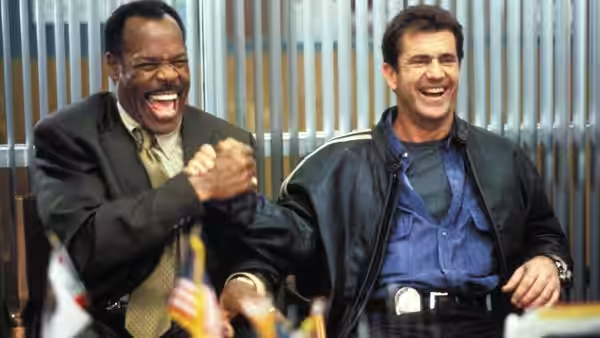
The reunion itself is pleasant, and that is not nothing. Gibson and Glover have been doing this long enough that the bickering has settled into something like a marriage, Riggs needling Murtaugh about his age, Murtaugh pretending not to mind. The best scene in the film is a quiet one, on Murtaugh’s boat at night, when he decides to hide a family of Chinese immigrants rather than hand them over, and Glover plays the decision without a speech. Rock arrives as Lee Butters, a young detective who talks the way a man talks when he is frightened of being found out, and he gets more laughs per minute than anyone else because he is the only one still trying.
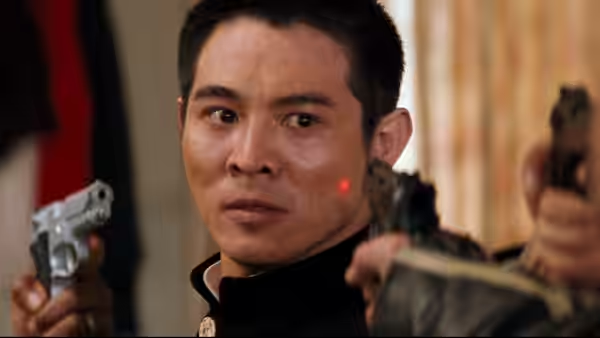
Jet Li, in his first Hollywood film, is the reason to sit through it. His Wah Sing Ku barely speaks and never raises his voice, and Ha Nguyen puts him in plain dark suits that make him look like an accountant until he moves. When he does, Donner for once holds the camera still. There is a moment where he takes a pistol apart in a policeman’s hand, in close-up, in about a second, and we laughed out loud the way you laugh at a card trick. It is the only time the film is frightening, and it is frightening because the violence is done by a person rather than by a special effects department.
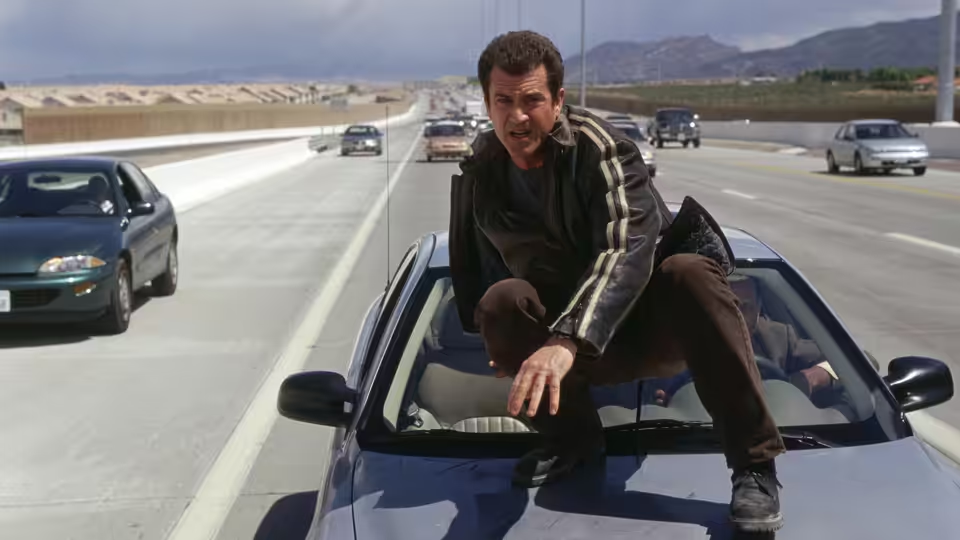
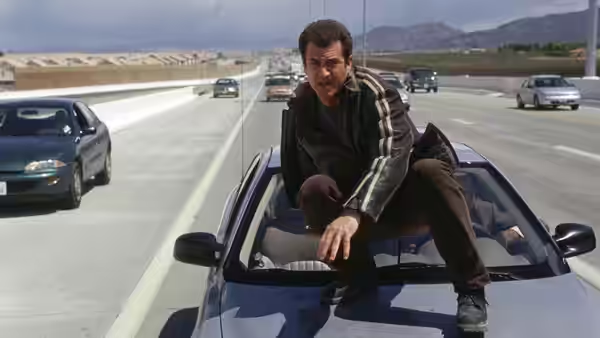
The freeway chase is the other thing worth your time. Andrzej Bartkowiak shoots it in hard daylight with the camera low to the tarmac: Riggs dragged along the road on a sheet of plastic trailing from a lorry, a car going straight through the ground floor of an office building and out the far side. We sat forward, and we laughed, and for about six minutes the film had the cheerful disregard for physics and good sense that the first one had.
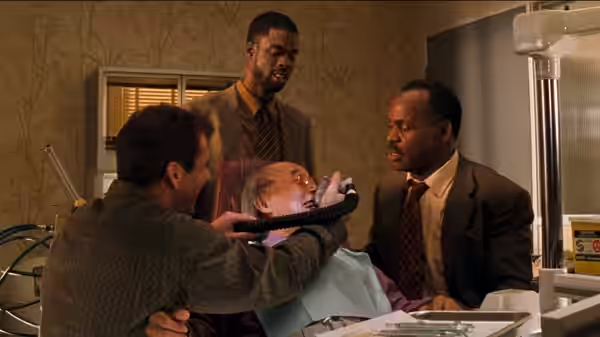
The rest is padding, and the credits tell you why. Four editors are listed, Dallas Puett, Eric Strand, Frank J. Urioste and Kevin Stitt, and the film cuts like something assembled by four people who were not shown each other’s work. Scenes start without a reason and end without a payoff. Leo Getz has a long monologue about a childhood pet frog that stops the film dead, and we checked our watch during it. The jokes have soured too. Riggs does a mock-Chinese accent at a restaurant owner. A running gag at Butters’ expense, which we will not spell out, was tired in 1998 and is worse now, and we winced each time it came round.
Lethal Weapon was about a man who wanted to die and a man who wanted to get home for dinner, and it took both wishes seriously. This one is about two men who want to retire, and it agrees with them. J. Michael Riva gives the Murtaugh house the same warm clutter it has always had, and the film keeps retreating there, to pregnancies and in-laws and dinner, as if it would rather be a sitcom. Then it remembers it is a 15 certificate and someone is shot in the head. Donner used to hold the two halves together better than anyone in the business, and here he has stopped trying.
If you liked the first three, you will get an evening’s company from this one, and you will know within ten minutes whether that is enough. If you have not seen them, start at the beginning, where the gang was smaller and had somewhere to go.