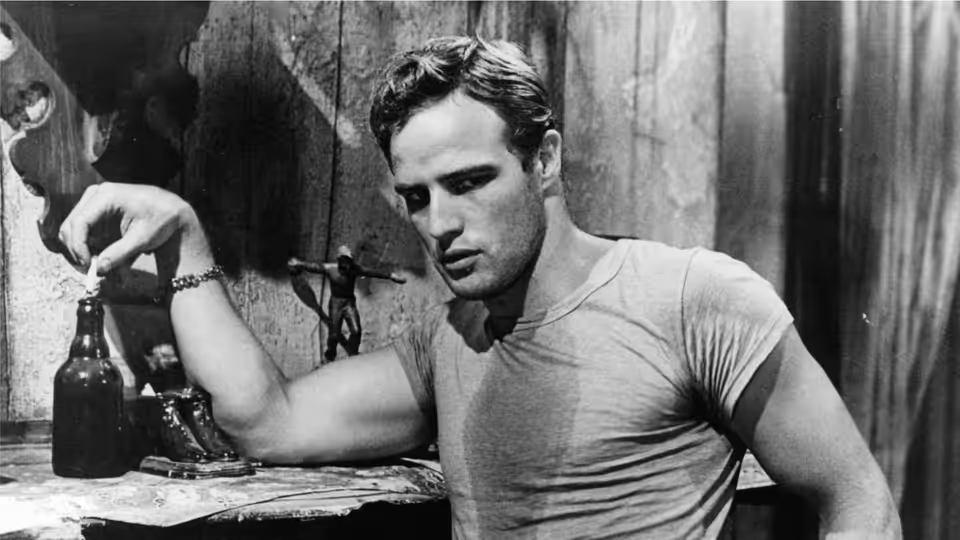
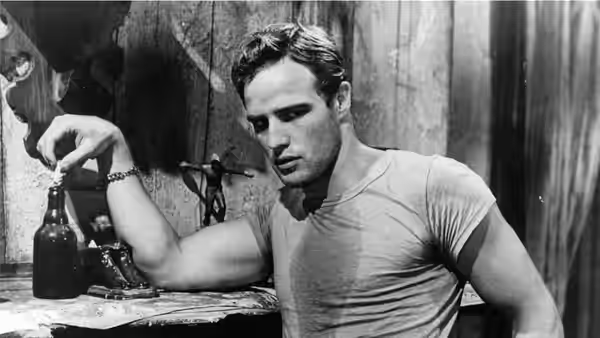
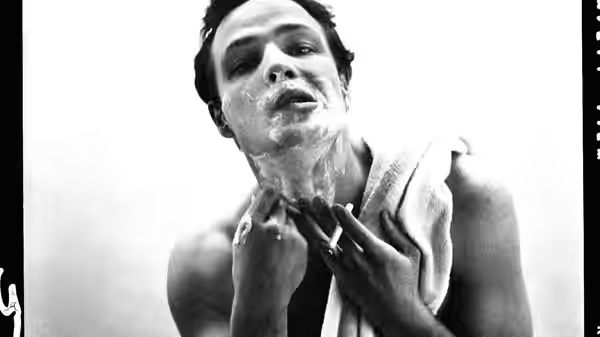
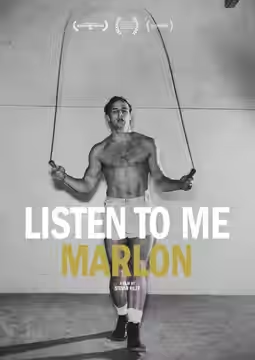
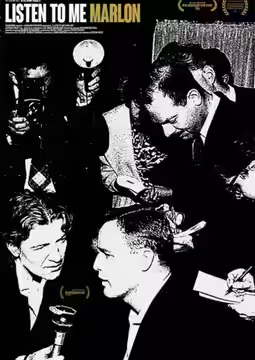
Stevan Riley builds Marlon Brando’s life from the actor’s own private tapes, and the voice is remarkable: funny, bitter, shrewd about acting and lost about most else. The pictures under it are sometimes literal, but the voice carries the film.
Marlon Brando spent decades talking into tape recorders when nobody else was listening: diaries, notes on acting, and long sessions in which he tried to hypnotise himself into calm. Stevan Riley has made a film almost entirely out of those tapes. There are no experts, no friends in armchairs, no narrator. Brando tells his own story, and everyone else, from Stella Adler to Francis Ford Coppola, turns up only in archive footage. It is a good film with a remarkable voice at the centre of it, and its weaknesses are nearly all in what Riley chooses to show while that voice is speaking.
It opens at the lowest point in his life, with Brando on tape sounding like a man who has been expecting the worst for years, and the film does not hurry to explain why. From there Riley moves loosely back and forth: Omaha, a drunk mother and a father whose contempt he never got over; New York and Stella Adler, who taught him to watch people; the films, which he discusses as if they had happened to someone else. Acting, he says more than once, is what everybody does all day; he was simply paid for it. He is funnier than we expected and harder on himself than any interviewer managed to be.
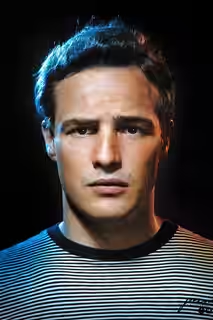
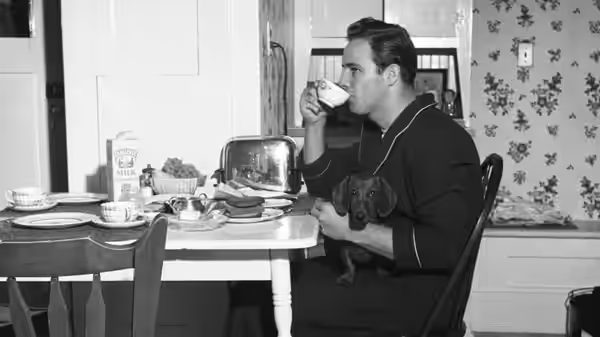
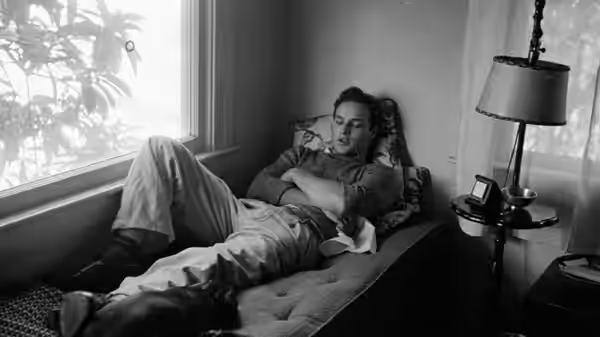
Riley is also the editor, and his best decision is to let a tape run while the picture stays still. Kristian Milsted has rebuilt a version of Brando’s study, a cluttered room with the recorder on the desk, and Ole Birkeland’s camera drifts through it, settling on a lamp, a stack of cassettes, dust in the light. Above it floats a digitised Brando, a head scanned in the 1980s that Riley has animated to mouth the words. We found this eerie for about ten minutes and then, without noticing when, moving: a dead man’s face shaping sentences he said alone, about why he could not stop eating or stop leaving people. By the end we had stopped seeing the trick.
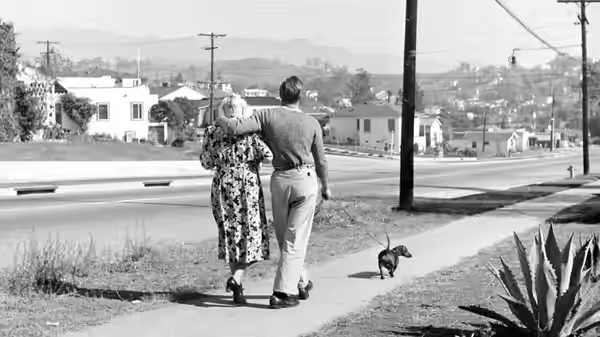
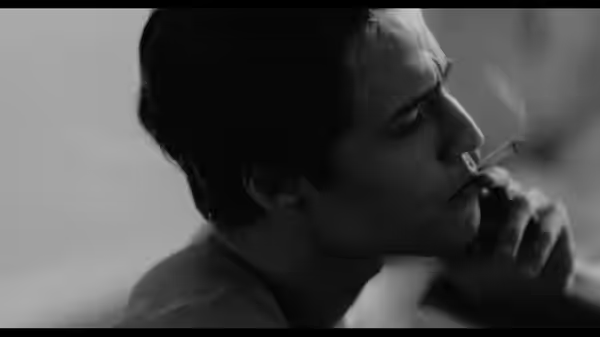
Not every picture is as well chosen. Michael Borne plays the young Brando in brief reconstructions, and they add nothing the voice has not already given us. When Brando describes Tahiti we get helicopter shots of a lagoon; when he describes his father we get a photograph slowly pushed in on. Matthew Robert Cooper’s score is a wash of low electronic tones, and for the first hour it sits under the tapes like weather. Later it swells on cue, telling us a moment is sad when Brando’s voice has already told us exactly how sad.
The larger problem is one Riley sets himself. Brando is the only witness. Anna Kashfi, the first wife, is glimpsed in a hostile old interview and otherwise exists as a figure in his monologue, as do the other wives and the children. A man talking himself to sleep is trying to feel better, and some of the comfort he finds on these tapes comes at other people’s expense. Riley does not interrupt, and we came out knowing a great deal about how he felt and rather less about what he did.
What stays is the sound of him. There is a tape near the middle in which he instructs himself to loosen his jaw and his hands and to forgive, and his voice slows and thickens as he goes. We listened with the discomfort of overhearing something not meant for us, and we did not want it to stop. Coppola, Bernardo Bertolucci and Dick Cavett appear in archive to confirm that he was difficult and worth it. None of them gets near him the way that tape does.
Set against other portraits built only from archive, Asif Kapadia’s Senna (2010) and Amy (2015) among them, this one has the better subject and the looser assembly. It runs 103 minutes and could lose a few of the lagoons. Watch it at home with the lights down and the volume up, because some of the older recordings are hard to make out and because almost everything good in it is on the soundtrack. Brando, who spent a career complaining that nobody looked past the face, would probably have approved.