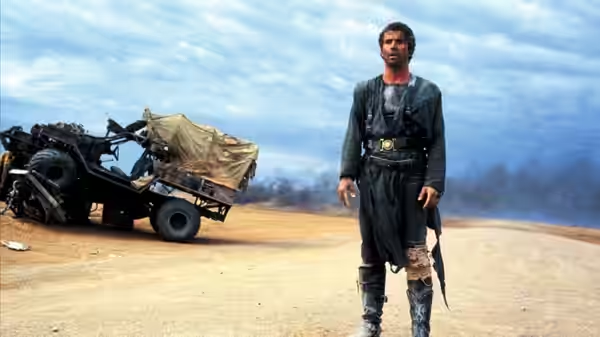
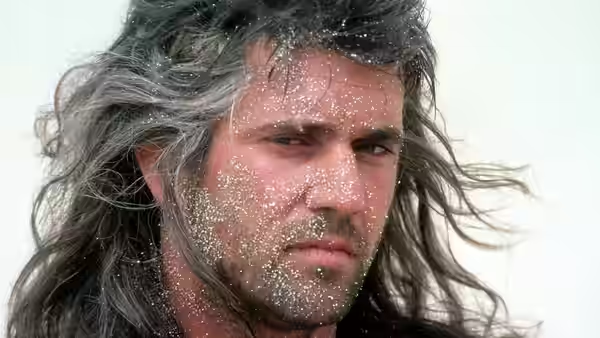
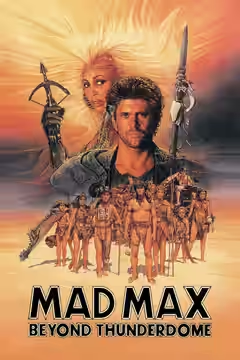
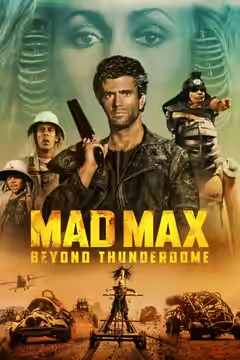
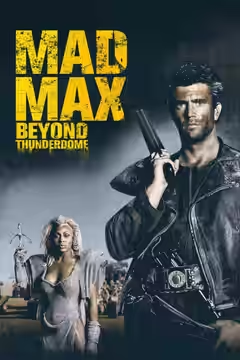
The third Mad Max is the handsomest and the softest of the series. Bartertown and its Thunderdome are as good as anything the films have done and Tina Turner is a proper villain; then the story walks out into the desert and loses its nerve.
The third film about Max Rockatansky has two directors, George Miller and George Ogilvie, and it plays like a film with two directors. For an hour it is the fullest world the series has built: a city of scrap and rope, run on pig manure, with Tina Turner on the balcony. Then it leaves town, and what follows is gentler, slower and less interesting. The first half is worth anyone’s evening. The second is for the patient.
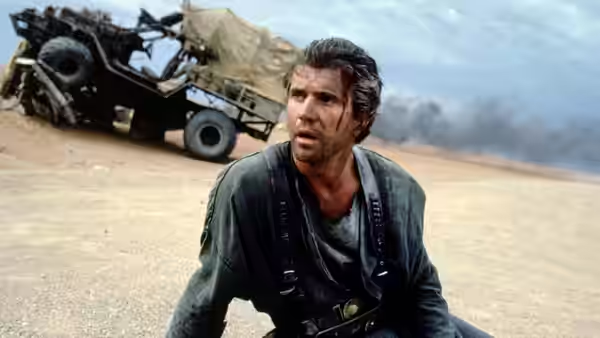
Bartertown is the achievement. Graham “Grace” Walker builds it in a crater, tiers of shanties and gantries with a hanging cage above the crowd and, beneath it all, the Underworld, where pigs live in their own filth and their gas is piped up to light the lamps. Norma Moriceau dresses everyone as if they had raided a museum in the dark. Frank Thring’s Collector wears fur and face paint; Angry Anderson’s Ironbar has a doll’s head on a pole strapped to his back; Aunty herself is in chain mail and a blonde mane. Dean Semler shoots the desert bleached almost white and the town in amber dust and lamplight.
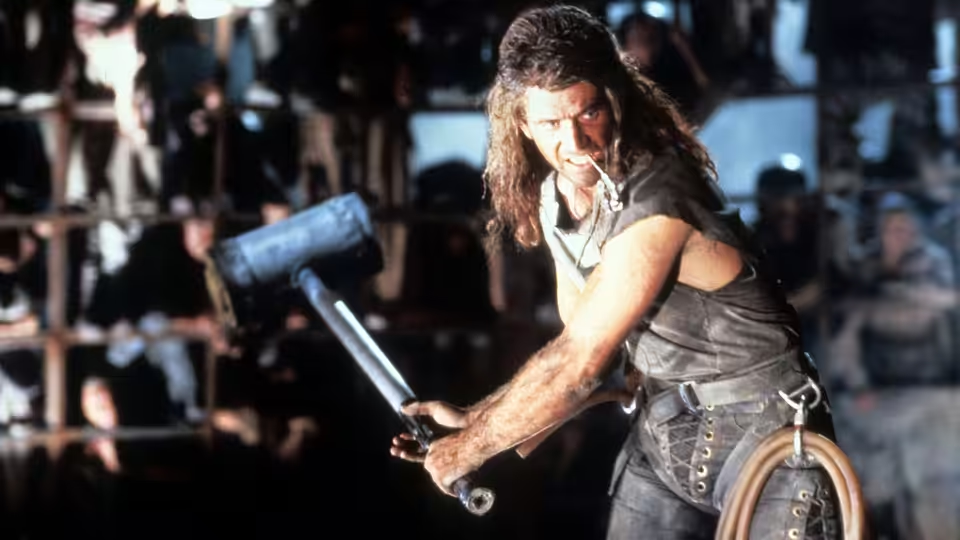
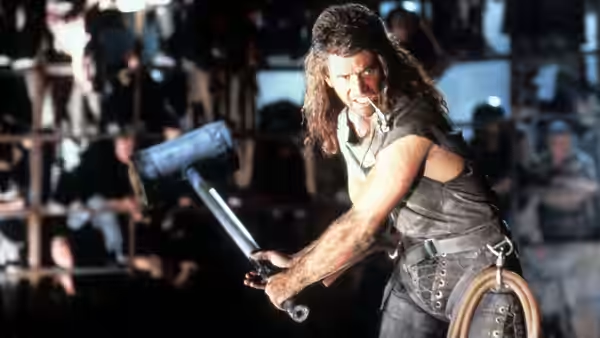
The Thunderdome is the set piece the film is named for, and it earns the title. Edwin Hodgeman’s Dr. Dealgood works the crowd like a game-show host, spectators hang off the outside of the dome, weapons dangle from the bars, and the two fighters are strapped into harnesses that fling them up and across the cage. One is Blaster (Paul Larsson), a giant in a metal helmet. The other is Max. Richard Francis-Bruce cuts it so that we always know where both men are. We grinned through the whole thing, pleased that a series built on cars had found something this good to do without one.
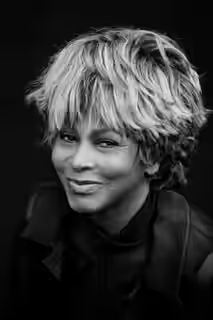
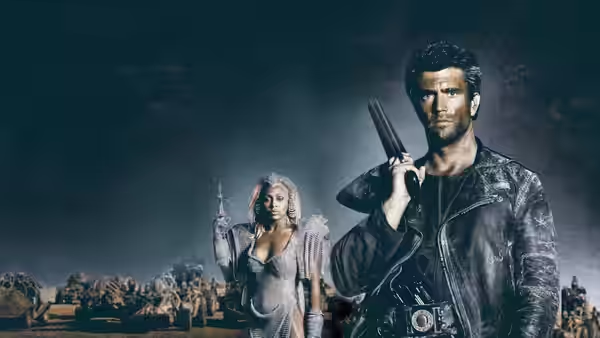
Tina Turner is not a subtle actor, and Aunty Entity does not need one. She stands above her town and speaks in a purr that turns to a bark, and when she asks her people who runs Bartertown and they roar the answer back, it is the film’s best moment of swagger. Gibson’s Max now talks, gets embarrassed and is funny about it; a scene of him being disarmed at the gate, handing over weapon after weapon, plays as straight comedy and works. Bruce Spence, the gyro captain of Mad Max 2, returns as a different man with a different aircraft and the same habit of stealing Max’s things.
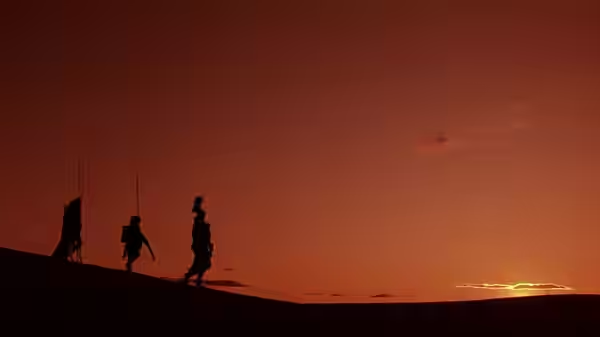
Then, at about the hour mark, the film walks out of Bartertown, and we will not say where it goes. We can say that the people Max meets there are younger and kinder than anyone in the first half, that they speak a chanted, half-broken English of the screenplay’s own invention, and that Helen Buday, as Savannah Nix, gives their leader a stern conviction that is the second half’s best performance. Terry Hayes and Miller have written this passage with more care than anything in Bartertown, and it stops the film dead. We felt the energy leave the film, and then something like resentment: we had been shown a world we wanted to stay in, and it had been taken away for a parable.
Maurice Jarre’s score does nothing to close the gap. It is full orchestra with choir and horns, swelling at every dune, insisting on a grandeur the first two films never asked for. Turner’s song over the closing credits does more for the mood than the score manages in the rest.
Against the rest of the series this is the odd one out. Mad Max 2 (1981) was a chase with just enough story to give it a direction. This is the one where Miller tried to make a fable, and a fable needs stillness, which these films have never done well. It carries a 15 certificate and is the mildest of the three; most of the violence happens off screen or in a cage with rules.
Watch the first hour closely. Watch the rest with a drink and a forgiving mind, and stay awake for the final twenty minutes, which remember what kind of film this is. It runs 107 minutes, and about seventy of them are worth your evening.