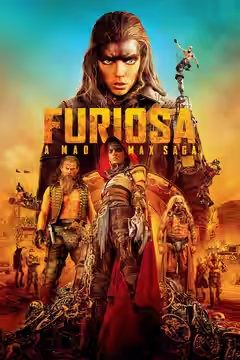
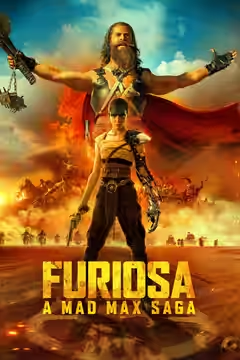
George Miller goes back fifteen years before Fury Road to explain a woman who needed no explaining, and does it with real invention and a good deal of digital sand. Taylor-Joy is fierce, Hemsworth talks too much, and the middle hour is as good as the series gets.
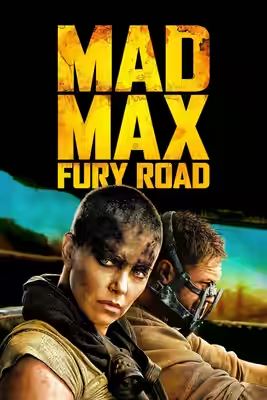
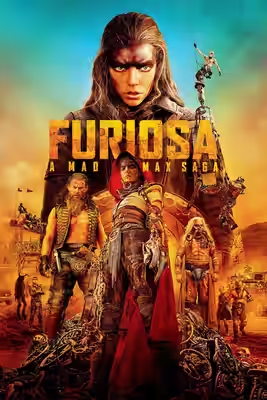
George Miller made Mad Max: Fury Road in 2015 as one long chase with almost no backstory, and it did not need any. Furiosa: A Mad Max Saga is the backstory. It goes back fifteen years to find the woman Charlize Theron played as a child, snatched from the Green Place by bikers, and follows her through five chapters into the Citadel and on to the war rig. Miller and his co-writer Nico Lathouris have built something larger and slower than Fury Road, with more talk, more places and more years. It is good, often better than good, and it is the lesser film. We enjoyed most of the 149 minutes and would happily have lost twenty of them.
The first hour is the best of it. Alyla Browne plays the young Furiosa with almost no lines and a face that gives nothing away to the men who have her, and the film watches her watching them. Her mother, Mary Jabassa (Charlee Fraser), rides out of the orchards after the bikers alone, and the pursuit across the salt is shot by Simon Duggan in hard white light that turns every rider into a smudge of black. We were more frightened for the child than we expected to be. The reason is simple: Browne never cries, and so we did it for her.
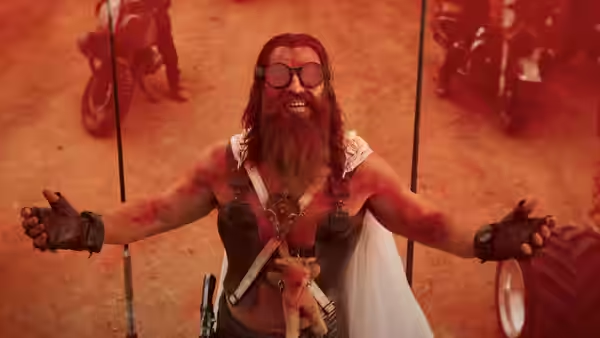
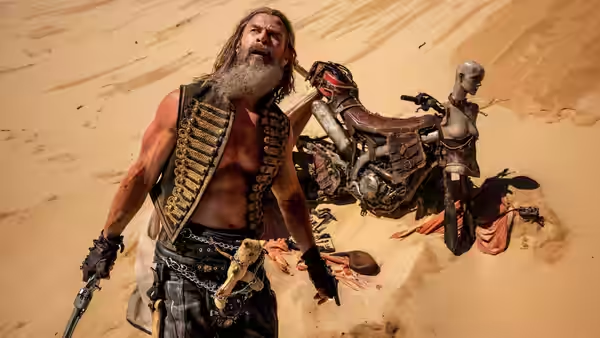
Then Dementus arrives properly. Chris Hemsworth plays him in white robes, on a chariot pulled by three motorbikes, with a teddy bear strapped to his belt and a prosthetic nose, and he talks. He talks to his men, to his prisoners, to the girl, to the horizon. It is a real performance, funny and self-pitying and now and then frightening, and Miller loves it more than is good for the film. Every time the picture builds up speed, Dementus stops it to explain himself. The speeches get longer as the film goes on, and the film has already said what they say without him.
Colin Gibson’s production design gives us three cities this time: the Citadel with its hanging gardens, Gastown with its flare stacks, and the Bullet Farm, and each is sooty and specific, with pulleys and ladders you could climb. Jenny Beavan dresses the horde in rags and goggles and gives Dementus his robes. Tom Holkenborg’s score thunders as before, with a wordless choir under the chases. Margaret Sixel and Eliot Knapman cut the action so that you always know which vehicle is where, which sounds simple and is not.
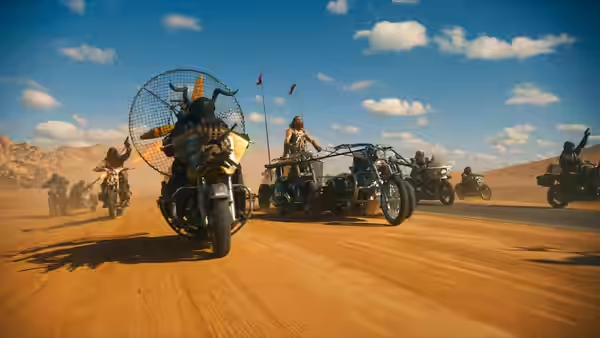
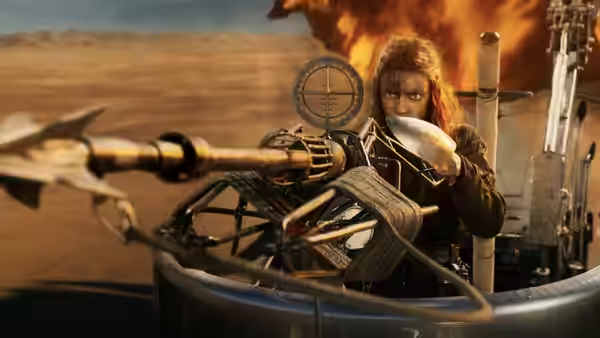
The set piece at the centre, a war rig attacked by men on motorbikes and men in the air on kites, is the equal of anything in Fury Road. It lasts a long time and never repeats itself. We gripped the armrest and laughed at the same time, which is what this series does when it is working. Tom Burke, driving the rig as Praetorian Jack, is the calmest thing in the film and gives it what warmth it has; his scenes with Taylor-Joy are done mostly in glances.
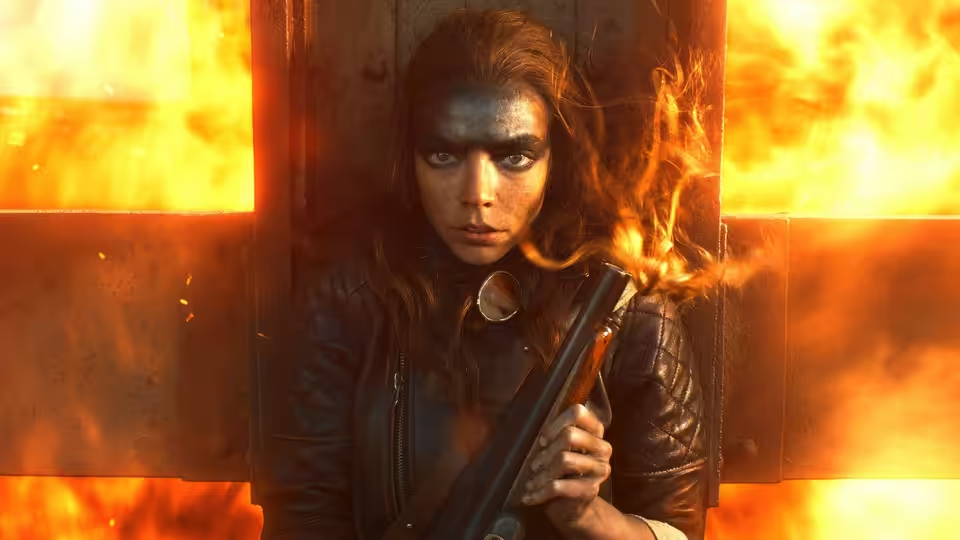
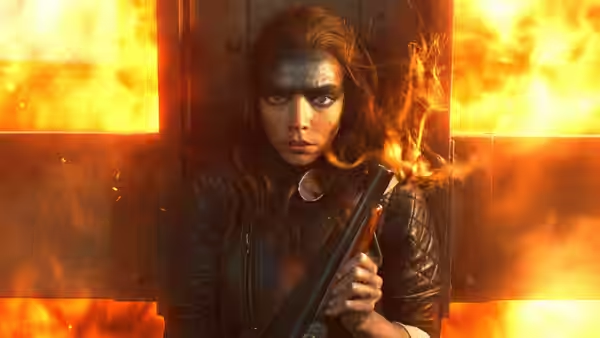
Anya Taylor-Joy does not arrive until well into the film and then barely speaks. She is fierce, and her eyes do the work; she is also given less to play than the child was, because the plot has decided what she will become and she must simply become it. That is the prequel’s trouble. We know where she ends up, and so the film cannot make us fear for her. It can only show us what it cost.
The other trouble is the sand. Where Fury Road put real trucks on real desert, this film puts them in front of a great deal of digital sky, and the wide shots have a painted look, the horizon too clean, the dust too tidy. The fights staged inside those shots look lighter than they should.
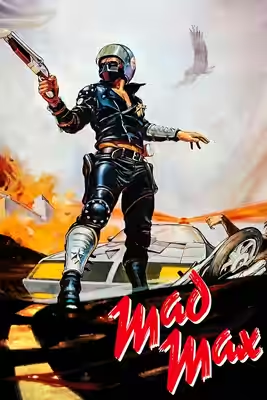
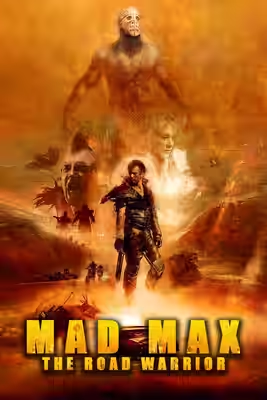
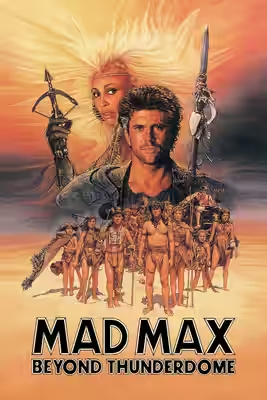
Most critics have landed near where we have, though the reviews split unusually wide, from five stars to two. The admirers are right about the middle hour and the sceptics are right about the last one. Against Miller’s own series it sits below Fury Road and comfortably above Beyond Thunderdome. See it on the largest screen you can find; the middle hour deserves it.