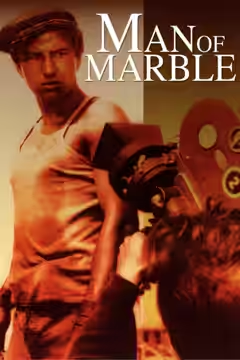
Andrzej Wajda’s film about a student digging into a discarded 1950s labour hero is angry, intricate and still sharp, built like Citizen Kane and shot as two different films. It runs long and the ending stops rather than finishes, but we would not miss it.
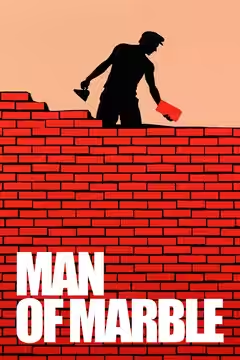
Aleksander Ścibor-Rylski’s screenplay takes the shape of Citizen Kane and does not pretend otherwise. A dead or missing man, an investigator with a camera, a chain of witnesses each holding one piece, and old footage that turns out to have been arranged. What Andrzej Wajda does with the shape is the point. The man is Mateusz Birkut, a bricklayer turned poster hero of the early 1950s, and the footage is the state’s, so every reel Agnieszka unspools is a small lie told with a full orchestra. Over 153 minutes the film asks how a country makes a hero, what it does with him afterwards, and what a young woman with a borrowed crew can find out about it twenty years on.
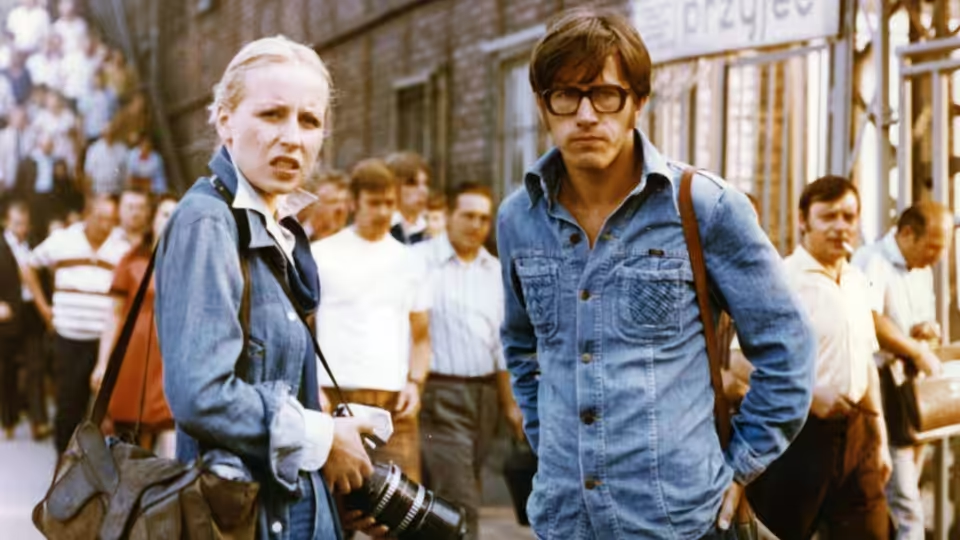
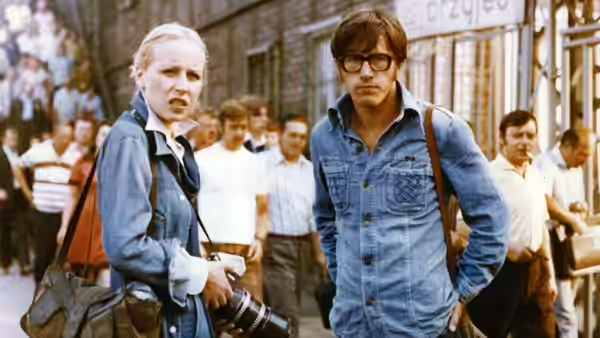
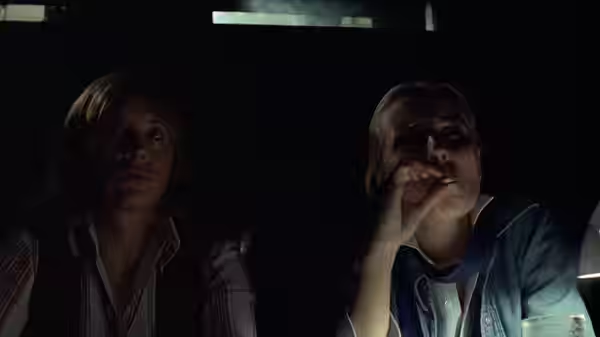
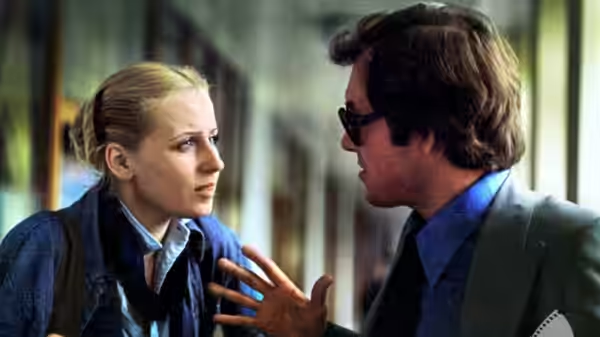
Krystyna Janda plays Agnieszka as if she has been wound too tight and likes it. She strides through corridors in a denim jacket and flares, chews gum in front of officials, smokes in the archive and tells her cameraman, Leonard Zajączkowski, playing himself, to get low and put the wide lens on. Wiesława Starska and Lidia Rzeszewska dress her in the same clothes throughout, so she looks like a student who has not been home. It is a big performance, pitched at one level, and we admit it wore us down around the middle hour. It also makes sense: she is the only person in the film who is not tired.
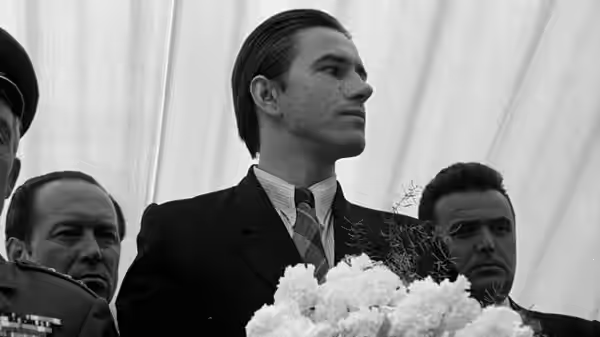
Edward Klosinski shoots the 1970s in colour under fluorescent light, with wide lenses that make television offices and hotel lobbies look like they were built to intimidate. The fake 1950s newsreels are in black and white, grainy, framed the way that footage was framed, with a narrator who never stops. The flashbacks proper are in colour again, brighter and stranger. Halina Prugar-Ketling cuts between the newsreel version of an event and the remembered version so that we watch the same afternoon twice and see what was cropped. Andrzej Korzyński gives Agnieszka a jittery electronic pop score and gives the propaganda its choral marches, and the two never mix.
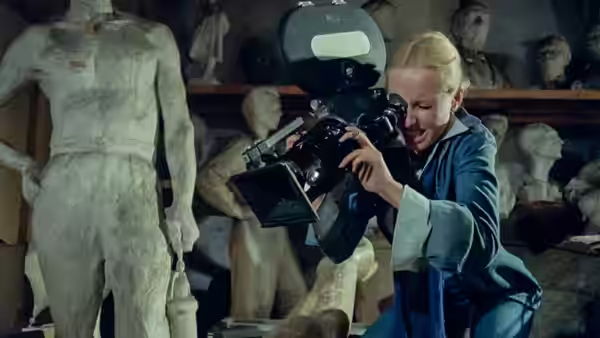
Jerzy Radziwiłowicz plays Birkut without irony, and that is the film’s best decision. The record attempt at Nowa Huta is the centrepiece: a band, a crowd, cameras on scaffolding, and a broad, gentle man laying bricks faster than is good for him. It moved us more than we expected, and it was because he looks pleased. He believes them. Allan Starski’s storeroom, where Agnieszka first finds the marble Birkut lying among other unwanted statues, tells you where that belief ends before anyone says so.
Tadeusz Łomnicki’s Burski is the film’s most interesting witness, a director who staged the record and became famous for it, and who tells the story in an airport lounge as though it were a funny anecdote about a difficult shoot. Michał Tarkowski, as Birkut’s friend Witek, and Piotr Cieślak, as Michalak, the man from security who is always somewhere nearby, carry the middle stretch, and Krystyna Zachwatowicz has a hard, quiet scene as Hanka Tomczyk that we will not describe. The second half takes turns we will leave alone.
It is too long. The scenes in the television building, with Magda Teresa Wójcik’s editor and Bogusław Sobczuk’s television editor telling Agnieszka to stop, say the same thing three times. And the film ends abruptly, on a corridor, with a question hanging that it plainly meant to answer. We were annoyed, and then we thought about why a Polish film in 1977 might stop where it did, and the annoyance became something else.
Wajda had made Ashes and Diamonds nearly two decades earlier and knew how to put a country’s history on one face. Ścibor-Rylski’s script had been written years before it was allowed to be filmed. Both facts show. Watch it in one sitting, in the evening, with the subtitles large; the narrator talks quickly and you will want to catch what he is not saying.