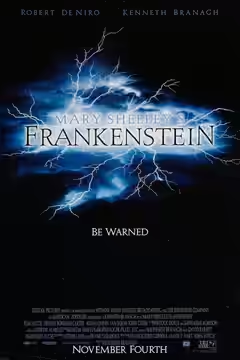
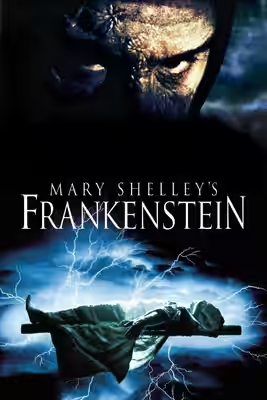
Kenneth Branagh set out to make the faithful Frankenstein and made the loudest one. Robert De Niro’s Creature and a soaked, slithering birth scene are worth seeing; the rest is a great novel shouted at speed, and it wears you out.
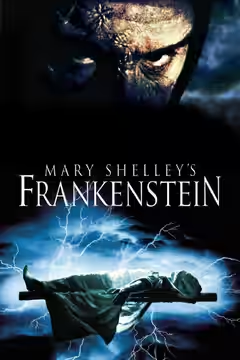
Kenneth Branagh directs and stars in a 123-minute Frankenstein that puts the author’s name in the title, which is a promise: this is to be the faithful one, the version that gives you the book rather than the bolt through the neck. Steph Lady and Frank Darabont’s script keeps most of what Mary Shelley wrote. The ship in the ice is there, and Geneva, and Ingolstadt, and the Creature who teaches himself to read and comes back to make demands. What the film cannot do is keep still, and the novel is a patient book.
Roger Pratt’s camera circles the actors, cranes up over them and rushes down corridors after them, and Andrew Marcus cuts a conversation at a dinner table as if it were a pursuit. Patrick Doyle’s orchestra is under nearly all of it, brass and choir, at a pitch most films save for their last ten minutes. A dance in the Frankenstein house is shot from above with the couples spinning on Tim Harvey’s great staircase, and it is handsome and it is already too much. We were worn out before Victor had left home for university, and we were irritated at being worn out, because a story about a man who goes too far needs somewhere further to go.
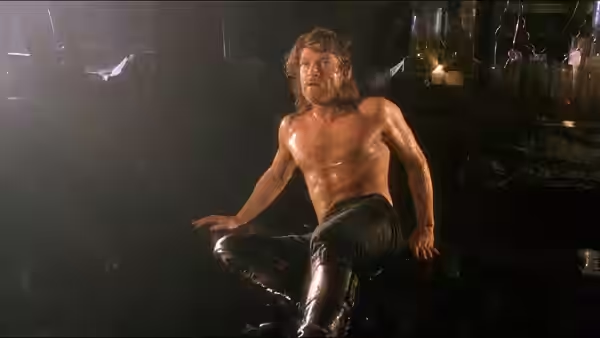
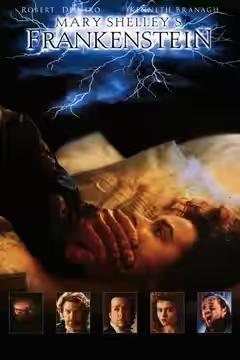
The one place where the volume matches the subject is the creation. Victor (Branagh), stripped to the waist and shining with sweat, tips eels into a copper sarcophagus full of fluid, and when the lid is prised off the Creature (Robert De Niro) comes out in a flood of it, and the two of them slip and flail on the wet floor like a man trying to hold a landed fish. We were horrified, and properly so. It is clumsy, naked and sickening in a way the old laboratory scenes, with their levers and lightning, never risked, and for ten minutes the film is about what it says it is about: a birth, and a father who cannot bear to look.
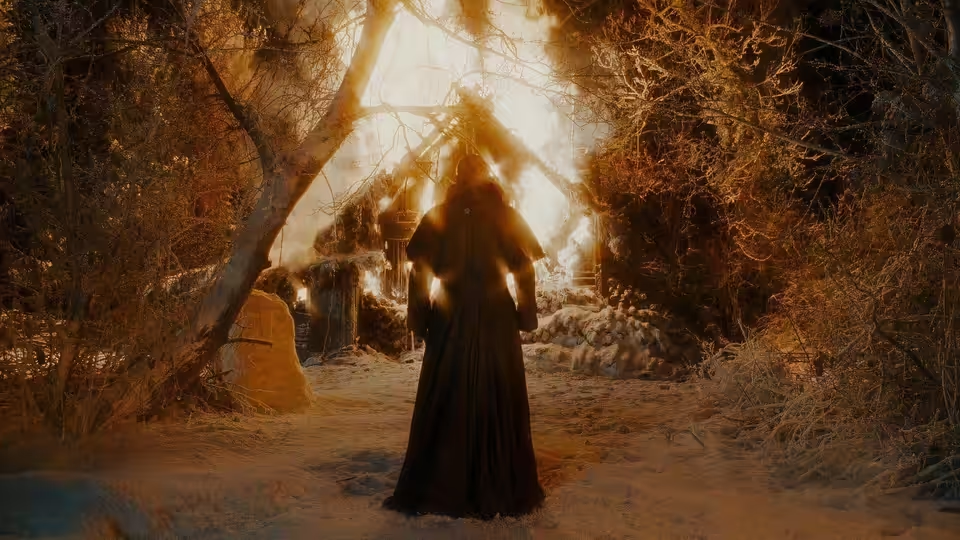
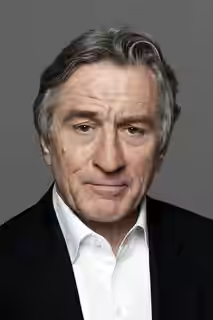
De Niro is the reason to stay. Under the stitching he does nearly everything with his eyes and a soft, careful voice, and the stretch in which he hides in a lean-to against a cottage and learns to speak by watching the family inside, among them Richard Briers as a blind grandfather, is the only part of the film that slows down enough to hurt. It moved us, more than the rest of the picture had earned, and then Doyle’s strings came in to make sure we had noticed and the moment was gone. The Creature’s later demands of his maker are the best written scenes in the film, and De Niro plays them as a man arguing a case rather than a monster making threats.
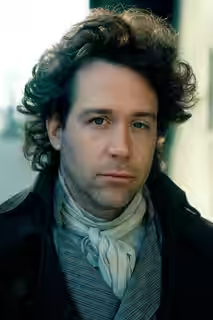
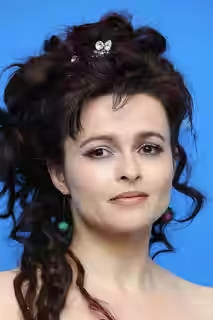
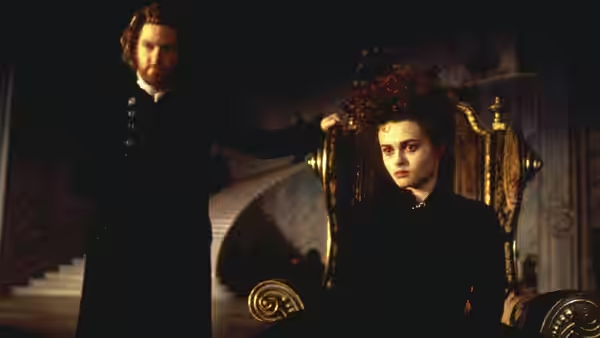
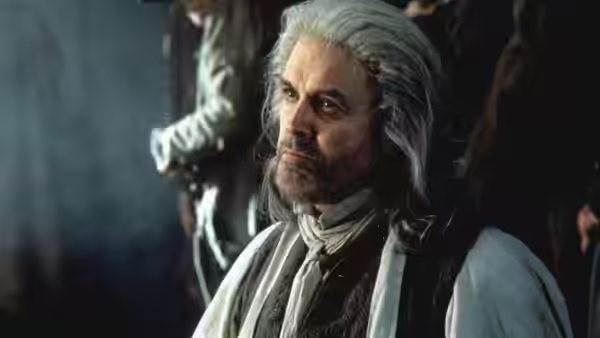
Branagh plays Victor as a man forever running up stairs. It is a performance of exertion: he shouts, he weeps, he loses his shirt again, and he is never allowed a quiet minute in which to think, so we never see how a clever young man arrives at a vat of eels. Helena Bonham Carter is good as Elizabeth and given little to do but wait and worry, which she does with more intelligence than the lines contain. Tom Hulce’s Henry Clerval is a warm friend who exists to be told things. Ian Holm has a few scenes as the Baron and makes them count. The surprise is John Cleese as Professor Waldman, quiet, unsmiling and sad, the one person in the film who seems to understand what is at stake. James Acheson’s costumes are heavy and exact; the Creature’s long coat, which makes him a shape on a skyline, is the best of them.
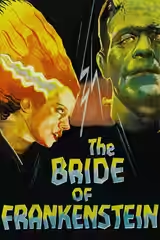
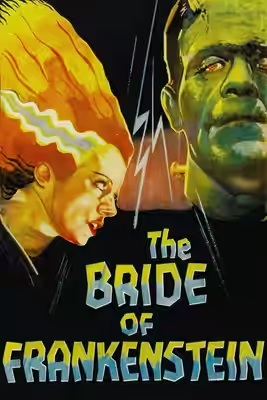
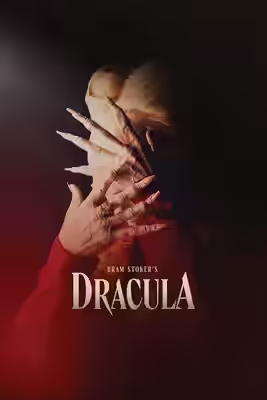
The film is produced by Francis Ford Coppola and James V. Hart, who had made Bram Stoker’s Dracula two years before. That film was theatrical on purpose and enjoyed itself. This one wants to be an opera and a serious adaptation at the same time, and the two keep tripping over each other. It follows the novel far more closely than the 1931 film did, and it is nowhere near as frightening. The dread in the book comes from waiting, and this film never waits.
Most critics were harder on it than we are, and we understand why, but the birth scene and De Niro buy it more credit than it has been given. Watch it at home, where you can pause and breathe; it will not. The 15 certificate is earned by the slime rather than the scares, which tells you a good deal.