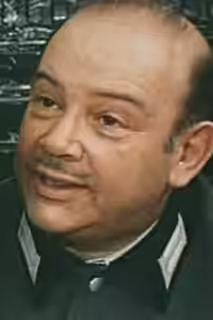
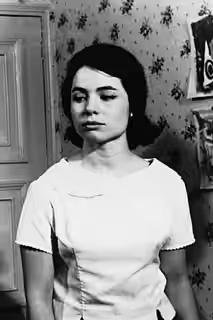
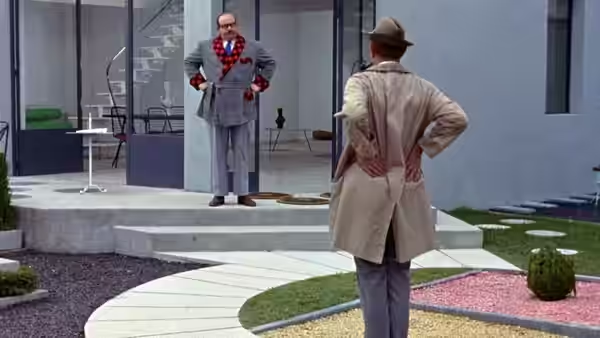
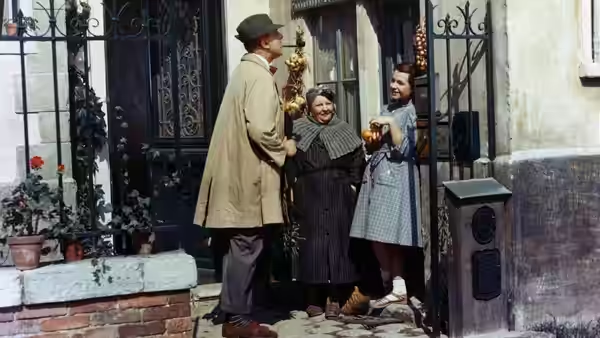
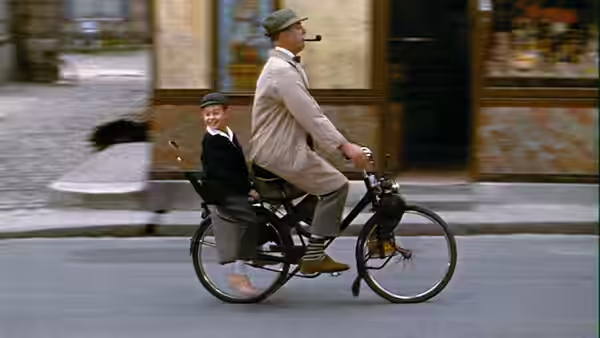
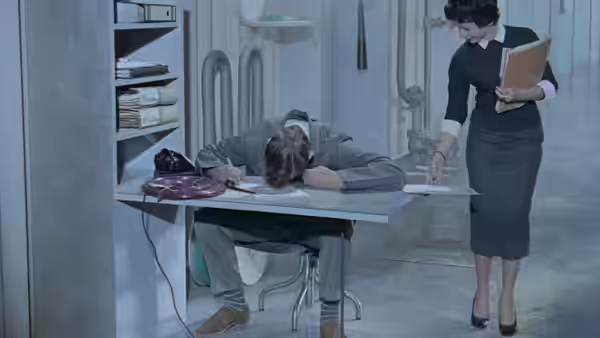
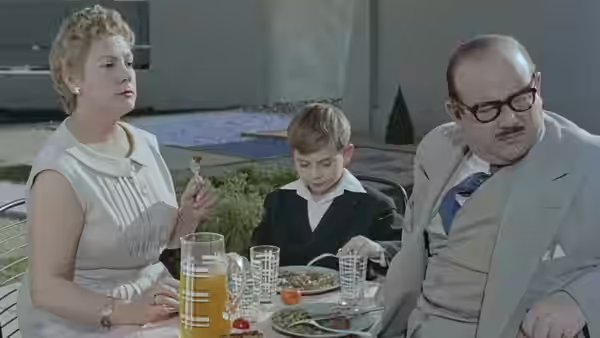
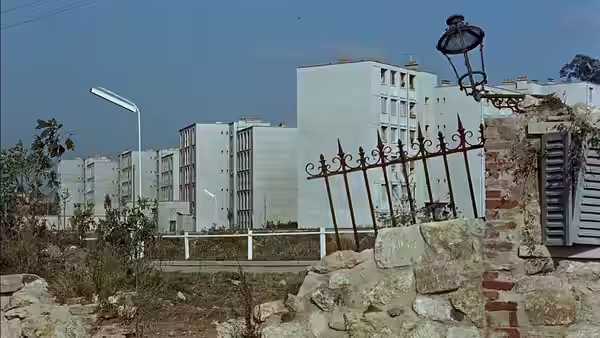
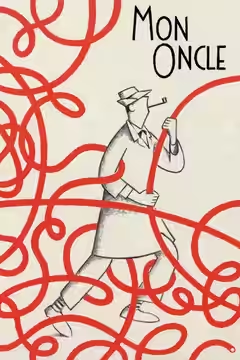
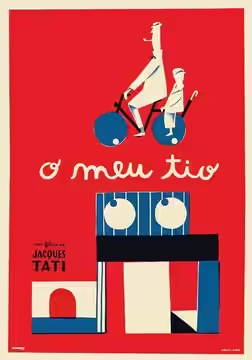
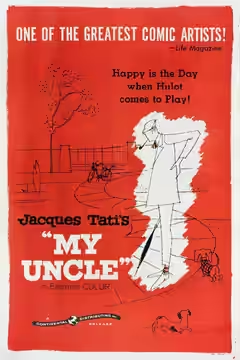
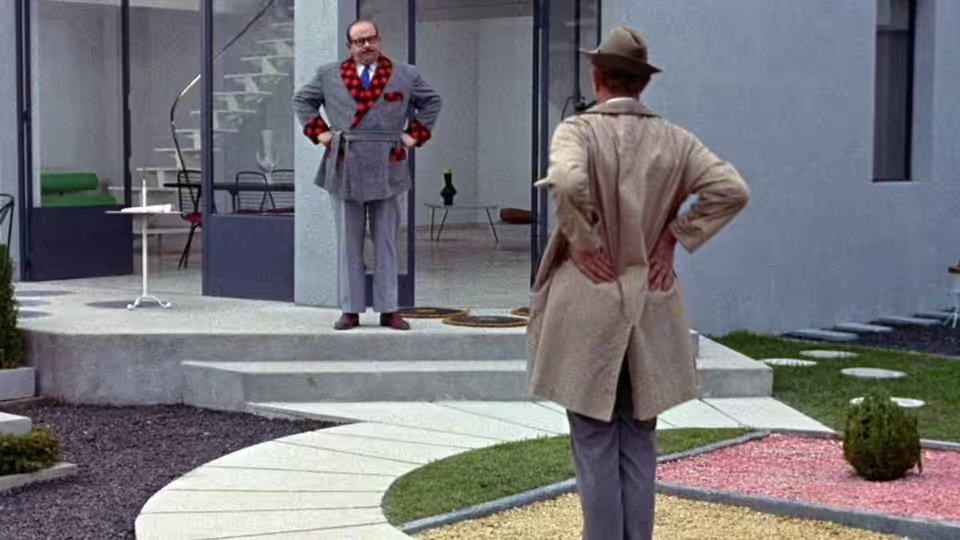
Monsieur Hulot faces Monsieur Arpel across the geometric garden of the Arpel home
Film review

Mon Oncle

1958 · Directed by Jacques Tati · 1h 58m

In a sentenceThe Arpels have a house so thoroughly organised that living in it seems rather bad manners

Monsieur Hulot (Jacques Tati) lives in an old Paris neighbourhood whose disorder is being squeezed out by modernisation. Across the divide are Monsieur Arpel (Jean-Pierre Zola) and Madame Arpel (Adrienne Servantie), with their automated modernist house and commitment to keeping everything clean and controlled. Hulot goes about life in his own untidy fashion, at odds with the Arpels’ insistence on order. Their domestic machinery and carefully organised surroundings leave little room for his habits. The differences emerge through ordinary routines: how people occupy a room, use their possessions and expect others to behave.

Fi1m review

Jacques Tati makes domestic convenience look exhausting in this warm, exact comedy about people trying to live correctly. The jokes repeat themselves, but the Arpels’ automated house keeps providing fresh reasons to laugh.

Mon Oncle is a patient, funny comedy about the trouble people take to appear comfortable, and we recommend it with one reservation: its jokes sometimes outstay their welcome. Jacques Tati sets Monsieur Hulot’s disorder beside the Arpels’ modern house, where cleanliness and technology have become measures of personal worth. That is a simple contrast, and the film does not pretend otherwise. Much of the pleasure comes from watching how thoroughly it can complicate an ordinary business such as being in a room.

Henri Schmitt’s production design gives the comedy somewhere precise to happen: an automated house whose insistence on order makes its occupants look awkward. The Arpels’ home has such a strong visual identity that a person’s position within it becomes part of the joke. Jean Bourgoin’s photography lets us read those arrangements, with the house at night particularly effective in making domestic space look forbidding. We laughed at the house, then felt a little sorry for the people living in it.

Jacques Tati plays Monsieur Hulot as someone whose presence can unsettle a carefully arranged space without much apparent effort. That gives the comedy a useful scale: a whole household can be disturbed by one man failing to fit into it. Jean-Pierre Zola and Adrienne Servantie give the Arpels the seriousness the comedy needs, since their allegiance to the house’s rules cannot look like a joke to them. Their concern with appearances remains recognisable even when the setting makes it ridiculous.

Sound makes the automated house demand our attention, adding to the sense that its occupants must keep up with it. The emphasis helps us follow the comedy without having every mishap explained by someone on screen. The music credited to Franck Barcellini, Alain Romans and Norbert Glanzberg keeps the tone light even when the satire becomes severe. That lightness is welcome in a film whose view of modern living can otherwise become a little stern.

Suzanne Baron’s editing allows the blocking to do its work rather than forcing a laugh with every cut. We have time to study how people fit into their surroundings, and to notice when they do not. The cost is repetition, especially once we have understood the house’s hold on its owners. At 118 minutes, the film occasionally gives a familiar joke more time than it needs.

The writing by Jacques Tati, Jacques Lagrange and Jean L’Hôte is less persuasive when the contrast between old and new becomes too tidy. Hulot’s neighbourhood is granted the warmth that the modern home is so often denied, which makes the case against progress rather easy to win. A little more pleasure in the Arpels’ preferred way of life would have made them harder to dismiss. Their snobbery is funny enough without making their surroundings seem permanently in the wrong.

Still, the affection matters. Plenty of comedies about snobbery encourage us to enjoy the punishment of people who own nicer things; here we keep noticing the effort those people expend, and how little ease it buys them. Hulot supplies a welcome disturbance without needing to be declared a model citizen. Allow the film its pauses, and give the whole frame your attention: the house deserves watching almost as closely as the people.

Critical consensus AI synthesised

73
Positive
5
Mixed
2
Negative
0

Most critics respond warmly to Mon Oncle, finding Tati’s comedy inventive and its satire of modern living pointed without losing its warmth. Praise centres on the contrast between Hulot’s disorderly neighbourhood and the Arpels’ automated home, where domestic technology and bourgeois habits supply the jokes. The reviews particularly value the visual composition, expert blocking and creative sound, which make the clash between two ways of life funny while giving the changing surroundings a serious edge.

Reservations concern pace and how insistently the film makes its case, rather than a failure of comic invention. Empire finds the slow pace and repetition better suited to a shorter feature, while Slant Magazine enjoys the film but considers it didactic, depressing and overly nostalgic. The spread is fairly narrow, with no outright negative verdicts among the supplied ratings, though one inaccessible review offers no usable explanation for its score.

The AV Club
19 April 2002 · Keith Phipps
85*

Phipps praises Tati’s films for combining comedy and beauty, and considers Mon Oncle a refined, funny work with serious themes. He singles out its depiction of a changing Paris, where Hulot’s old neighborhood gives way to modernity.

Read the full review →
Slant Magazine
6 September 2010 · ★★★/4 · Christian Blauvelt
75

The critic finds the film pleasurable despite calling it didactic, depressing, and overly nostalgic. He praises its art direction, especially the striking composition of the Arpel home at night.

Read the full review →
The New Yorker
11 September 2009 · Richard Brody
75*

Brody presents the film as an angry, gleeful satire of modernization. He singles out its attack on domestic technology, cleanliness, and the industrial regimentation they encourage.

Read the full review →
Variety
31 December 1957 · Variety Staff
75*

The review finds the comedy somewhat long but inventive, warm and poetically satirical. It praises the expert blocking, creative sound and comic contrast between two ways of life.

Read the full review →
Time Out
· JS
70*

The available blurb presents the film favorably, highlighting Tati’s comic contrast between the Arpels’ automated modernist house and Hulot’s bohemian disorder. The article text is unavailable, so the finer details of the critic’s assessment cannot be confirmed.

Read the full review →
Empire
1 January 2000 · William Thomas
65*

Thomas finds the film delightful and praises its inspired satire of bourgeois snobbery. He says its slow pace and repetition make it feel better suited to a short feature.

Read the full review →

Straight answers AI written, from our review

Is Mon Oncle worth watching?
Mon Oncle is worth watching for its warm, precise comedy about domestic convenience making life harder, and we score it 82 out of 100. We recommend it to anyone who enjoys patient visual humour and noticing what happens across the whole frame, though at 118 minutes some jokes receive more time than they need.
How long is Mon Oncle, and what is it rated?
Mon Oncle runs 1h 58m. It is a comedy film.
Where can I watch Mon Oncle in Argentina?
Mon Oncle is not on any streaming or rental service in Argentina at the moment. It is available in 10 other countries; change your country at the top of the page to see where. Availability is checked daily.
How does Mon Oncle compare to Modern Times?
Mon Oncle makes gentler comedy from domestic order than Modern Times makes from factory efficiency, with both finding humour in bodies that refuse to fit their surroundings. We favour Modern Times for the sharper bite of its physical comedy, and Mon Oncle for patient observation of social awkwardness. Both have weaknesses: Tati repeats jokes, while Chaplin’s story wanders and gives the romance less attention.

Cast

Awards

Academy Awards, 1959

Won
Best International Feature Film

International Submission to the Academy Awards, 1959

Nominated
International Submission to the Academy Awards

Jury Prize, 1958

Won
Jury Prize

If you liked this, try…

  1. PlayTime (1967) · not on Fi1m yetJacques Tati expands the architectural confusion until the whole city needs instructions.

  2. Modern Times (1936, Fi1m 88)Factory efficiency meets a body with other ideas about how to move.

  3. Good Morning (1959) · not on Fi1m yetDomestic conveniences and stubborn neighbours supply another quietly exact comedy of manners.

  4. The Party (1968) · not on Fi1m yetA meticulously organised home struggles to accommodate one thoroughly unsuitable guest.

  5. The Man in the White Suit (1951) · not on Fi1m yetAnother comedy in which technological improvement causes considerable inconvenience for everyone involved.