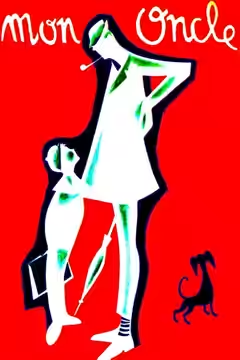
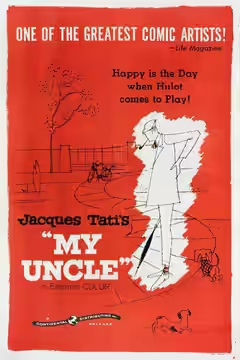
Jacques Tati makes domestic convenience look exhausting in this warm, exact comedy about people trying to live correctly. The jokes repeat themselves, but the Arpels’ automated house keeps providing fresh reasons to laugh.
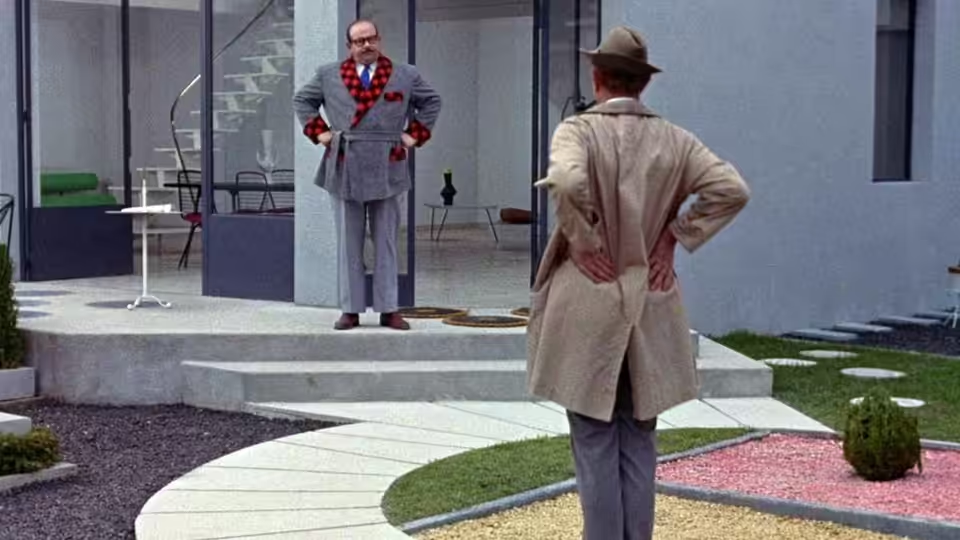
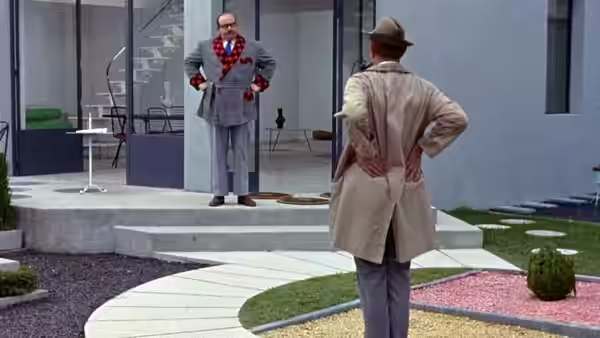
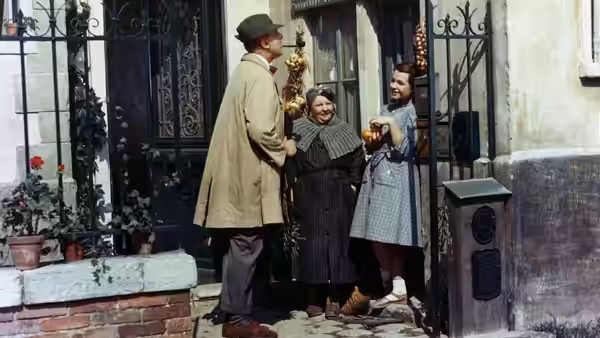
Mon Oncle is a patient, funny comedy about the trouble people take to appear comfortable, and we recommend it with one reservation: its jokes sometimes outstay their welcome. Jacques Tati sets Monsieur Hulot’s disorder beside the Arpels’ modern house, where cleanliness and technology have become measures of personal worth. That is a simple contrast, and the film does not pretend otherwise. Much of the pleasure comes from watching how thoroughly it can complicate an ordinary business such as being in a room.
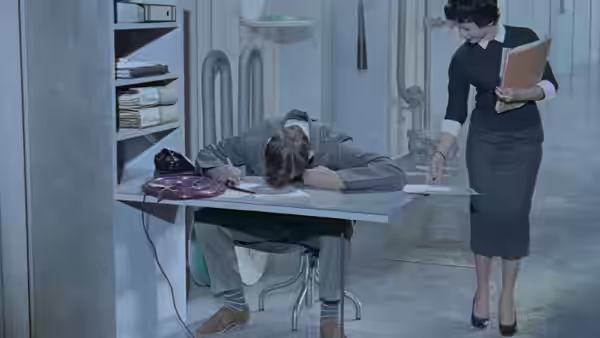
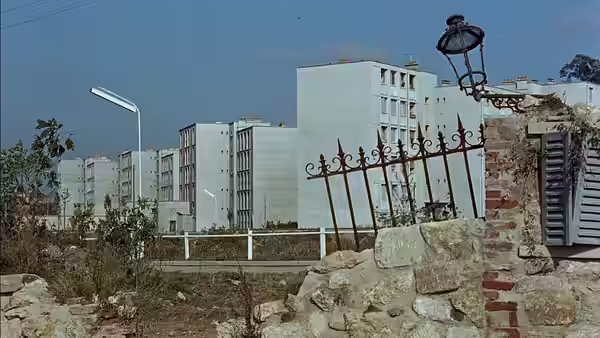
Henri Schmitt’s production design gives the comedy somewhere precise to happen: an automated house whose insistence on order makes its occupants look awkward. The Arpels’ home has such a strong visual identity that a person’s position within it becomes part of the joke. Jean Bourgoin’s photography lets us read those arrangements, with the house at night particularly effective in making domestic space look forbidding. We laughed at the house, then felt a little sorry for the people living in it.
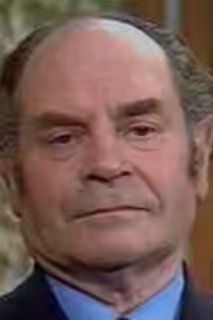
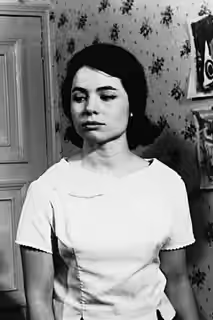
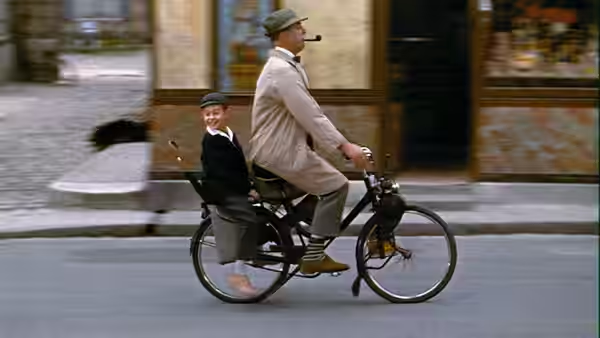
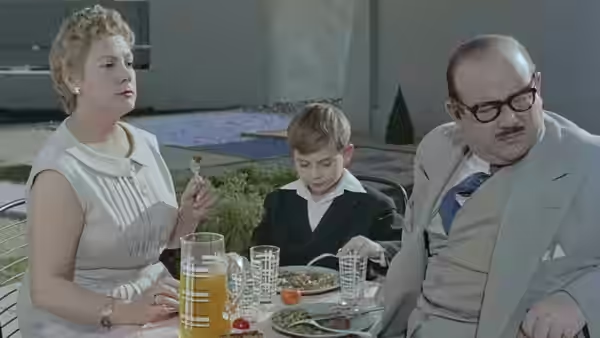
Jacques Tati plays Monsieur Hulot as someone whose presence can unsettle a carefully arranged space without much apparent effort. That gives the comedy a useful scale: a whole household can be disturbed by one man failing to fit into it. Jean-Pierre Zola and Adrienne Servantie give the Arpels the seriousness the comedy needs, since their allegiance to the house’s rules cannot look like a joke to them. Their concern with appearances remains recognisable even when the setting makes it ridiculous.
Sound makes the automated house demand our attention, adding to the sense that its occupants must keep up with it. The emphasis helps us follow the comedy without having every mishap explained by someone on screen. The music credited to Franck Barcellini, Alain Romans and Norbert Glanzberg keeps the tone light even when the satire becomes severe. That lightness is welcome in a film whose view of modern living can otherwise become a little stern.
Suzanne Baron’s editing allows the blocking to do its work rather than forcing a laugh with every cut. We have time to study how people fit into their surroundings, and to notice when they do not. The cost is repetition, especially once we have understood the house’s hold on its owners. At 118 minutes, the film occasionally gives a familiar joke more time than it needs.
The writing by Jacques Tati, Jacques Lagrange and Jean L’Hôte is less persuasive when the contrast between old and new becomes too tidy. Hulot’s neighbourhood is granted the warmth that the modern home is so often denied, which makes the case against progress rather easy to win. A little more pleasure in the Arpels’ preferred way of life would have made them harder to dismiss. Their snobbery is funny enough without making their surroundings seem permanently in the wrong.
Still, the affection matters. Plenty of comedies about snobbery encourage us to enjoy the punishment of people who own nicer things; here we keep noticing the effort those people expend, and how little ease it buys them. Hulot supplies a welcome disturbance without needing to be declared a model citizen. Allow the film its pauses, and give the whole frame your attention: the house deserves watching almost as closely as the people.